
Amanda Dean, Vice-President, Ontario and Atlantic, Insurance Bureau of Canada
“Catastrophic flooding events are no longer unexpected. They are becoming more frequent, and each one seems more severe than the last. Canada’s flood challenge is clear. What remains unclear is why we continue to underinvest in solutions that could better protect people, property and communities.” – Amanda Dean, Vice-President, Ontario and Atlantic, Insurance Bureau of Canada
News from the Insurance Bureau of Canada
Posted September 21st, 2026 on Niagara At Large
Insurers urge stronger action to reduce flood risk and protect Ontario communities
 Storms that swept across parts of Ontario on July 27 and July 28, and between August 1 and 3, caused nearly $360 million in insured damage, according to initial estimates from Catastrophe Indices and Quantification Inc. (CatIQ).
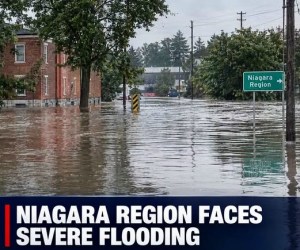
The storms brought intense rainfall and flash flooding to communities in the Niagara Region, including St. Catharines, Niagara-on-the-Lake, Grimsby, and Lincoln, affecting thousands of residents. Intense rainfall was also reported as far north as North Bay.
Flooding in the Niagara Region was extensive, with thousands of reports of flooded streets and basements, and of sewer backups. Immediately following the intense rainfall, Insurance Bureau of Canada (IBC) deployed its Virtual Community Assistance Mobile Pavilion (V-CAMP) helpline to provide residents with real-time, one-to-one insurance support as they began the recovery process. IBC also established a community hub in St. Catharines to help affected residents navigate general insurance questions and the claims process.
Trained insurance industry personnel remain available through IBC’s Consumer Information Centre at 1-844-2ask-IBC (1-844-227-5422) and ConsumerCentre@ibc.ca to answer general questions about home, business or vehicle insurance.
 “This has been another difficult year for communities across Ontario, as families and businesses face the growing toll of extreme weather,” said Amanda Dean, Vice-President, Ontario and Atlantic, IBC.
“Catastrophic flooding events are no longer unexpected. They are becoming more frequent, and each one seems more severe than the last.
“Canada’s flood challenge is clear. What remains unclear is why we continue to underinvest in solutions that could better protect people, property and communities. Investing in resilient infrastructure, shifting our focus from recovery to prevention and giving Canadians access to flood-risk information are among the most effective ways to help limit damage, reduce long-term insurance costs and strengthen community resilience.”
IBC Calls for Urgent Action to Reduce Flood:
Flooding is Canada’s most frequent and costly natural disaster, and the trend is accelerating. Over the last 20 years, flood and water-related insured losses have increased more than 300% compared to the previous two decades, according to CatIQ.
To meaningfully reduce flood losses and help keep insurance affordable, IBC is calling on governments to accelerate action in three key areas, including:
- Invest in the infrastructure that protects communities. Investing in stormwater systems, wastewater systems and drainage infrastructure is the most effective way to help reduce flood damage. But with an estimated $60-billion infrastructure deficit, many communities are relying on stormwater and drainage systems that were not designed for today’s extreme weather.
- Shift from recovery to prevention. Flood prevention is one of the smartest investments governments can make. Measures such as home retrofits, backwater valves, sump pumps, stronger building codes and better land-use planning can help reduce flood losses and help avoid much larger repair costs from future disasters.
- Give Canadians access to flood-risk information. Canadians deserve to know their flood risk. Although Canada’s Flood Risk Finder was developed to help people understand their exposure to flooding, provincial governments have yet to make the tool available to residents. Expanding access would help Canadians make more informed decisions and better protect their homes.
The amount of insured damage is an estimate provided by CatIQ (www.catiq.com) under licence to IBC.
 About the Insurance Bureau of Canada – We are the national industry association representing the vast majority of Canada’s home, car and business insurance companies. We rely on the collective expertise of our members and leadership team to create policy positions, advocate for a competitive and sustainable market and influence meaningful change in the insurance industry.
For more on the Bureau, click on – https://www.ibc.ca/
NIAGARA AT LARGE Encourages You To Join The Conversation By Sharing Your Views On This Post In The Space Following The Bernie Sanders Quote Below and by sharing the Niagara At Large site at www.niagaraatlarge.com with all of your friends and associates.
“A Politician Thinks Of The Next Election. A Leader Thinks Of The Next Generation.” – Bernie Sanders
Share this: Niagara At Large at wwwlniagaraatlarge.com









 Niagara/Hamilton – Patients are suffering lengthy waits and inadequate services while the Ford government continues to repeatedly claim that cutting more than 600 hospital staff has no impact on care, a situation that the Ontario Health Coalition called ‘unconscionable’ today.
 If you are a full-blooded political junkie like me, you may be finding it a little bit harder to stay awake today after staying up well after midnight this October 20th to learn the news that an overwhelming 76 per cent of Albertans voted in a referendum drawn up by separatists in that province to remain in Canada.
 Oh, that Canada. Such a bad trading partner, taking advantage of the U.S.A as much as it can. All while its wasting its money on a public health care system.’
 With less than two years left before the Monday, October 26th municipal elections across Niagara and the rest of Ontario, we need to make sure that first, we make sure we go out and vote, and second and most importantly, we vote for candidates that promise to address our interests and concerns, and not just those of developers and other special interests.
 NIAGARA-ON-THE-LAKE, ON — Canada has relied on migrant farm workers to growits food for 60 years. Yet workers are still being killed and seriously injured while cycling or walking home from work, buying groceries or simply visiting friends.
  To paraphrase the old song from the Great Depression of the 1930s; “Brother can you spare another nickel and dime?”
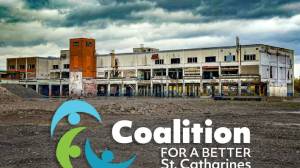 On Thursday October 8th, The Ontario Superior Court of Justice granted the Coalition for a Better St. Catharines Intervenor status in the case concerning a Property Standards Order issued by the City of St. Catharines to the owner of the former GM site on Ontario Street (Bayshore Groups).
 The Niagara Peninsula Conservation Authority (NPCA) is inviting residents, property owners and stakeholders to review and provide feedback on final mapping for the Upper Welland River Tributaries in Haldimand, Hamilton, West Lincoln, and Wainfleet.

 I confess that I am among one of those Niagara, Ontario residents that has, over the years, enjoyed going over to Buffalo too.


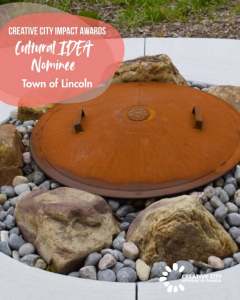 Lincoln, ON –– The Town of Lincoln is the proud recipient of a Cultural IDEA Award from the Creative City Network of Canada (CCNC), recognizing the Town’s innovative Indigenous Engagement and Cultural Practices Policy Framework.
 Lincoln, ON – Advance online voting for the 2026 Municipal and School Board Election opens on October 7, 2026, at 10:00 a.m. and is available 24 hours a day until October 21, 2026, at 8:00 p.m.
 The City of St. Catharines 2026 Fall Tree Giveaway is set for Saturday, Oct. 24 and registration opens today (Wednesday, Oct. 7) for residents to claim their free tree.
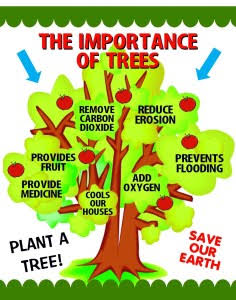 Tree pickups will take place Saturday, Oct. 24, from 8-11 a.m. at Lancaster Park. Once registered, residents will receive a confirmation email with a QR code they must present (digitally or printed) when picking up their free tree.
 Start Me Up Niagara is introducing new winter extended hours at its Drop-In Resource Centre beginning Thursday, October 8th, 2026.
  Niagara, Ontario – Four thousand native trees are taking root across St. Catharines and Niagara-on-the-Lake this fall, supporting ongoing efforts to enhance biodiversity, restore habitat, increase tree cover, and strengthen the natural spaces that communities rely on.
 It is that time of year when the flu is becoming a serious health problem and that comes in the context of serious concerns about an insurgence of measles, COVID and a number of other infectious diseases that can seriously harm the health and even kill some of the most vulnerable among us.
 Niagara Region Public Health is reminding residents to make respiratory illness prevention part of their fall routines. With flu already reported in Niagara this season, now is the time to take steps to help protect yourself and those around you.
 St. Catharines Fire Services is sharing a reminder with the community about the importance of safety when using lithium-ion batteries found in smartphones, tablets, power and lawn tools, laptops, headphones, toys and more.
 If you are still a reader of Niagara’s daily newspapers, you may have notice the headshots of five individuals featured on the front page of this Friday’s October 2nd edition of The St. Catharines Standard, if not on the pages ofthe Niagara Falls Review and Welland Tribune.
 News from the non-profit public interest group, Canadians For Tax Fairness
 Niagara Falls, ON – This Thanksgiving, Niagara Parks is inviting the community to turn gratitude into action by donating blood. In partnership with Canadian Blood Services, Niagara Parks will host a Thanksgiving Blood Drive at the Niagara Parks Power Station on Monday, October 12, from 10 a.m. to 5 p.m.
 Prime Minister Mark Carney’s Major Projects Office is making a major mistake by fast-tracking a pipeline the world doesn’t want or need, and that will require billions of taxpayer dollars. There is no excuse for this reckless project that will deepen the climate crisis, put endangered Southern Resident Orca Whales at risk of extinction, and benefit very rich oil companies at the expense of everyday Canadians.

 A new memorial honouring firefighters who have fallen in the line of duty is officially open at a City parkette in Downtown St. Catharines.
 “Together, Canadians must do more than just talk about reconciliation; we must learn how to practise reconciliation in our everyday lives—within ourselves and our families, and in our communities, governments, places of worship, schools, and workplaces. To do so constructively, Canadians must remain committed to the ongoing work of establishing and maintaining respectful relationships.”
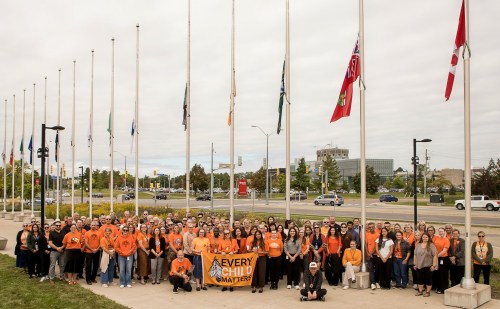
 Niagara, Ontario – The Niagara Police Service Board and the Niagara Regional Police Service (NRPS) are releasing the results of the 2026 Community Safety Survey, establishing a baseline for measuring community perceptions throughout the implementation of the Niagara Police Service Board’s 2026 – 2029 Strategic Plan.
 ST.CATHARINES – The Ontario government is investing $6,712,838 through the Ontario Together Trade Fund to help four local manufactures in Niagara increase resilience, build capacity and re-shore critical supply chains to Ontario.

 Niagara Voters Hoping To Cast Their Ballot Before Election Day On Oct. 26, 2026, Can Do So At Advance Polling Sites.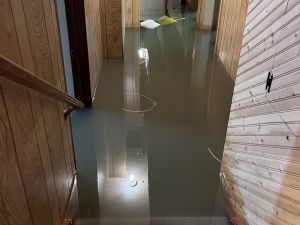
 After our Prime Minister Mark Carney told The New York Times in an interview this September. 2026 that he felt he has a responsibility to prepare Canada for what might be done to ward off any possibility of a military invasion from south of the border, I thought of this song, called ‘We’ll Never Be The 51st State’, written, performed and recently released by Canadian rocker Bryan Adams.


 Niagara, Ontario – As Niagara residents prepare to head to the polls for municipal elections on Monday, Oct. 26th, Brock University experts are hosting an event to demystify recent changes to regional governments and illuminate key local issues elected officials will need to address.
 Legendary Canadian rock band RUSH and their fans have cranked their late friend’s Neil Peart Memorial at Lakeside Park fundraising campaign to a platinum finish – and secured the project’s $1-million goal.
 Toronto –
 “At this pivotal moment in history, the world can count on Canada. In the face of upheaval and uncertainty, Canada shows up, builds coalitions, and gets work done – for our environment, our security, and our shared prosperity. The United Nations is vital to this work as a pillar of global stability and dialogue. Canada is a steadfast supporter of this institution, and we will ensure it remains an effective force for peace, stability, and prosperity for all.”
  NIAGARA REGION — Migrant farm workers have put safety and dignity on the municipal election agenda in Niagara, and more than half of all candidates in Niagara’s largest farm communities have answered their call.
 Come and have a little fun, this coming Saturday, September 26th, at one of the oldest surviving churches in all of Ontario.

 Ottawa– Today’s “Bulldoze Nature” bill (the government’s
 All too often when we read or hear about a grizzly bear in the news, it is because the bear reportedly attacked one or more members of our species – often because we encroached on what little is left of their territory or because a mother grizzly was trying to protect her cubs.