By Doug Draper
Just about everyone is grumbling about what a long, cold winter it has been. It has been a tough one – we know, we know!
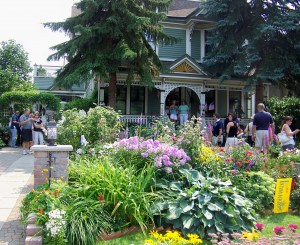
Only one of the many great gardens to explore in this great city. Photo by Doug Draper
But believe it or not, there are warmer, sunnier days just around the corner. Aside from the first sight of a robin in my backyard this March 9, a reminder to this ‘I’ve-had-enough-of winter’ writer, that there are only weeks to go to warmer days, there was a media release from the people who organize what has become the most popular and largest garden walk event in all of North America.
The media release from Garden Walk Buffalo, an amazing group of volunteers in Buffalo that is doing possibly more to showcase the grand old neighbourhoods in this city than practically anyone else, is calling on even more residents to showcase their lawns and gardens at what will be the 17th anniversary of this very public and open and free event to all who love making the most beautiful use of landscape in an urban environment.
If you enjoy the outdoors and beautiful trees and gardens, don’t miss Garden Walk Buffalo this year – an event that always takes place on the last full Saturday and Sunday of July, and this year takes place on July 30 and 31.
In the meantime, Niagara At Large is pleased to post the following media release for a not-for-profit group that should receive the equivalent of an ‘Order of Ontario’ award north of the border. How about that, Governor Cuomo?
Garden Walk Buffalo garden applications now available
Garden Walk Buffalo invites gardens, and their gardeners, from the Peace Bridge to Main Street and from Erie Basin Marina to Forest Avenue/Rumsey Road to be part of the 17th annual Garden Walk, to be held Saturday and Sunday, July 30 and 31 from 10 a.m. to 4 p.m. Share your garden and show your pride in our neighborhoods and city.
Enter by May 15, 2011
Enter online at http://www.GardenWalkBuffalo.com. If a mailed, paper application is preferred, a printable .pdf application can be found there.
More information can be found at http://www.GardenWalkBuffalo.com.
Garden Walk Buffalo, the largest garden tour in the U.S., is held the last weekend of July each year. More than 350 residences and businesses throughout the west side of Buffalo open their creative urban gardens for tens of thousands of visitors from around the U.S. and Canada. For more information, visit http://www.GardenWalkBuffalo.com.
High-resolution, print-worthy, professional photography of Garden Walk Buffalo is always available in the Garden Walk Press Kit, found here.
(Visit Niagara At Large at www.niagaraatlarge.com for more news and commentary on matters of interest and concern to residents in our greater Niagara region and beyond.)
Share this: Niagara At Large at wwwlniagaraatlarge.com