

Amanda Dean, Vice-President, Ontario and Atlantic, Insurance Bureau of Canada
“Catastrophic flooding events are no longer unexpected. They are becoming more frequent, and each one seems more severe than the last. Canada’s flood challenge is clear. What remains unclear is why we continue to underinvest in solutions that could better protect people, property and communities.” – Amanda Dean, Vice-President, Ontario and Atlantic, Insurance Bureau of Canada
News from the Insurance Bureau of Canada
Posted September 21st, 2026 on Niagara At Large
Insurers urge stronger action to reduce flood risk and protect Ontario communities
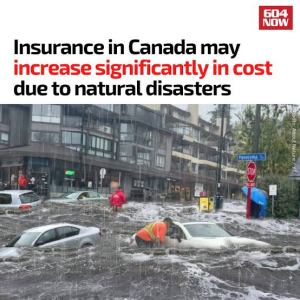
 Storms that swept across parts of Ontario on July 27 and July 28, and between August 1 and 3, caused nearly $360 million in insured damage, according to initial estimates from Catastrophe Indices and Quantification Inc. (CatIQ).
The storms brought intense rainfall and flash flooding to communities in the Niagara Region, including St. Catharines, Niagara-on-the-Lake, Grimsby, and Lincoln, affecting thousands of residents. Intense rainfall was also reported as far north as North Bay.
Flooding in the Niagara Region was extensive, with thousands of reports of flooded streets and basements, and of sewer backups. Immediately following the intense rainfall, Insurance Bureau of Canada (IBC) deployed its Virtual Community Assistance Mobile Pavilion (V-CAMP) helpline to provide residents with real-time, one-to-one insurance support as they began the recovery process. IBC also established a community hub in St. Catharines to help affected residents navigate general insurance questions and the claims process.
Trained insurance industry personnel remain available through IBC’s Consumer Information Centre at 1-844-2ask-IBC (1-844-227-5422) and ConsumerCentre@ibc.ca to answer general questions about home, business or vehicle insurance.
 “This has been another difficult year for communities across Ontario, as families and businesses face the growing toll of extreme weather,” said Amanda Dean, Vice-President, Ontario and Atlantic, IBC.
“Catastrophic flooding events are no longer unexpected. They are becoming more frequent, and each one seems more severe than the last.
“Canada’s flood challenge is clear. What remains unclear is why we continue to underinvest in solutions that could better protect people, property and communities. Investing in resilient infrastructure, shifting our focus from recovery to prevention and giving Canadians access to flood-risk information are among the most effective ways to help limit damage, reduce long-term insurance costs and strengthen community resilience.”
IBC Calls for Urgent Action to Reduce Flood:
Flooding is Canada’s most frequent and costly natural disaster, and the trend is accelerating. Over the last 20 years, flood and water-related insured losses have increased more than 300% compared to the previous two decades, according to CatIQ.
To meaningfully reduce flood losses and help keep insurance affordable, IBC is calling on governments to accelerate action in three key areas, including:
- Invest in the infrastructure that protects communities. Investing in stormwater systems, wastewater systems and drainage infrastructure is the most effective way to help reduce flood damage. But with an estimated $60-billion infrastructure deficit, many communities are relying on stormwater and drainage systems that were not designed for today’s extreme weather.
- Shift from recovery to prevention. Flood prevention is one of the smartest investments governments can make. Measures such as home retrofits, backwater valves, sump pumps, stronger building codes and better land-use planning can help reduce flood losses and help avoid much larger repair costs from future disasters.
- Give Canadians access to flood-risk information. Canadians deserve to know their flood risk. Although Canada’s Flood Risk Finder was developed to help people understand their exposure to flooding, provincial governments have yet to make the tool available to residents. Expanding access would help Canadians make more informed decisions and better protect their homes.
The amount of insured damage is an estimate provided by CatIQ (www.catiq.com) under licence to IBC.
 About the Insurance Bureau of Canada – We are the national industry association representing the vast majority of Canada’s home, car and business insurance companies. We rely on the collective expertise of our members and leadership team to create policy positions, advocate for a competitive and sustainable market and influence meaningful change in the insurance industry.
For more on the Bureau, click on – https://www.ibc.ca/
NIAGARA AT LARGE Encourages You To Join The Conversation By Sharing Your Views On This Post In The Space Following The Bernie Sanders Quote Below and by sharing the Niagara At Large site at www.niagaraatlarge.com with all of your friends and associates.
“A Politician Thinks Of The Next Election. A Leader Thinks Of The Next Generation.” – Bernie Sanders

