
“We all want more homes. We all want Niagara to grow. But growth requires roads, water, sewers, transit and other services,” said Bateman. Those things still have to be paid for. If the Province reduces what developers pay, it cannot simply leave Niagara residents to make up the difference.” – Haley Bateman, a St. Catharines representative sitting on Niagara Regional Council
A News Release from Haley Bateman, St. Catharines Regional Councillor and a long-time community activist
Posted August 25th, 2026 on Niagara At Large
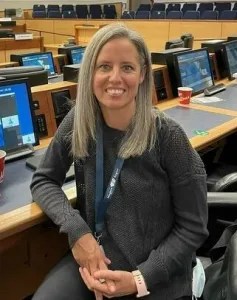
Haley Bateman, a Niagara Regional Councillor living in St. Catharines, Ontario
NIAGARA REGION – Niagara Regional Councillor Haley Bateman says the proposed development charge reduction program is not the New Deal council has asked for, one that recognizes the real cost of growth and stops shifting more costs onto local residents.
Bateman says that a long-term, fair and predictable funding relationship between municipalities and the Province is needed to make budgets manageable.
Niagara continues to face growing demands for public health, social services, waste management, roads, water and sewer systems, transit and other essential services. Municipalities are being asked to do more with less provincial support.
Bateman says the Province’s approach to development charges is another example of why Niagara needs a better deal. “Every time the Province makes a change without providing the money to go with it, Niagara residents lose,” said Councillor Haley Bateman. “The Province makes the decision, but the bill ends up coming to the municipality and ultimately to local taxpayers.”
The Province has reduced the amount developers are required to pay toward some of the costs of growth. Bateman says that while building homes is important, reducing the contribution toward infrastructure does not make the cost of that infrastructure disappear.
“We all want more homes. We all want Niagara to grow. But growth requires roads, water, sewers, transit and other services,” said Bateman. “Those things still have to be paid for. If the Province reduces what developers pay, it cannot simply leave Niagara residents to make up the difference.”
In a memo to Council, Corporate Services Commissioner, Tim Ellis wrote that Bill 23, More Homes Built Faster Act, 2022 materially reduced the Region’s ability to recover growth-related costs through DCs.
These changes removed housing services as a development charge eligible service, introduced mandatory exemptions and discounts for specified residential development, phased-in the Region’s DC rates and deferred the timing of collections for certain residential development.
Bill 23 has resulted in an estimated $38.9 million cost to the Region since its implementation in November 2022. The result is a direct shift of growth-related costs away from development charges and onto other funding sources, including reserves, debt, rate-supported financing and the general tax levy.
Bateman says this is exactly why Regional Council has been asking the Province for a New Deal. “This is bigger than one development charge program,” said Bateman. “It is about the relationship between the Province and Niagara. We need a government that understands that municipalities are not an endless source of money. The Province cannot keep changing the rules, reducing municipal revenue and then expecting residents to pay more to make up the difference. That is not a partnership.”
When asked about the meeting being in closed session, Bateman said “meetings like this should be in open session, with input from residents to hear what the province is has come up with. I also have concerns about those who participated in the vote who have also applied for the position of Regional Chair. It is not for me to determine if there is a conflict of interest, but I certainly perceive there to be one.”
Niagara Region has advocated for a long-term, sustainable funding framework between all levels of government and has identified a New Deal for municipalities as an important priority. Bateman says Niagara is prepared to support responsible growth, but the Province needs to provide the support needed to make that growth work.
“Niagara is doing its part. Our residents are doing their part. Now we need the Province to do its part,” said Bateman. “A New Deal means that when the Province makes a decision that affects Niagara, it also takes responsibility for the cost. Our residents should not always be the ones left holding the bill.”
A Footnote by Niagara At Large reporter/publisher Doug Draper – One of the many tragedies of Ontario Premier Doug Ford and his Conservative government slashing the number of seats on Niagara Regional Council is that we are losing younger, more progressive voices like Haley Bateman. Hopefully she and other young people will continue to find ways of speaking out and acting in ways that benefit our Niagara community and the everyday people, many of whom are now struggling to live healthy, affordable lives in it.
NIAGARA AT LARGE Encourages You To Join The Conversation By Sharing Your Views On This Post In The Space Below and by sharing the Niagara At Large site at www.niagaraatlarge.com with all of your friends and associates.
Visit us every day on www.niagaraat.arge.com and on Doug Draper’s Facebook page at https://www.facebook.com/doug.draper.180 and encourage everyone else you know to do the same. Let’s build media outlets for local news and commentary!

