
News from the Western New York-based citizens group Buffalo Niagara RIVERKEEPERS
(A Brief Foreword note from Niagara At Large – The native plants featured in this wonderful new guidebook are just as available and as relevant to the environment and climate of Niagara, Ontario as they are to Western New York.
Please consider the possibly that growing native plants requires less energy and chemical fertilizers, and helps attract and keep alive native butterflies, birds and other species we need to keep a healthy web of life alive – all things that contribute to a healthy environment.)
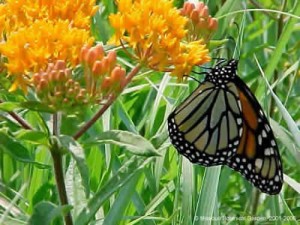
Buterfly milkweed in your garden may help save struggling monarch populations
August 8th, 2014 – As we enter the dog days of summer and wonder how much water your garden plants can actually drink season after season, consider this: Native Plants need less water! They also provide a multitude of benefits to the environment, as outlined in Buffalo Niagara RIVERKEEPER’s newest publication Western New York Guide to Native Plants for your Garden.
” Protecting water quality is a top priority for this administration. The County is happy to partner with the Buffalo Niagara Riverkeeper to help print this important guide so that citizens can plan beautiful native gardens that will reduce pesticide use and also provide habitat for pollinators.” – Erie County Executive Mark Poloncarz
Native plants are indigenous plants that have evolved to a particular region, adapting to the geography, hydrography and climate of that region. As a result, regions with healthy populations of native plants are more sustainable and resilient, supporting cleaner water, a diversity of wildlife and thriving ecosystems. Native plants have adapted to local climate and ecosystems, usually requiring little additional water beyond normal rainfall levels and typically do not need fertilizers, pruning, or pesticides to flourish; saving time, money, and the environment.
According to Jill Jedlicka, Executive Director of Buffalo Niagara RIVERKEEPER, “Landowners can play a significant role in the stewardship of our local waters, especially in the way they design, plant and care for their properties. With this guide we really wanted to help Western New Yorkers create more sustainable landscapes, improving habitat and requiring less maintenance, while also fostering water conservation and pollutant reduction”.
Beautifully illustrated, the Guide outlines over 90 different plants native to Western New York, including old favorites like Purple Cone Flower and Redosier Dogwood, to the horticulturally significant Paw Paw or American Cranberry Bush. Everything from groundcovers and vines to grasses and trees are represented. Funded through a grant by the Niagara River Greenway Ecological Standing Committee, the guide also provides 6 different native garden planting plans, a planning design consideration checklist, and proper planting instructions.
The Western New York Guide to Native Plants for your Garden is available in hard copy at various locations around Erie and Niagara Counties. For a full list of locations the guide is available at, or to download a digital version, visit Buffalo Niagara RIVERKEEPER’s website (www.bnriverkeeper.org) .
More about Riverkeeper – RIVERKEEPER® is a leading organization dedicated to protecting the quality and quantity of water, while connecting people to water. We do this by cleaning up pollution from our waterways, restoring fish and wildlife habitat, and enhancing public access through greenways that expand parks and open space.
(Niagara At Large invites you to share your views on this post. A reminder that we only post comments by individuals who share their first and last name with them.)
 Niagara At Large
Just a comment. Since Milkweed has been delisted as banned, it is not as easy as one might think to get some. Local nurseries? no. Local Walkers Creek Association sold some, and so we have it now in our garden. In hopes. Liatris and some Hydrangeous are covered with bees in my garden. Fingers crossed this all works.
LikeLike