
“People are looking to the south and seeing what happens when democracy is corroded, one pillar at a time, and they are not going to quietly go along with the same thing happening in this province.”
– Liz Benneian, resident of Lincoln and head of the region-wide citizens coalition, A Better Niagara
News from Niagara resident Liz Benneian
Posted April 30th, 2026 on Niagara At Large
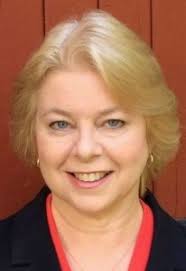
Niagara citizen activist and head of the region-wide citizens coalition A Better Niagara, Liz Benneian
A Brief Foreword Note from Doug Draper – Niagara At Large is proud to post the following news from Liz Benneian. We need far more citizens like her standing up and speaking out for the freedoms and the democracy that generations of Canadians fought and died for.
Come on people! Now is the time to Fight Ford’s relentless campaign to gut our democratic institutions and rules, one pillar at a time.
Now here is the news from Liz Benneian. –
I delegated to the (Ford government’s) Legislative Standing Committee on Heritage, Infrastructure and Cultural Policy on Tuesday, April 28th to speak against Bill 100 which, among other things, gives the Minister of Municipal Affairs the ability to appoint a regional chair for Niagara and other Regions and imbue them with strong chair powers.
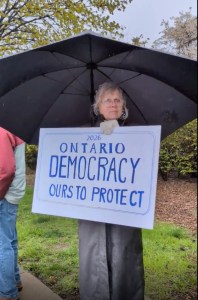
One of more than 200 Niagara residents braving the old, wet weather this past April 25th to join a “Fight Ford” rally in front of St. Catharines’ Pen Centre mall. Photo by Annette Long Gibbons
This includes being able to overrule elected Mayors on Regional Council. The Bill also reduces Regional Council to mayors only, among other measures. …
Niagara Falls Mayor (Jim) Diodati, Mayor (Frank) Campion of Welland, (Niagara Regional) Councillor Peter Secord from St.
Catharines, former Grimsby Councillor and current party treasurer for the PCs, Tony Joose of Grimsby, all spoke in favour of the change (that Bill 100 would usher in).
Only Councillor Sandra O’Connor from Niagara-on-the-Lake and I spoke against, though there were others from different communities and organizations (across Ontario) who also spoke against.
Now here is Liz Benneian’s address to the legislative committee –
Good afternoon Chair and Committee members. Thank you for allowing me to speak on Bill 100.My name is Liz Benneian. I am a resident of the Town of Lincoln in the Region of Niagara.
I am here today (Tuesday, April 28th, 2026) to say Bill 100 is deeply flawed and should be discarded for the following reasons: at it’s very core, it’s undemocratic; it flouts hundreds of years of democratic traditions that go to the essence of who we are as a people; it enshrines inequality between citizens; the changes are unjustified; and finally these changes are fostering a belief in citizens that the current government is illegitimate and out-of-touch with the needs of its citizens.
The Bill is Anti-Democratic
To maintain democracy three things are necessary from our leaders: they must earn the right to govern through a democratic process; they must be transparent about the way they conduct the people’s business and they must be accountable to the public for their decisions.
If the Minister, at his own discretion, appoints the foremost political leader in Niagara Region, and then also endows him with “strong chair powers”, none of the three pillars of democracy can be met: appointed not elected; not transparent, answerable to the Minister not the people; and not accountable to the people, just to the Minister who appointed him.
It also must be noted that a large portion of the property taxes paid by Niagara residents go to the Region. If citizens have no stake in electing their regional leader — a leader who will be imbued with “strong chair powers” — then that in effect is taxation without representation.
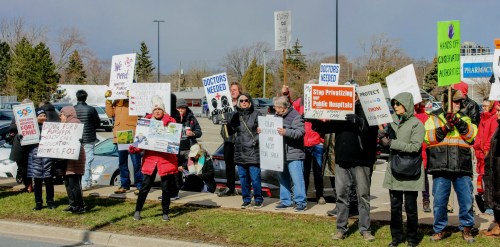
A ‘Fight Ford’ rally in Niagara this past March. photo by Emily Spanton
It’s important to note that the Bill provides the appointed chair the power to “veto decisions of the duly elected council that do not meet ‘provincial policy,’ with the support of one third of council votes.” As well these powers will allow the appointee to hire/fire the region’s CAO and other senior staff and determine a weighted voting system among Niagara’s mayors.
This Bill must be reviewed in the context of many moves that the government has made to concentrate power to itself. For instance, school boards have been taken over by the Minister of Education who will soon appoint directors to lead them, and the power of elected trustees have been greatly diminished. Conservation Authorities have had much of their authority removed and now will be consolidated and put under the control of a Provincial Agency.
As well development decisions that were made locally, while adhering to Provincial Policy, are now easily overridden by the province, by using an unprecedented number of Ministerial Zoning Orders.
Back in 2025, the government gave itself more power in the judge selection process, having a say in who’s appointed to the judicial selection committee, setting criteria for judicial appointments and allowing the Minister to appoint judges instead of the Law Society.
And then most recently, the government has given itself more unchecked power by passing changes to the Freedom of Information Act that will allow the government to exempt the premier, cabinet ministers and their offices from FOI requests and to add insult to injury, the changes are retroactive. This also invalidates a judge’s order for the Premier to disclose his phone records.

Niagara resident holds up this sign at a large rally in St. Catharines late this March. Photo by Emily Spanton
The changes noted above also politicize roles that traditionally have been neutral: roles such as judges, senior municipal staff and directors of education who have been hired/selected for their experience, professionalism and competence, not on their connection to those in power.
Democracy is messy. Elections are messy. Citizens with various opinions and perspectives are messy. Conservation Authorities, School Boards and local Councils are messy. So, sure it’s more efficient to concentrate power in hand-picked appointees and then imbue them with the power to overrule elected officials.
Following that rationale, to make government even more efficient and to address “the potential for misalignment between federal and provincial priorities” perhaps we should collapse all government to one federal government, run by one federal party and while we are at it, if we want real efficiency, we can do away with elections altogether and have the great leader choose their successor. I hear that form of government works very efficiently in North Korea.
The Bill Enshrines Inequality Between Citizens
What I mean by this is that depending on where they live, Bill 100 gives some citizens a greater right to elect their leaders than others. Why should a citizen in Hamilton, a city that has roughly the same population as Niagara region, be able to vote for their highest ranking local politician while I in Niagara, may have my mine appointed by the Minister?
It is simply not right that the Provincial government is creating two classes of citizens, some with more democratic rights than others.
These Changes Are Unjustified
The government has made various claims about why these governance changes are needed including “to expedite housing and infrastructure development” and to take “decisive action in the face of economic threats”.
It’s true the housing starts have been falling over the past several years, however, that is largely due to external economic factors like the rising costs of materials which make new homes unaffordable for much of the potential market. It’s also caused by a mismatch in what developer’s want to build — single family homes on greenfield sites — with what the market needs — rental units, truly affordable starter homes and non-market housing which higher levels of government must resume the responsibility for funding.
Finally, it’s hard to understand how appointing a regional chair could expedite housing starts when planning powers have already been stripped from the region by the Province.
If the province is concerned about infrastructure funding, it should stop cutting development charges which were used to pay for a large portion of infrastructure to support growth.
As for the excuse of “economic threats”, those are best dealt with by the federal government and to a lesser extent by the Provincial government. The municipalities have only a marginal role to play.
It Flouts Democratic Tradition
These authoritarian changes not only erode the foundations of local democracy, they flout hundreds of years of democratic traditions.
In Niagara region, the first municipal Council meeting was held on April 5, 1790 at the home of John Green, in the area of Grimsby now known as “the Forty”. While there have always been some kind of upper level governments, there has always also been, beginning with the area’s Indigenous peoples and later with early settlers, local governance in our province.
While I know that that Section 3 of the Canadian Charter of Rights and Freedoms only provides the right for Canadians to vote in elections for the House of Commons and the Legislative Assembly, it does enshrine the democratic traditions of our country and it does reflect the belief, and traditional practice of our citizens, that they have a right to vote for their political leaders at all levels of government. That should not be swept away by an ill-thought out Bill.
Citizens Views Are Disregarded
Citizens in Niagara did not vote in the last Provincial election to have a strong chair selected for us by the province. Local people must have a say in important decisions that impact them. That means real, meaningful consultation needs to take place. And then the people of the community, through an electoral process, should decide what, if any, changes to local governance should occur.
With Bill 100, the Provincial government is continuing its tradition of making sweeping policy changes without sufficient and meaningful consultation with the citizens those changes will impact. This is causing citizens to view this government as increasingly illegitimate and out of step with the people.

A poster for the ‘Fight Ford’ rally that took place this past April 25th in St. Catharines
That’s why there were 200 hundred voters standing along one of Niagara’s busiest streets in the cold and rain and wind last Saturday, protesting this government. That’s why citizens in 54 other Ontario communities were doing the same. And that’s why these protests are only going to grow in locations and scale.
In Conclusion:
People are looking to the south and seeing what happens when democracy is corroded, one pillar at a time, and they are not going to quietly go along with the same thing happening in this province.
This Bill should be withdrawn. Regional and local autonomy should be maintained. Regions should continue to decide how their leaders are selected and the government of this Province should stop its constant meddling in municipal business and get back to doing the work that the people want done: public healthcare they can count on; properly funded educational systems and providing the non-market housing that is so desperately needed.
For a related CBC News story on this issue, click on – https://www.cbc.ca/news/canada/hamilton/regional-chairs-jeff-burch-wayne-gates-democracy-9.7181818
NIAGARA AT LARGE Encourages You To Join The Conversation By Sharing Your Views On This Post In The Space Below and by sharing the Niagara At Large site at www.niagaraatlarge.com with all of your friends and associates.
Visit us every day on www.niagaraat.arge.com and on Doug Draper’s Facebook page at https://www.facebook.com/doug.draper.180 and encourage everyone else you know to do the same. Let’s build media outlets for local news and commentary!

