
By Doug Draper
An exhibit of ‘rainforest animals’ that had already been charming visitors to the Niagara Parks Commission’s Butterfly Conservatory has recently given them two more reasons to ooh and aah.

A newly born Marmoset rides on dad's back at Butterfly Conservatory. Photo courtesy of Niagara Parks Commission
To the delight of NPC staff and visitors the Conservatory alike, two Common Marmosets (small monkeys from the rainforests of Brazil) became the busy parents this past March 1 of a pair of twins.”
“It has been very exciting for us and our visitors are delighted to see them,” the Conservatory’s curator Cheryl Tyndall told Niagara At Large in a recent interview. “The Marmoset babies are seven days old (as of March 1 and) they are doing quite well and growing rapidly.”
The Marmosets are part of an ‘Animals of the Rainforest’ exhibit that has been organized by Ottawa-based Little Ray’s Reptile Zoo and that opened early this past February and continues through May 11 at a Conservatory in Niagara Falls, Ontario that is already renown for its diverse exhibit of some world’s most exotic butterflies.
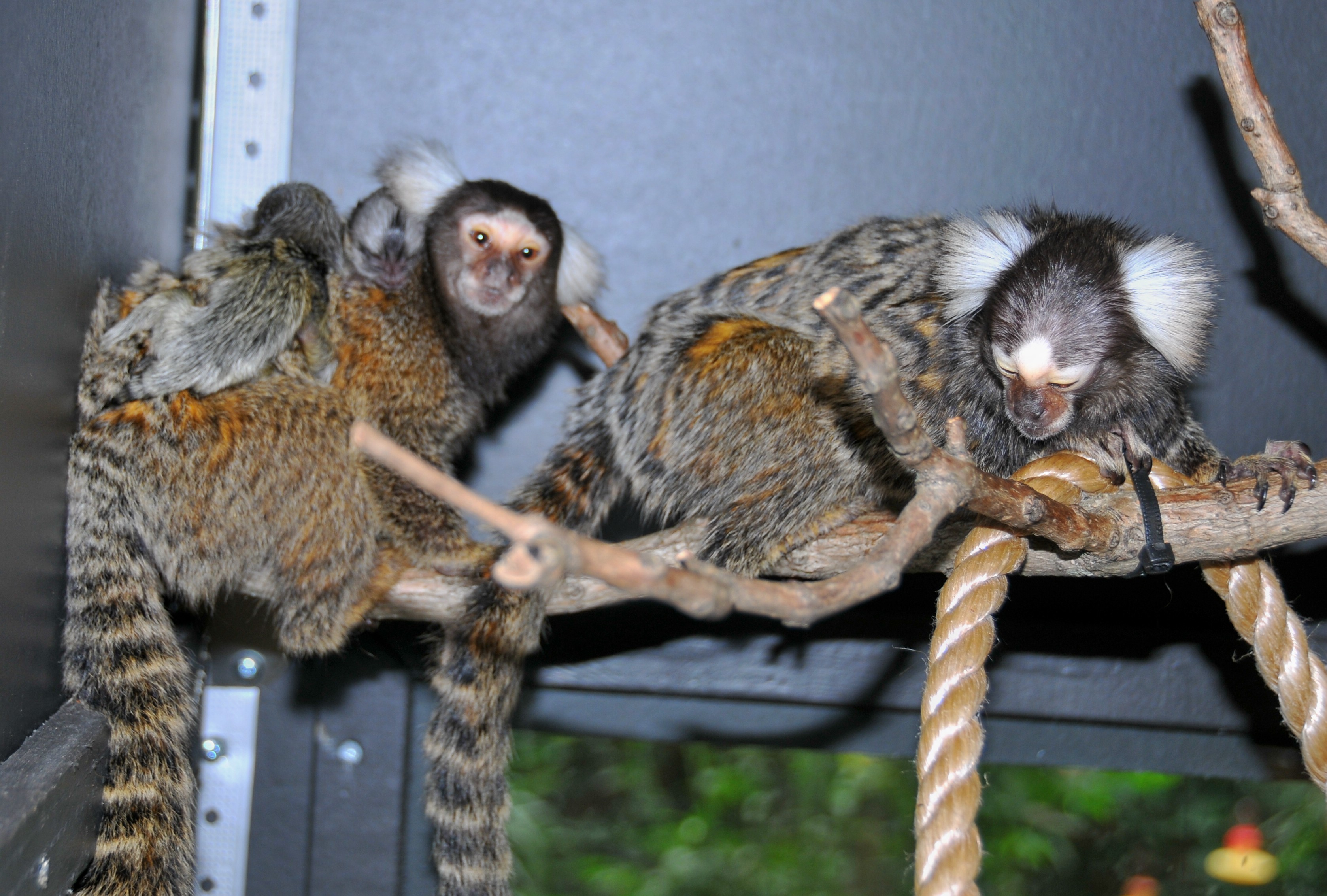
Marmoset parents with both babies on dad's back. Photo courtest of Niagara Parks Commission
The exhibit also features a full-grown Reticulated Python, a Crested Gecko, Emperor Scorpions, a Red Footed Tortoise, a Panther Chameleon and other critters common to the tropical rainforest environments of South America.
Kevin Dungey, a reptile handler with Little Ray’s, told Niagara At Large when the exhibit first opened that none of the creatures they have in their possession were captured in the wild. Many were someone’s idea of a house pet until Little Ray’s handlers rescued them when it turned out that the house pet idea wasn’t working out for the animal and owner alike. “We are always stressing to people that these animals don’t belong in homes,” said Dungey at the time. “We believe they belong in the wild,” but trying to reintroduce them to the wild after they’ve been living in captivity risks the animals’ lives.

The Marmoset couple prior to the recent birth of their offspring. Photo courtesy of Niagara Parks Commission.
The Marmosets that gave birth this March at the Conservatory were themselves bred in captivity.
“It is fascinating to watch the (Marmosets’) parenting skills,” said Tyndall in the days after the babies were born. “Mom does the nursing and Dad takes over after that, carrying both babies on his back. It is amazing to see the Dad moving about with the babies have no problem hanging on.
The Niagara Parks Commission is hoping as many people as possible take the opportunity to enjoy the exhibit for the weeks it remains at the Conservatory.
Entrance to the exhibit is included with admission to the Butterfly Conservatory: $12.95 for adults (ages 13+), $8.25 for children (6-12 years), with children five and under admitted FREE (prices in Canadian plus tax). Parking is available on-site. The Butterfly Conservatory is currently open daily from 10 a.m. to 5 p.m. (last visitors admitted at 4:30 p.m.) with extended hours on holidays. Call (905) 356-8119 or visit www.niagaraparks.com for more information.
(Niagara At Large invites our readers to share their views on this post in the comment boxes below. NAL only posts comments with real names attached to them. Comments by anonymous parties or parties who use pseudonyms are not posted.)
 Niagara At Large
Marmosets do not belong in the country …please save your money and help ensure lands are saved in the countries where marmosets naturally reside – south america. Animals should not be bred in captivity. Any suggestions that this is educational is false – these animals have lost all that is natural to them!!
LikeLike
While I somewhat agree with the above sentiments, I also know many of these creatures wind up on barbeques so any effort to safe guard the species has to be helpful.
LikeLike