
By Doug Draper
Of all the threats to a Great Lakes ecosystem so vital to our lives and the economic welfare of our communities across the greater Niagara region, few continue to wreak more havoc than the invasion of alien species in and around our lake waters.
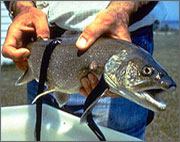
Sea lamprey - an invasive species in our Great Lakes - suck the living fluids from a lake trout. Photo courtesy of U.S. Fish and Wildlife Service.
From the sea lamprey that threatened to wipe out the recreational and commercial fishery in the last half of the 20th century, to the Asian carp now on the verge of finishing off a fishery worth hundreds of thousands of jobs and many billions of dollars to the economies of the United States and Canada, the number of invasive species now populating or on the verge of populating the Great Lakes basin now total more than 180.
It has already been well documented how many hundreds of millions of dollars annually just one alien creature like the zebra mussel can do. This Asian creature, that caught a free ride to the Great Lakes in the ballast waters of ocean vessels in the 1980s, has clogged industrial and municipal water lines, and vacuumed up no end of plankton and other aquatic life that make up a critical part of the foodchain for native fish and birds in the lakes basin.
Yet governments on both sides of the Canada/U.S. border seem reluctant to take all the actions necessary to combat the invaders already in our lakes and prevent others like the Asian carp – possibly the greatest threat to the survival of our native fishery to date – from getting in. Samples of DNA from these voracious fish have already been detected in the southern most waters of Lake Michigan, indicating that they may have already broken through from the upper Mississippi River watershed.
Niagara At Large is sharing a media released, dated March 24, by the Canada/U.S. not-for-profit coalition, Great Lakes United, on the subject of invasive species and the pressing need to bring their numbers under control before it is too late. You can read the release by clicking ‘keep reading’ at the end of this sentence. Continue reading

 Niagara At Large