
By Doug Draper
A year ago last June, Hillary Clinton walked halfway across the Rainbow Bridge from the American side of the Niagara River to announce that, at long last, the United States was ready to work with Canada to renegotiate the Great Lakes Water Quality Agreement.
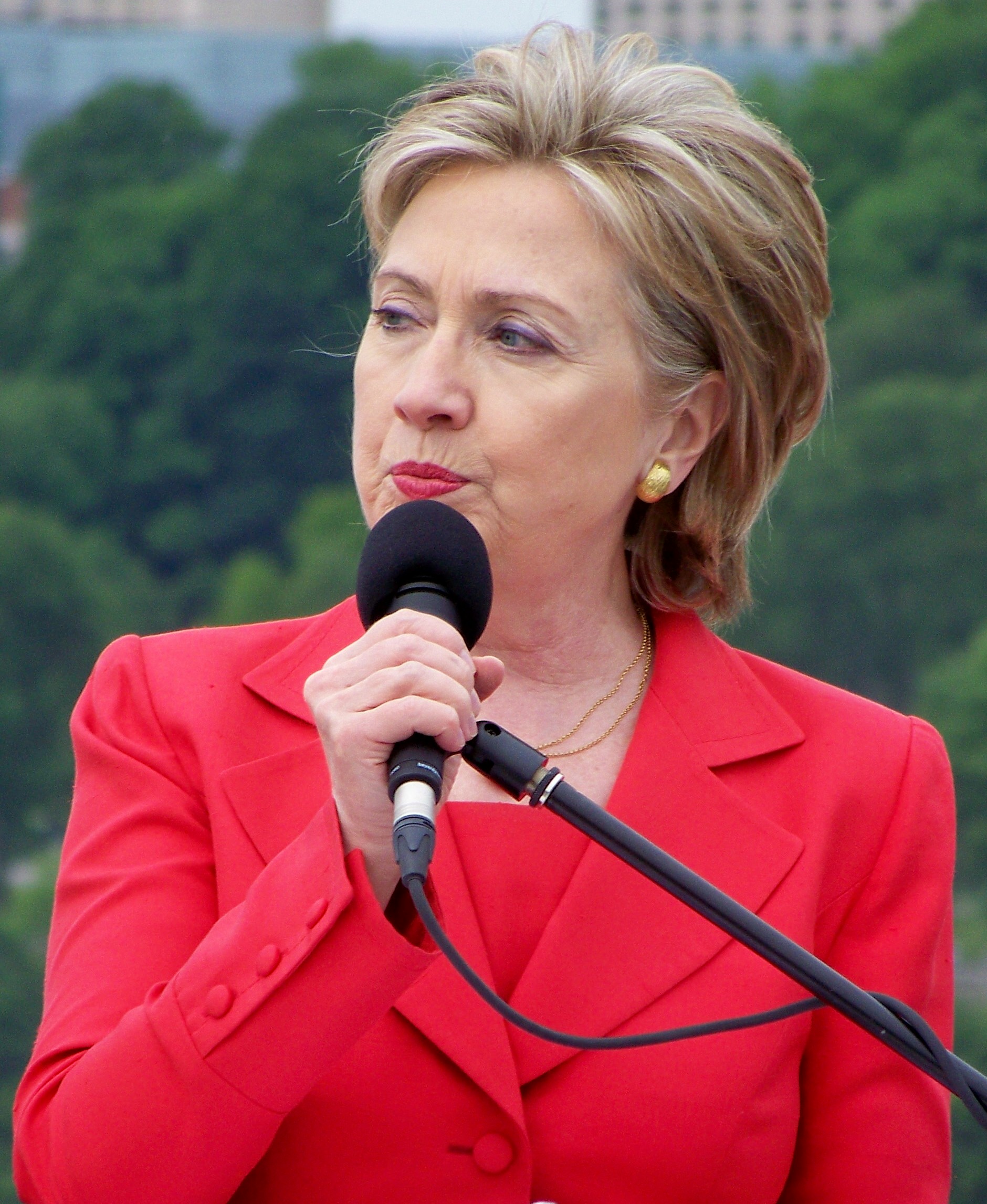
Hillary Clinton, America's Secretary of State, on the Rainbow Bridge between Niagara Falls U.S. and Canada last June, announcing plans to renegotiate the Great Lakes Water Quality Agreement. Photo by Doug Draper.
On that 13th day of June – celebrating the 100th anniversary of the Canada-U.S. Boundary Waters Treaty as one of the precedent-setting international agreements for protecting the health of shared natural resources in the world – Canadian and U.S. environmentalists around the Great Lakes applauded. They had been urging their respective governments to update the Great Lakes Water Quality Agreement (first signed in 1972 and last amended in 1987) for years to better address the kinds of pollutants and their sources, the alien species like zebra mussels and Asian carp, and other threats that could ravage these great reservoirs of fresh water today and for generations to come .
But eight months after America’s secretary of state, Hillary Clinton, made the announcement to renegotiate this groundbreaking treaty to protect and preserve the world’s largest resource of fresh water, it looks like the tens-of-millions of U.S. and Canadian residents living around the lakes might be shut out from the talks. Continue reading
 Niagara At Large