
”At a time when climate change, habitat fragmentation, biodiversity loss, and expanding development pressures threaten the ecological health of southern Ontario, the Bruce Trail Conservancy offers an inspiring model of institutional leadership. Its achievements show what can be accomplished when a clearly defined mission is supported by capable leadership, sound management, committed volunteers, generous donors, and a public that recognizes the lasting value of conservation.”
News from the Niagara Academy for Indigenous Relatons and Bruce Trail Conservancy
Posted November 20th, 2026 on Niagara At Large
 TOWN OF LINCOLN in NIAGARA, ON — The Niagara Academy for Indigenous Relations extends its warmest congratulations to its Memorandum of Understanding ally, the Bruce Trail Conservancy, on an extraordinary and record-setting 2025–2026 year that established new benchmarks in fundraising, land acquisition, ecological restoration, and environmental protection.
The Conservancy’s remarkable achievements include the acquisition of 21 newly protected natural areas along the Niagara Escarpment and the mobilization of more than $30 million in financial support through over 12,000 individual donations.
These accomplishments demonstrate not only the extraordinary generosity of Canadians who value the natural environment, but also the effectiveness of an organization that transforms public goodwill into measurable, enduring conservation outcomes.
“The Bruce Trail Conservancy celebrates our many supporters and donor community for helping us to protect nature and critical habitat for the many species that thrive along the Niagara Escarpment,” said CEO Michael McDonald.
“Connecting people to nature is the only way to help save it. This past year our donors further proved that they want to see the conservation corridor containing our iconic Bruce Trail strengthened and resilient for future generations.”
Among the year’s most significant achievements is the acquisition of the Talisman Forest Nature Reserve, an exceptional conservation initiative that is bringing new life to the beloved Beaver Valley landscape.
 The project represents an ambitious effort to reclaim a former ski resort property, remove deteriorating infrastructure, restore native forest cover, rehabilitate damaged habitats, and return a significant portion of the Niagara Escarpment to its natural ecological functions. It is a compelling example of how lands altered by human activity can be healed and returned to nature for the benefit of generations yet to come.
What makes the Bruce Trail Conservancy so closely aligned with the Niagara Academy for Indigenous Relations is its direct, practical, and enduring approach to conservation. Rather than limiting its efforts to advocacy or expressions of environmental concern, the Conservancy takes decisive action: it raises funds, acquires ecologically significant lands, restores natural habitats, safeguards biodiversity, and assumes the long-term responsibility of protecting these places forever.
“The Bruce Trail Conservancy’s pragmatic approach to conservation, which is understood and enthusiastically delivered by highly skilled and professional staff, is what enables it to consistently achieve its significant annual outcomes,” said Niagara Academy President Tim Johnson.
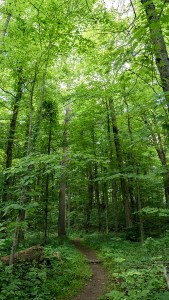
The natural heritage we can all enjoy hiking along the Bruce Trail in Niagara, Ontario
“With 72.1 percent of Bruce Trail lands now secured, the organization is steadily advancing toward its ultimate goal of a permanently protected natural corridor from Niagara to Tobermory.”
This philosophy strongly resonates with the Indigenous principle of Seventh Generation responsibility — the understanding that decisions made today must consider their consequences for those who will inherit the Earth many generations into the future.
The protection of forests, wetlands, watersheds, wildlife corridors, and other natural systems is not simply an environmental preference; it is an intergenerational obligation grounded in respect for the living world and the relationships that sustain it.
The Conservancy’s work also demonstrates that environmental stewardship and public access to nature can be mutually reinforcing. By securing the Bruce Trail’s conservation corridor, protecting sensitive landscapes from development, and undertaking ecological restoration, the organization is preserving both the integrity of natural ecosystems and opportunities for people to experience, appreciate, and develop meaningful relationships with the land.
At a time when climate change, habitat fragmentation, biodiversity loss, and expanding development pressures threaten the ecological health of southern Ontario, the Bruce Trail Conservancy offers an inspiring model of institutional leadership. Its achievements show what can be accomplished when a clearly defined mission is supported by capable leadership, sound management, committed volunteers, generous donors, and a public that recognizes the lasting value of conservation.
For the Niagara Academy for Indigenous Relations, its partnership with the Bruce Trail Conservancy reflects a shared commitment to protecting the natural heritage of the Niagara Escarpment while advancing greater understanding of Indigenous knowledge, environmental responsibility, and the profound connections between peoples and the land.
NIAGARA AT LARGE Encourages You To Join The Conversation By Sharing Your Views On This Post In The Space Following The Bernie Sanders Quote Below and by sharing the Niagara At Large site at www.niagaraatlarge.com with all of your friends and associates.
“A Politician Thinks Of The Next Election. A Leader Thinks Of The Next Generation.” – Bernie Sanders

