
‘None of this is good for Canada.’
News from Brock University in St. Catharines, Ontario
Posted January 13th, 2026 on Niagara At Large
Trump threatens takeover of Canada
A week after the U.S. invaded Venezuela and ousted its president, questions remain about what comes next for the South American nation — and the rest of the world — as a result.
Brock University Associate Professor of Political Science Pascal Lupien says this recent military action against Venezuela fits into a long-standing pattern of the U.S. government failing to respect “rules-based international order” in Latin America and the Middle East.
Associate Professor of Political Science Stefan Dolgert adds that “the U.S. talked about defending democracy and preserving national security, but, as has been the theme historically, it was simply about dominance.”
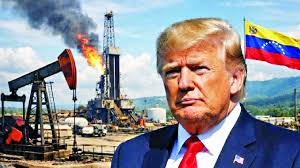 Lupien says any pretense as to President Donald Trump’s intention has now been stripped away, with the U.S. administration “saying very openly that they intend to take Venezuela’s oil and profit from their resources,” making it all the more important not to lose sight of the historical context of Nicolás Maduro’s regime, which originated with the free election of Hugo Chávez in the late 1990s and throughout the 2000s.
Chávez notably reasserted state control over Venezuela’s oil industry to limit the ability of international corporations to extract wealth from the country and ensure that oil industry profits remained in Venezuela to fund social programs.
Lupien says these programs were the envy of much of Latin America in the early 2000s and a major source of tension with the U.S. government, which had reason to be concerned about a “demonstration effect” that could inspire other Latin American nations to make similar efforts to keep profits at home.
But in the face of ongoing internal and external pressure, and especially after Maduro succeeded Chávez in 2013, the regime grew more authoritarian and less popular. The most recent election in 2024 is widely believed to have been rigged.
Lupien calls it an “ugly irony” that the U.S., having removed Maduro, is otherwise leaving the ruling government in place with no commitment to a new election.
 “For the 15 years during which this movement was democratically elected, the U.S. tried to sabotage it, and now that the government is not democratically elected, they are leaving it in place because it’s easier to impose their will on the country through an authoritarian regime,” he says.
Further, Dolgert says “it must be assumed Trump and his American regime will continue operating as authoritarians themselves, both at home and abroad.”
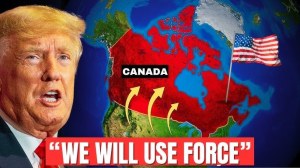
This shift, he says, also aligns with Trump’s broader imperialist ambitions, pointing to annexation and interventionist threats the leader has made about Panama, Cuba, Colombia, Mexico, Iran, Greenland and Canada.
“This fits with a return to policies of the 19th century, with the U.S. leveraging Monroe Doctrine principles to legitimatize its moves to exercise full control over any nation it wants at any time,’” Dolgert says. “They’re proclaiming that ‘might makes right,’ saying outright that since America is the most powerful nation, it has the right to act how, and take what, it wants, regardless of international laws.”
Dolgert says Trump’s revolutionized foreign policy strategy must also be considered within the scope of Russia’s broader geopolitical realignment, with both countries simultaneously endeavouring to redefine where their spheres of influence begin and end.
“The irony is that the U.S. is doing this with the fantasy that it’s making them stronger, but it’s doing exactly the opposite,” Dolgert says.
None of this, he adds, is good for Canada.
“These are all fundamental, existential dangers for Canada’s sovereignty and we’ve woken up too late to it,” says Dolgert.
 For now, Lupien sees major challenges on the horizon for the U.S. as they try to hold onto power in Venezuela — where current leaders are “all very committed revolutionaries with deeply ingrained anti-U.S. sentiment” — or in any other country the U.S. may be interested in seizing for the extraction of resources or control of territory.
“Toppling a president is one thing, but occupying and subjugating a country on a longer-term basis is something else entirely,” he says. “In Venezuela, armed citizens and paramilitaries who are very committed to the revolution could well engage in long-term guerrilla warfare with any occupying forces.”
NIAGARA AT LARGE Encourages You To Join The Conversation By Sharing Your Views On This Post In The Space Below and by sharing the Niagara At Large site at www.niagaraatlarge.com with all of your friends and associates.
Visit us every day on www.niagaraat.arge.com and on Doug Draper’s Facebook page at https://www.facebook.com/doug.draper.180 and encourage everyone else you know to do the same. Let’s build local news and commentary media!
 Niagara At Large
1984 / THE MOVIE …………………. Coming to a theater near you. Currently playing in Minneapolis, Los Angeles, Chicago and Washington DC. For those who haven’t read the book on George Orwell’s vision of the future of the world, it might be a good time to. https://www.bing.com/search?q=1984+trailor&form=MSNSB1&refig=69667ff5e7464920907ea3322c71a95e&mkt=en-ca
LikeLike