
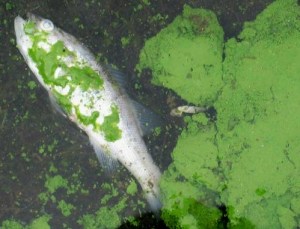
 U.S. National Oceanic and Atmospheric Administration (NOAA)Warns of Significant Harmful Algal Bloom, Which Are Toxic to People & Animals, in Lake Erie
“As climate change increases the threat of algal blooms, our efforts (to address (the harmful effects of this problem in the Lake Erie basin) must escalate proportionately.” – Brian Higgins, U.S. Congressman
News from the Buffalo, New York Office of U.S. Congressman Brian Higgins
Posted July 14th, 2019 on Niagara At Large
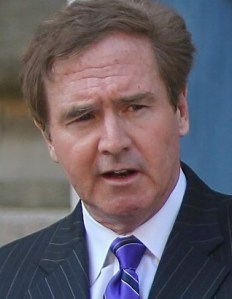
Buffalo, New York area Congressman Brian Higgins
In a letter to the U.S. Environmental Protection Agency, Congressman Brian Higgins (NY-26) is calling for swift action in response to new warning about toxic algae threatening the health of the Great Lakes and the communities around them.
Higgins letter calls on the EPA to accelerate efforts to combat Harmful Algal Blooms, writing, “Such a bloom may impact the health of the entire lake, including the eastern basin near my district in Buffalo, New York. As climate change increases the threat of algal blooms, our efforts must escalate proportionately.”
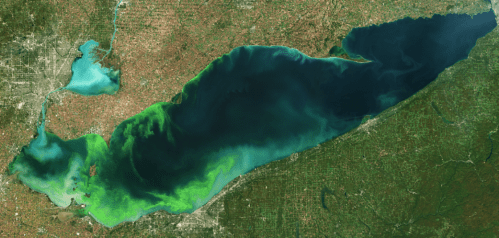
The green algae mass, seen from space as it grows in the western end of Lake Erie, and working its way to the lake’s eastern end off the shores of Buffalo and Niagara.
This week the National Oceanic and Atmospheric Administration (NOAA) issued a warning predicting a harmful algal bloom in Lake Erie.
According to NOAA – “Harmful algal blooms, or HABs, occur when colonies of algae-simple photosynthetic organisms that live in the sea and freshwater-grow out of control while producing toxic or harmful effects on people, fish, shellfish, marine mammals, and birds. The human illnesses caused by HABs, though rare, can be debilitating or even fatal.”
In his letter, Higgins specifically calls for an increased emphasis on methods to reduce or prevent harmful algal blooms in the third phase of the Great Lakes Restoration Initiative Action Plan<https://www.glri.us/action-plan-3> for 2020 – 2024, which is set to be finalized by October 1 of this year.
Congressman Higgins, whose Western New York district borders Lake Erie, is a member of the Congressional Great Lakes Task Force and an avid supporter of the Great Lakes Restoration Initiative.
NOAA Warns of Significant Harmful Algal Bloom, Which Are Toxic to People & Animals, in Lake Erie. See NOAA warming by clicking on – <https://www.noaa.gov/media-release/noaa-partners-predict-large-summer-harmful-algal-bloom-for-western-lake-erie> .
The following is a Fact Page on the Algal Bloom threat in Lake Erie produced by the Canadian Freshwater Alliance –
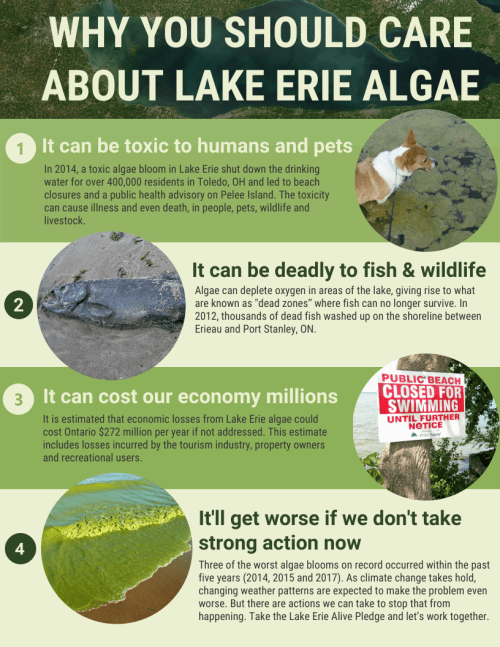
To learn more about the Canadian Freshwater Alliance and its work, click on – https://www.freshwateralliance.ca/ .
NIAGARA AT LARGE encourages you to join the conversation by sharing your views on this post in the space following the bernie sanders quote below.
A reminder that we only post comments by individuals who also share their first and last names.
For more news and commentary from Niagara At Large – an independent, alternative voice for our greater bi-national NiagaraRegion – become a regular visitor and subscriber to NAL at www.niagaraatlarge.com .
 Niagara At Large
In a nutshell, PHOSPHORUS used to fertilize farms is the culprit. Significant sources are the Maumee River, Portage River, Grand River and the Detroit River, to name a few.
Why is phosphorus an issue?
Because there is an absolute absence of buffers, a meaningful corridor of vegetation in between farmlands and adjacent rivers, creeks and streams that can consume and/or stop the run-off of phosphorus that pours unfettered into Lake Erie after a hard rain.
Further, farmers don’t test their soil to see if additional phosphorus is required. Instead, they follow a schedule that can easily cause over-fertilization, ie. heavier levels of phosphorus than are needed. Another issue that needs to be addressed is HOW phosphorus is applied.
It is still applied to the surface of the soil where rain naturally facilitates its flow to the shores of Lake Erie. Beyond testing soil for accurate phosphorus needs, farmers need a method whereby phosphorus can be “plugged” into the soil; buried beneath the surface where the roots of the plants can most benefit in the first place thus significantly reducing runoff after a rain.
If nothing is done it has been stated that it could cost $272,000,000 per year, every year to address the problem (and the estimate will be on an ever-escalating scale as blooms grow, health and environmental problems escalate, the cost of water filtration for drinking water soars and inflation takes its share).
It makes economic and environmental sense to address the issue at its source instead of anticipating escalating costs associated with cleanup, filtration, species extinction, illnesses and a lake too sick to support tourism and recreational sports such as fishing, swimming, scuba diving and sailing.
LikeLike