
Submitted by the Office of Niagara, Ontario’s Welland Riding MP Malcolm Allen
OTTAWA, February 18th – A new study by Statistics Canada revealed that the Conservatives and Liberals are letting family farms die a slow death.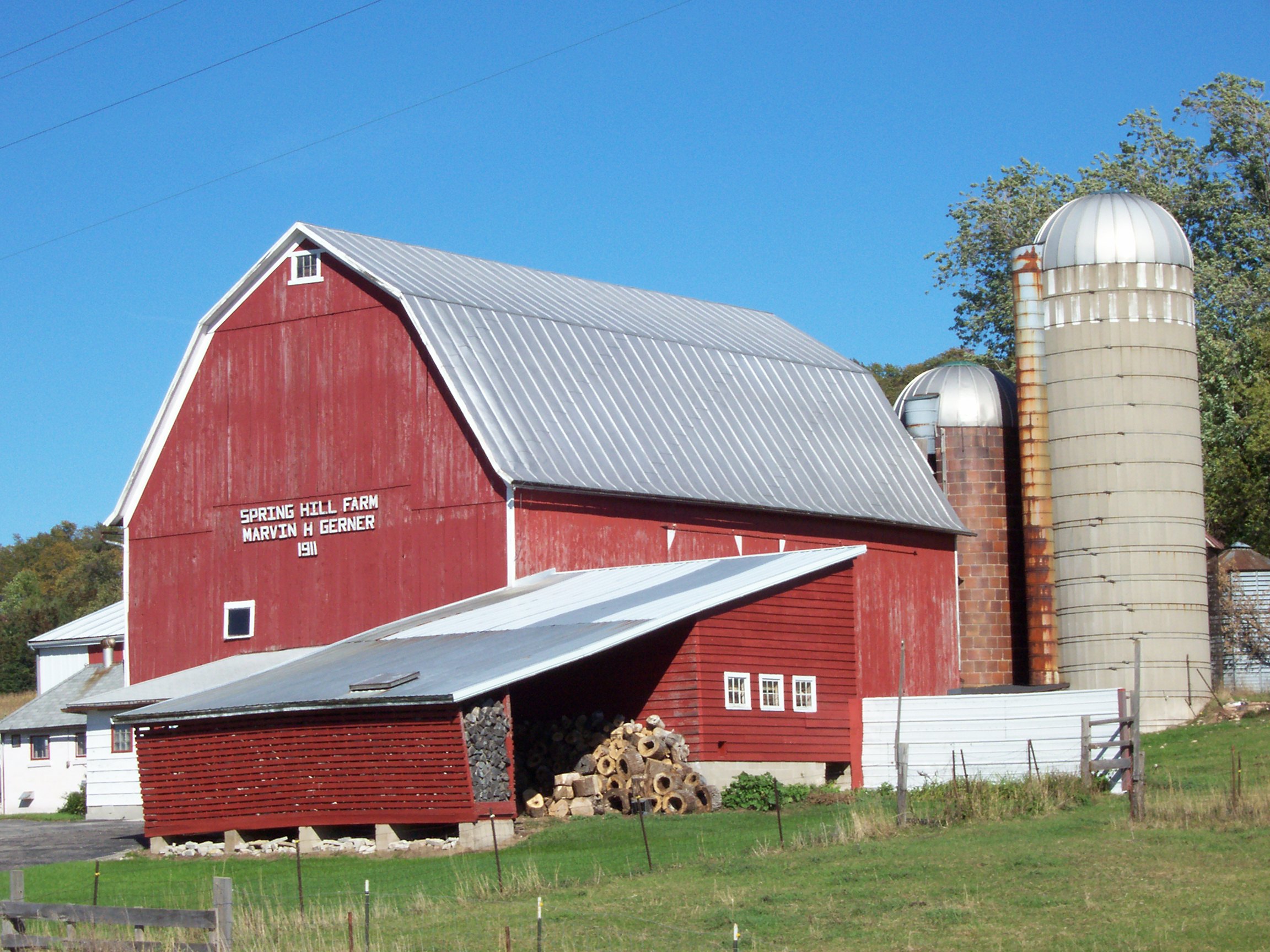
“Canada’s agricultural sector has undergone profound change in the last 20 years. The number of family farms has fallen sharply because they do not have enough money to survive. It is easy to understand why. The Conservatives’ and Liberals’ lack of commitment toward our rural farming communities will lead to the disappearance of our family farms,” said NDP Agriculture critic Malcom Allen and MPP for Niagara, Ontario’s Welland Riding.
Family farms have decreased by more than 20% according to the latest statistics. In addition, less than a tenth of farms are operated by an owner under the age of 40. The next generation of farmers is threatened as well as the security of the country’s food supply. “We need to make sure our young farmers can succeed. Our rural economies are at stake. The Conservative government must protect our family farms before they disappear,” added deputy critic Ruth Ellen Brosseau, the federal NDP member for the riding of Berthier – Maskinongé, Quebec.
(An Afterword from Niagara At Large – This call to save what is left of our family farms is in harmony with some f Niagara At Large’s mission to support our local, independent businesses and those who work with and for them, over corporate chain giants that are all about maximizing profits for their shareholders at whatever cost to local communities.
So please dear readers, think about how vulnerable we may be to global corporate forces if we lose something as vital to our survival as our local food supply. Support our local farmers by doing as much grocery shopping as you can at local farm and food markets, and support those few grocery stores in Niagara that still go out of their way to support farmers in our region. There is the still independently owned Pupo’s Supermarket in Welland, Ontario, and there may be a few others you may wish to share in the comment area
As for the larger grocery chains on the Ontario side of the Niagara/Western New York border, some have made a token gesture by identifying the odd shelf of tomatoes, peppers or whatever as ‘Ontario grown’. But none have gone anywhere near as far as the great Western New York grocery chain Wegmans which has had a long tradition of featuring shelves full of food from local farms, complete with photos of the farm family and a history of their farm. Around harvest time, Wegmans also has some of these farmers at their stores, serving customers samples of their produce. We should be demanding the same kind of support from grocery chains on the Ontario side of the border.
Of course, another good source of locally grown food are food co-operatives if and where you can find them.
In Niagara, Ontario there is the fledgling Garden City Food Co-op in St. Catharines, a group started in 2012 and dedicated to establishing a food co-op in the downtown area of that city. It is determined to open a store sometime soon and you can find out more about it by clicking on http://www.gardencityfoodcoop.ca/ .
In Buffalo, New York, There is the Lexington Co-perative Market, now long up and running on that city’s very nice Elmwood Avenue and a true success story and model for food coops across the continent. You can find out more about it by clicking on http://lexington.coop/ .
Once again, please join the discussion on this issue by sharing your views below on how we, as individuals, communities and governments, can do more to support those among us who grow food for our tables.
(Niagara At Large invites you to share your views on this post. A reminder that we only post comments by individuals who share their first and last name with them.)
 Niagara At Large
Just a comment. Recently, we were shopping at Metro’s in the north end of St. Catharines, and the bin of peppers were labelled from Ontario and Mexico. I could not tell which was which. I asked the checkout clerk, who had no idea either. So much for disambiguation.
LikeLike
Factory farms, Frankenfoods & GM crops. Family farms can’t compete. Factory farm conditions are very cruel to animals, shipping pigs in freezing vehicles over long distances, chickens in battery cages & so on. Factory farms fill their animals full of chemicals that effect our metabolism. I’ll buy locally any time I can regardless of the cost. Supporting family farms is also environmentally sound because produce isn’t shipped long distances.
I also avoid ANYTHING produced in China where chickens are raised on one level of grate & the fish underneath eat their waste. Crops are grown in night soil carrying god knows what diseases. Dead chickens are collected in streets & thrown into the pile. Dogs are skinned alive & hidden as other meats. Plastics are used for fillers. I won’t even buy dog treats from there. Products from there often have large “Product of Canada or USA” while they are only packed there but produced in China or some other 3rd world dump eg Europe’s Best ….European right? nah! Chinese.
As with all big industries, places like Walmart, big agriculture is more economical but they put mom & pop shops out of business & provide inferior products. Pupo’s is one survivor & a good one in the produce field. Everything now is about profit & quantity, not quality. Our farmers work hard & I’ll buy local over Walmart’s food section any day. In the summer I get everything at road side stands.
LikeLike
I make an effort to shop locally by purchasing in season and in order of preference starting with Niagara grown, then Ontario and finally Canadian.
One of the frustrations that I encounter all too frequently, when grocery shopping is produce signage that says it is grown in Ontario/Canada, but, when I read the sticker on the item, it is actually imported from Mexico, etc. Often this occurs when that particular fruit or vegetable is even in season here.
I remember when Cadbury shut down the local juice plant in St. Catharines and refused to sell it as an operational business to avoid any competition for its product which would now be imported. The local juice grape growers were given a onetime compensation package and told to rip out their grape vines. (Something similar is in progress in the Leamington area now that Warren Buffet has decide to close the Canadian Heinz plant.) Yet many people told me they would like the plant to remain open under local ownership as they would definitely feel confident purchasing grown in Niagara grape juice.
The loss of the juice plant was followed shortly by the closing of the CanGro canning plant in St. Davids. I read that that was the closure of the last fruit cannery in Canada. Now we can buy canned peaches and pears from China. Ugh. And again, our local farmers had little choice but to rip out healthy orchards.
Again, a while back, after the then federal government signed NAFTA, our regulations were changed to allow higher pesticide loads on produce in compliance with those in the US. This made increased imports from the US possible as the pesticides no longer exceeded allowable Canadian limits.
Our current federal government likes to focus on security and sovereignty issues but doesn’t seem to get it – food sovereignty is a security issue.
A country that is dependent on imports to feed itself is not secure.
We need a real ‘grown in Canada’ policy that supports our family farmers.
LikeLike
Much the produce that bears the label “Product of Mexico’ is in Reality produced by American “Super Farms” located in Mexico and the same goes for much of the food stuff produced in Central and South America. American producers pickeed up millions of acres for peanuts in the early 1900s and continue to look for more as control of these poorer nations stumble and succumb to outside intervention and control…
LikeLike
I agree with Susan entirely. To that point, with the increase of Organic food demand, I am hopeful the mom and pop farm will persevere.
However, that will be difficult if governments allow key/prime agricultural land to be cleared to make way for townhouse/commuter communities like we have in Grimsby. Any one that lives there knows what I am talking about!
A nation is not a nation without a stable food supply that is safe and available.
It should be viewed as being as important as any other resource and foreign interests should not be allowed to control it.
Just sayin…….
LikeLike