
By Chris Wojnarowski
Much has been said of late about Niagara Region, its structure, optimizing services, hospitals, water rates, and that scary monster, the “One Niagara” Godzilla Monster, destined to eat small communities.
Buzz phrases like “efficiency”, “parochialism” and “stubborn rural politicians” are being thrown around as a way to polarize the debate and guilt people into agreeing with the “smarter” bureaucrat.
When did parochialism stop meaning accountability to local needs? Are we being asked to believe that merging Grimsby with Fort Erie is no more difficult than slapping together some adjacent ‘burbs and yelling “bingo”?
SHAME
Ever since the hatching of the regional system in the 1970s, voters from Southern Niagara have been looking at their options when they realized they were removed from decision making process. As they see a “deer caught in the head-lights” lack of vision from their elected officials, they feel in their gut that the rights of their families acquired over generations are being eroded away. In a self-fulfilling spiral of rural abandonment and systemic impoverishment created by the power elites, they have been gradually forced to vote with their feet.
It should never have come to this. Political expediency and willful disrespect for rural and working-class communities has seldom been more blatant than in Niagara.
As Fig 1 shows, prior to the forming of Niagara Region out of the Lincoln and Welland Counties, there were two distinct and sustainable communities that co-existed since the 1800s. In the South, there was one logical hub, captured in the motto “Where Rails and Water Meet”. It was a bustling city with incredible geographic gifts and a great skilled workforce. Located smack-dab in the middle of Welland County, it was an engine of growth. For 100 years it was a major commercial depot on the T H & B Railway, running from Hamilton to Fort Erie & Buffalo.
So what went wrong? The answer to “what” is as long as a phone book. Asking “why” Niagara Region doesn’t work is the right question. The simple answer to that “why”, my friends, is the 800-pound gorilla, politics … raw, brass-knuckled politics. Politics stripped Southern Niagara of its birthright, disenfranchised it provincially, and severed it from the means of self-determined sustainability.
COLLATERAL DAMAGE
Lincoln County has its natural focus in St. Catharines. It has been the beneficiary of billions in subsidies – massive expansion of the QEW, the 406 to Brock, Provincial Ministry of Transportation Headquarters, regional Land Registry Office, regional Passport Office, the trophy Robert S.K. Welch Courthouse, Niagara Regional Police headquarters (since 1971 and for now), a shiny new $1.5 Billion hospital, via-rail, go-bus service and so on. The “Regional” Water treatment plant was put in Grimsby. Even the “Regional” Chamber of Commerce is consolidating its empire in St. Catharines.
There is no evidence any of these directly benefiting the former Welland County.
Welland County has been on the short end of all this, as Fig 2 shows, with key  industrial centers like Welland and Port Colborne mostly bypassed by the QEW. Even the 406 was for years just a North-end short-cut to the Pen Center. Not coincidentally, Fig 3 shows that the QEW bypasses all of the Welland Riding.
- St. Catharines built its fancy new hospital by looting the trust funds of the hospitals in Welland County.
- Go Bus Service is useless for Welland County. Try catching a Go-bus from Wainfleet or Stevensville on a bad weather day in winter. The City of Welland, the natural hub of Welland County still has rail track, but no passenger service. The last passenger to Welland stepped off the train 50 years ago.
- And as for government subsidies? Well, we get some landscaping at Niagara College and an unnecessary soccer field near a dump that will continue to lose money for generations.
POWER POLITICS
What about power politics and jobs? When Lincoln County’s GM runs into trouble, there’s always lots of bail out money. But when Welland County’s Atlas, Page, Deere, Cyanamid, Exolon and others … not so much. And just as Welland was close to getting a container port that could have protected industrial jobs, political mismanagement showed up.
St. Catharines and Toronto elites sanctioned paving over thousands of acres of Lincoln County, some of the best agricultural land in Ontario outside of Holland Marsh. But to keep us peasants in Welland County from getting uppity, these same elites wax oh-so politically correct. They have the gall to wag their finger disapprovingly when Welland wants to build a highway in an existing 100 year old rail corridor. That rail line, located on land best used for growing goldenrod and cow corn, never ran through agricultural or environmentally sensitive areas. Talk about double standards!
Power politics works that way. Electoral district boundaries kept being fiddled to where they are now – away from the QEW. The new hospital never had a chance to be located in Welland County. The political elites at Queens Park rewarded St Catharines, the center of the former Lincoln County for voting the right way. It’s facile to ask – why didn’t we vote for someone with their snout in the trough that could bail us out? Is that how we should view the democratic process? Vote the right way or starve?
When someone tells me that Welland was just a part of the “rust belt” and victim of globalization, I want to hurl abuse at them for mindlessly repeating the lame excuses of failed bureaucrats. Canada is not the Northern States.
We needlessly created our own little hell that devastated our heavy industry. In 1974, Welland County got the shaft when the politicians in Toronto figured that they could get re-elected by creating province-wide unified hydro rates – cheap rates for vote-rich residential Toronto, plant closures for Welland, Thorold, Niagara Falls and Port Colborne. Labor costs in the type of industries that closed in these communities were not generally the issue. It was Hydro costs, and the plant closures were political.
As to Lincoln County, sure they had some issues at GM, Port Weller Dry Dock, Foster Wheeler, and a host of support shops. But these were labor intensive. Their problems were truly caused by global issues. (Note: This trend is reversing as the combination of global wage & shipping costs are beginning to converge.)
A SOLUTION – THE HALDIMAND-NORFOLK MODEL
In the 1970s, there was this great push to rationalize services by creating Regions. Some have worked out quite well. Others like Haldimand-Norfolk realized that Haldimand and Norfolk Counties were like grapefruit juice and kerosene – not a good match. In 2001 that regional government was dissolved and two single-tier municipalities were formed. Maybe it’s time to build a case for a Haldimand-Norfolk option and adopt that two single tier municipal model.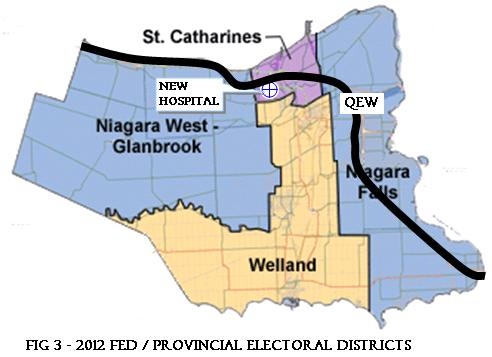
All politics is local. When it stops being local, politicians lose sight of their primary mandate – represent the interests of those who elected them. Welland County has endured the shabby spectacle of elected representatives turning their backs on the voters once in office. Instead of commanding respect, these self-serving careerists unctuously try to curry favor with the power elites in Toronto and St. Catharines. They check their public service at the door in exchange for cronyism, forgetting that their only legitimacy comes from the ballot-box. And the results are painfully obvious. If you’re not outraged, you’re just not paying attention.
The Region of Niagara, amalgamated or otherwise, is so deeply invested in a St Catharines-centric political model, it has absolutely no reason to do the right thing for Welland County. Lacking that incentive, it will never seek the means. And people in Southern Niagara are sick of hearing “If you don’t like it, move”.
Fellow editorialist John Finley proclaimed recently that restructuring is coming whether we like it or not, and he was right. The end result however may not be what he expected. There is a human reality that goes beyond pocket book issues and bureaucratic efficiency. It’s called dignity.
The military has a saying – “We’re going out one way or another. It’s up to us whether it’s on our knees or on our feet.” The pointy question that needs to be asked is whether we voters of South Niagara are willing to stay on our knees, gratefully taking handouts from elites that think they are better at running our lives than we are, or stand up for ourselves, split the region in two, and take back our own community.
Chris Wojnarowski is a resident of South Niagara in the former Welland County and has been a contributor of columns to news venues in Niagara, Ontario for many years. Niagara At Large thanks him for his permission to post this column here.
(Niagara At Large invites you to share your views on this post. A reminder that we only post comments by individuals who share their first and last name with them.)
 Niagara At Large
Such a good understanding of the system. My thanks to the editorialist.
LikeLike
All I can say is WOW, Bang On and Thank you Chris on behalf of the beleaguered South.
LikeLike
I have been advocating the break up of Niagara Region for some 25 years, We in the South should fight for the separation in this awful shotgun marriage, we in the South Niagara are the abused spouse,I think that our representatives just pay lip service and then hightail back to Fort Erie. The lack of respect at Niagara Region to any of our complaints is typical,Niagara Region as it now stands is larger than many European countries. Stevensville residents have no way to get to Pen Centre or the new hospital, even though their bus runs right by it, 3000 people many of whom are senior citizens are not serviced.it would take less than 5 minutes to get off the clover leaf and stop by the community centre and pick up people kids going to Brock are out of luck as well.Chris, has echoed my sentiments down to a Tee.
LikeLike
What a brilliant article! Chris, you put the issues so clearly and cogently, with such intelligence combined with passion, that I am moved to think that, with people like you among us, South Niagara is not lost. I’m going to share your words far and wide — they sound to me like a call to action!
LikeLike
Chris, myself and a very few others saw the writing on the wall some years ago when the decision was made to locate the new hospital in west St. Catharines. Alas, when advocating for a divorce from the old Lincoln County, I am usually met with the same tilted head look of incomprehensibility that my Dachshund gives me. My question to the residents of South Niagara is when is it going to hurt enough to wake up from the stupor of the status quo to actually want to do something. Let me put it bluntly, St. Catharines is the enemy, It is Niagara’s bully boy who cares nothing for us in the south and views us with contempt. To harsh, maybe, but just read the comments in the Standard on any story about the south. I rest my case.
LikeLike
Touche.!!!
LikeLike
An absolutely brilliant article that all people of the Niagara Peninsula, and beyond, should read and digest. I’m sure Chris took great pains with the evolution of this article to condense it down to size as concisely as it appears now. A tour-de-force by somebody that knows of which he speaks and has done extensive homework. Bravo!
LikeLike
A very thoughtful but sadly misguided opinion. A generous dose of unproven assertions grounded in conspiracy theory that rest on a simple premise; someone is out to destroy southern Niagara. The complex interplay between global economic trends over the past three decades and local economic restructuring are far more structural and complicated than the simple story of politics that this author tells. Niagara’s (and Welland’s) troubles are not unique to the region (or to Ontario) – it is very unfair and misleading to blame it all on politics and politicians – the usual scapegoats.
LikeLike
OTOH Charles, there hasn’t been much of any effort to help Niagara South out of the industrial crash caused by the hydro rate hikes noted in the article.
When the Region was first created, the search began as to where to locate the new Headquarters building. Since this was now a project to help All the region of Niagara, Lester Shoalts proposed that it be built in Port Colborne on the former Canada Cement lands. If memory serves, he proposed a 20-year rent-to-own property, and I believe the building was to have renewable energy &/or conservation construction – far-sighted for ~1972.
The true ‘owners’ of Regional Niagara merely sneezed at the idea of locating the Headquarters so far away from … what exactly? Why would they want to help lead growth away from the tender fruit lands? Why preserve them for agriculture when more money can be made by covering them with homes, businesses and … hospitals?
LikeLike
I agree Charles. The article is well written but not helpful. Those we elect deserve much more respect than this. I do not doubt that there is cause for resentment. Geography does matter and life is not always fair. That is what political participation is suppose to address. Harbouring resentment and framing discussion in an us/them context will not help foster a political climate for mutual benefit.
The question is “would a balkanized Niagara be better than a unified Niagara?”. I’ve not seen an argument that makes the former a good choice for any part of Niagara. If a unified Niagara is the best choice, then instead of name calling (see above), the discussion should turn to how to structure effective representation that also ensures the diversity needs are recognized.
LikeLike
Good points Dick, but I believe the author Did make a practical suggestion to ‘structure effective representation…’.
If you think back 45 years, Welland County (Niagara Falls, FortErie, Port Colborne, Welland, Thorold) was far more industrialized than Lincoln County, and therefore had more in common.
Perhaps you have another suggestion for a better structure? But please remember that the fear in both Niagara South (all of Welland County) and South Niagara (FE, PC, Wainfleet & Welland) is that St. Kitts will continue to push for ‘Representation by Population’, which would almost guarantee that they would win every vote.
One example of this is ‘Regional Transit’ which is Not regional at all, because it asks all the townships & small towns to pay taxes to get … no transit service. Why is no effort being made by the Region to create transit for Everyone? Not even to Explore or imagine new ideas to do so?
LikeLike
Here’s another example where the south has had to take care of itself:
Some years ago after the Ontario Hydro rate hike removed many of its industrial customers, the CNR decided to abandon its short-track lines. In order to keep rail transport and save the industries remaining in Port Colborne (Inco & the Carbohydrate Canal companies) – as well as in Welland, Thorold & St. Kitts, the city bought & renamed the Sugarloaf Harbour Railway to serve the canal area. They hired a private company to run it for us, Trillium Railway.
In the past 5 years, GO Transit has expanded bus service from Burlington through St. Kitts to Niagara Falls (destroying some of VIA Rail & competing unfairly in the process with Greyhound & Coach Canada who pay the fuel taxes to run GO Transit).
Now GO Transit proposes to add Rail service to Niagara. Trillium has advised that the TH&B tracks already go through Welland, under the Welland Canal and directly to Clifton Hill tourist area.
GO Transit says that this rail line is too slow, therefore Niagara should wait until GO finds $20M to build a rail tunnel or bridge in … St. Kitts. Even $1M spent on the TH&B line would raise the railway speed limit to allow GO to use the line now & help Niagara South quickly.
Could we get Niagara Region to support this commuter route from Niagara Falls through Welland to Hamilton & Toronto?
LikeLike