
A Submission from Niagara, Ontario’s Regional Government
(A brief foreword from Niagara At Large – If you are among those in this region who believes we, the people, should have access to our Great Lakes shorelines, and that they should not just be the monopoly of shoreline developers, you may wish to attned this meeting or at least offer feedback to Niagara’s regional government on this issue.)
Residents are invited to attend Region’s Lakefront Enhancement workshop
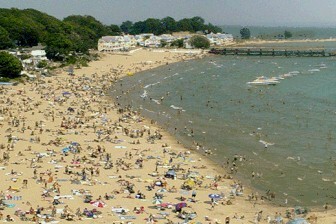
Bay Beach in the Crystal Beach area of Fort Erie, Ontario where a high-rise condo is going up that some fear will compromise public access to the beach.
NIAGARA REGION, May 15, 2013 – Media and the public are invited to attend the Lakefront Enhancement Strategy public workshop. The workshop will provide information on how the strategy is being developed and provide opportunities for the public to provide input.
WHAT: Niagara Region has been working together with members of the public, the area municipalities and other key stakeholders to develop a lakefront enhancement strategy. A second workshop is being held to review the findings from the first round of consultation and to discuss components of the strategy and how the strategy will be used.
WHO: Niagara Region staff and the consulting firm, Urban Strategies, will lead the workshop along with their team from Savanta Inc., Archeological Services Inc. and Strategy Corp.
WHEN: Thursday, May 23, 2013,6:30 – 8:30 p.m.
WHERE: The Atrium, Niagara Region Headquarters, Campbell East building
2201 St. David’s Rd. W. Thorold
For more information, including the workshop agenda, visit http://www.niagararegion.ca/living/water/lakefront-enhancement/default.aspx .
(Niagara At Large invites you to join in the conversation by sharing your views on the content of this post below. For reasons of transparency and promoting civil dialogue, NAL only posts comments from individuals who share their first and last name with their views.)
 Niagara At Large
I’d like to share some comments submitted to the Ministry of Natural Resources regarding the Molinaro highrise condominium-retail complex, comments which the MNR unfortunately failed to heed when it subsequently granted a permit for Molinaro to build his complex on so-far-but-not-for-long public land of Bay Beach on top of his extensive underground garage that will protrude far beyond the periphery of the building (to see the plans, see http://www.youtube.com/watch?v=IQJJ6xlXM7c ). This is the exact area where the endangered Fowler’s Toad buries itself for protection all winter and every day. Even if you don’t care about Fowler’s Toads, please read on.
These comments are from Dr. Davidson-Arnott, coastal geomorphologist and Professor Emeritus in the Department of Geography, University of Guelph. Dr. Davidson-Arnott has done extensive academic work on the dynamics of beach/dune systems in the Great Lakes and with Conservation Authorities, Ontario Parks, Parks Canada, the Ontario Ministry of Natural Resources and the International Joint Commission, including developing shoreline policies.
“The proposed development at Fort Erie is being permitted to occur within the Dynamic Beach Hazard Zone as designated by the Provincial Policy Statement – i.e., the foredune and embryo dune zone which form the habitat for Fowler’s Toad. If the development were sited inland of the properly designated Dynamic Beach Limit it would be feasible to incorporate a continuous foredune zone along the entire length of the development site and at the same time to provide public access to the beach. In this respect, the initial failure of the Niagara Region Conservation Authority to ensure that their Shoreline Management Plan for Lake Erie conformed to the Provincial Standards in the designation and mapping of the Regulatory Dynamic Beach Standard (the Plan for the Lake Ontario shoreline does) has permitted this development proposal to proceed to this stage. This has been compounded by the failure of the Ontario Ministry of Natural Resources to intervene to ensure that the approved SMP conformed to the minimum requirements under the Provincial Policy Statement. As a result, if the development is permitted to go ahead in its present form it will provide a precedent that could lead to the encroachment of development within the foredune zone along the whole stretch of sandy beach shoreline within the Lake Erie jurisdiction of the NCR with all the implications that has for plants and wildlife, including other populations of Fowlers Toad.”
Aside from concerns about plants and wildlife, this issue is important to those who care about the tourism dollars that come from retaining beaches, especially excellent strategically-located public beaches like Bay Beach. Allowing dunes to re-form at the Bay Beach site would protect the beach, because “Dunes depend on beach sand for their formation, particularly during low water level periods, and beaches need the sand reserve held in the dunes during high lake levels and storm events.” That quote and some excellent explanations from an enlightened community can be found in this stewardship guide: http://www.huronkinloss.com/public_docs/documents/Beach-Stewardship-Guide.pdf
As explained there, “Sand dunes have long been known by scientists and resource managers to be nature’s shore protection. They outperform their structural counterpart by their ability to give and take with the dynamic processes at work along the shoreline. It is important to recognize that it is this dynamic give and take that make dunes important protection features.” One more quote from that source: “Beach and dune systems are best managed by not interfering with the natural processes…Working with natural lake processes, rather than at odds with them, provides a wide range of benefits, including a healthy beach from ecological, economic and public health standpoints.”
Just a few days ago, the Town of Fort Erie flattened out all the sand that “tried” to form a dune at Bay Beach over the winter. This shows how easily and quickly dunes would form naturally at that if they were allowed to (unfortunately, Molinaro wants his underground garage to be there). It was particularly tragic this year, because the Town of Fort Erie performed this excavation just at the time the Fowler’sToads are emerging from the site where the toads had hibernated below the sand for the winter, only to be greeted by bulldozers.
Let’s hope that the participants of Thursday’s conference will get someone to recognize and put a halt to the plan to bypass what could be a wonderful opportunity to allow sand dunes to re-establish at this site. It is a mistake to let this condo be built so close to the water. The enormous buried and exposed rock revetments and extensive paving and excavation of the area will be bad for the toads, bad for the beach’s future, and bad for beach-goers. (By the way, the oft-mentioned changing rooms and snack bar for beach-goers are not evident to me on the plans. Does someone else see them on the plans? Could they have gone the way of the once-promised skating rink?)
Someone needs to get Molinaro to move that condo and garage (maybe a ramp would make more sense when building at essentially the water level, so he wouldn’t have to constantly pump garage water out into the surroundings) back from the water into the area where development is supposed to be permitted. I hope the meeting participants will bring attention to Bay Beach’s plight, especially in terms of their stated objectives:
“Objective 7.A.5.2: To maintain Niagara’s shorelines in as natural a condition as possible and promote environmental protection, restoration and enhancement “
and
“• Policy 7.A.5.5: Development and site alteration shall not be permitted in the dune areas along the Lake Erie shoreline unless they are in compliance with other policies in this Plan and it has been demonstrated that they will not have a significant negative impact on the natural features and ecological functions of the dunes or on adjacent properties.”
LikeLike