
By Don Smith
(A short note from Niagara At Large publisher Doug Draper – As a long-time environment writer, I often noted to audiences I have been invited to speak to that any concerns they may have over the possible health effects of wind farms, or parts per billion or trillion of chlorobenzenes and other industrial chemicals in the air we breathe or water we drink, people should be followed by this question – ‘If our governments are not prepapred to ban a known killer like cigarettes due to the profits they bring to the economy and to government tax coffers, why should anyone expect our governments to act on other potentially lethal assaults on persons and the environment?
In other words, the continued legal manufacture and sale of cigarettes are proof positive that our governments are still willing to lace dollars ahead of public health. As long as our goverments are prepared to allow for the suffering and deaths of countless ten-of-thousands of people over a confirmed carcinogen like tobacco for profit, why should we expect our governments act on any other proven or potential danger from a product with wealth-producing potential in our economy?
Remember that we now live in a world where the accumulation of wealth, by whatever means, ranks above almost anything else. Forget about the collateral damage. Now let’s move to Don Smith’s commentary.)
This is a current headline taken from a national newspaper – “Is it not time to ban this addictive and lethal drug? “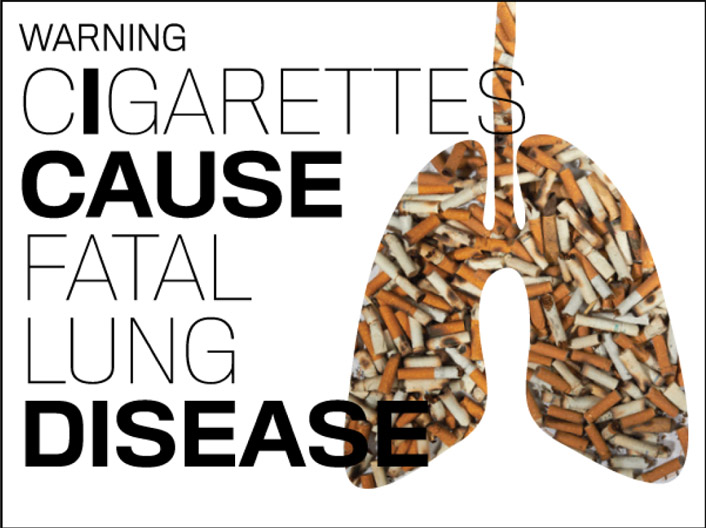
Every time I see a headline such as this one I think back to a discussion I had with my son’s late father-in-law, a tobacco farmer in the Tillsonburg area in the late 1990s. At that time, he told me that if and when cigarettes are declared illegal and banned that his tobacco growing friends, neighbors, and relatives all agreed they would willingly sell out their farms to the federal government and change to planting corn, gin sing, or peanuts.
The government turned a deaf ear to the plan at that time but on August 1, 2008, the federal government bought all but 18 of the 1,083 tobacco quota holders. Let it be understood even with the government buy out they, the government, most assuredly did not label cigarettes illegal nor did the government ban them.
There is no doubt it is as obvious as the nose on your face the government had no intention to ban cigarettes and experience a massive multi billion tax loss. The government spends millions on anti smoking programs on one hand while the billions in taxes are still taken in the other.
The following statement made by Mr. Robert Proctor, a historian of science at Stanford University, clearly defines how useless the government’s efforts to have smokers quit have been – “To use Education as one’s only weapon against a highly addictive and often lethal drug is unpardonable insufficient tobacco control policy centre’s on educating the public when it should be focusing on fixing or eliminating the product”
To support this statement all one has to do is drive by any of the local high schools and note how the education effort is fading by looking at the number of groups of children smoking.
To support what I am saying, I am going to show some very startling facts and figures that I’ve found by researching on the internet.
- There are 46 million smokers in the USA and out of that figure 443,000 die from smoking.
- World-wide there are six trillion cigarettes sold per year and six million of that figure will die each year which is more than from Aids, malaria, traffic violations, marijuana, and ecstasy.
- In Ontario tobacco is the leading cause of preventable death and disease killing 13,000 a year which is 3 times the combined deaths caused by alcohol, drugs, suicides, homicides, and car crashes.
- In Canada over 47,000 people die each year from smoking.
- A recent random poll was taken by a newspaper asking ‘Will graphic warning labels and pictures on cigarette packs reduce smoking?”
- There were 663 responses as follows; #1—Have no real effect on how many people smoke—503 votes—76% #2 Will it reduce the number of smokers?—137 votes—21% #3—Increase the number of smokers—31 votes—5%
- Now I would like you to look at the findings relating to second hand smoke. Second hand smoke kills about 3000 non smokers each year from lung cancer.
- Second hand smoke causes 30 times as many lung cancer deaths as all regional pollutants combined.
- Second hand smoke causes up to 500,000 lung infections (such as pneumonia and bronchitis) in infants and young children each year.
- Second hand smoke causes wheezing, coughing, colds, earaches, and asthma attacks.
- Now I want to show some interesting facts and figures on teen smokers.
- In the USA everyday approximately 3000 kids under the age of 18 start smoking.
- Teen smokers get sick more often than non smoking teens
- Teen smokers have smaller lungs and weaker hearts than non smoking teens.
- Teen smokers are more likely to use alcohol and other drugs.
- In the USA it is estimated 4.5 adolescents are smokers
- From February through to December 2010 17% of the Canadian population aged 15 years and older were current smokers. This is about 4.7 million Canadian residents.
- In 2010 approximately 208,000 15 to 19 year old teens were smokers with an average of 11.6 cigarettes per day.
- In 2010 about 121,000 youths 15 to 17 were smokers at an average of 11 cigarettes per day.
- Young adults 20 to 24 about 508,000 were smokers
- Canadians 25 and older (3.9 million) were current smokers
- Canadian daily smoker aged 15 years and older smoked an average of 15.1 cigarettes per day.
Here are a few more interesting facts and figures relating to death by smoking.
World wide, around about 5.4 million deaths are now caused each year by tobacco.
Smoking is set to kill 6.5 million in 2015 and 8.3 million in 2030 with most of these deaths occurring among low and middle income earners.
It is said tobacco use will kill one billion people in the 21 st century if the current smoking trend continues.
In the 20th century around 100 million people died in Canada alone because of Tobacco use. Every 6.5 seconds a current or former smoker dies.
In the USA, more than 443,000 Americans die each year because of smoking each year and second hand smoke kills 50,000 of them.Smokers die on the average of 15 years sooner than non smokers.
Now that I have your interest let’s look at some cost factors. On April 21 2011 the following figures were available based on a carton of 20 cigarettes—Provincials tax–$21.70 Federal tax–$17.00 HST Federal portion–$3.19—HST provincial portion–$5.10—Total $49.99 According to a clerk in a local chain store the retail price on a carton of 200 cigarettes is $100.00. That is 50 cents a cigarette or $ 10.00 a pack.
If one smokes a pack a day, that is $ 70.00 a week and $3920.00 a year. That money can go a long way toward a mortgage, clothes, and food. That figure will double if there are 2 people in a household with both smoking that is now 2 packs a day.
An average Ontario smoker buys approximately 8,500 cigarettes a year. The bottom line is how one can possibly afford to pay this. amount of money knowing full well there are certainly no health benefits with a certainty of dying of probably lung cancer in a shorter period of time?
My wife died on June 28, 2000 of lung cancer. She smoked at least a pack a day. If she had quit when I did in the early 80s she more than likely would be alive today.
Don Smith is a resident of Pelham, Ontario and contributor of commentary to Niagara At Large.
(Niagara At Large invites you to share your views on this post below. Only comments by individuals who are also willing to share their first and last name will be posted.)
 Niagara At Large
You have said it all. And I know because I smoked for 50 years
and I was lucky I quit when I did although I am paying for some things because I did not quit sooner. Only cowards still smoke. When I said I would quit I gave my word and when I did I never missed it. Because of this I never tried drugs.
Bill Augustine
LikeLike
I detest cigarettes but banning them will just push them underground as with booze during prohibition. At least the gov’t does get tax money for them. I wish they were $50 a pack! Education EARLY in life is vital because so many young people still think it’s cool.
It used to drive me crazy when mothers would bring their asthmatic kids into the ER for inhalers because they couldn’t afford them but they had a fresh pack of smokes in their pocket. How do you deal with that idiotic mentality? Then they would get all indignant and nasty if advised about the problem! I also think anybody on public assistance should be banned from smoking and drug use by regular, random testing. After all, that’s taxpayer money they’re using so they’re our employees. I couldn’t use drugs, drink or smoke under my employer so why should they? Furthermore, public assistance wasted on addictions of ANY kind is not feeding their kids. I know of at least one mother whose child was taken due to repeated respiratory crises and her refusal to stop smoking….and she was on public assistance. It was child abuse, pure and simple. Yeah, they’ll whine about their rights but that’s just tough.
LikeLike
When my daughter at three years old pretended to smoke, I ran out, got some champex, and haven’t looked back. I think that there are some socio-economic factors that make banning smoking and policing the increasing number of Ontario residents turning to social assistance a little more complicated than just banning people from using assistance in certain ways. As a former smoker I know that pressure is a trigger, but was pleased by the supportive programs in place to help me be the kind of (non smoking) role model I wanted to be. It took me about 5 tries to finally quit, but my daughter doesn’t play smoke anymore, so after 18 months I have no intention of going back.
LikeLike
Don raises many interesting points here.
Bill confirms that smoking is bad for health AND that people can stop.
Linda has listed a few of the problems with Don’s suggestion to ban tobacco.
We all know how well “Prohibition” of Alcohol worked in the USA.
(It helped make a few Lake Erie smugglers rich, and built huge mafia and police empires….)
We all know how well the “War on Drugs” has worked.
We all know how well the “War on Tobacco” has worked
– if you don;t want to pay $100/carton, just drive over to the Grand River and buy them (illegally) for much less, by avoiding the provincial and federal taxes that pay for the medical system that will deal with your eventual, tobacco-caused heart, lung and cancer diseases.
Don, did you learn whether tobacco taxes Exceed the medicare cost of tobacco-caused disease?
Why isn’t the federal government actively stopping the illegal smuggling part of the legal Amerindian sale and use of tobacco for their own people? (Presumably, they don’t smoke as much as non-Amerindians, and therefore hardly use their own Amerindian-paid medical system?)
Canadians are proud of our universal medical-care system. Can you honestly imagine turning away smokers when they suffer their inevitable tobacco-caused diseases?
Can you honestly imagine having FACS seize children because their parents are abusing them with second-hand smoke? This is a slippery slope, leading to a Soviet-style system where we put people who disagree with Any current government’s rules … in jail or in hospital or in other institutions. (Let’s all eat the same diet? Let’s all use only one system of healing? Let’s all vote for the same party?)
Perhaps what you really mean Linda, is that the nanny-state has gone too far, and that we should tall take responsibility for the results of our choices? Nah,
Canadians won’t go for that – we Like the nanny state.
Isn’t it funny how Churches taking care of our neighbours (eg. Tommy Douglas was a United Church minister) has led to a government-run state where Churches are disappearing and we no longer need to be responsible for the results of our actions? How Did that happen?
Finally Don, I’m not sure that you are correct that tobacco is more dangerous than alcohol:
– The LeDain Royal Commission on drugs reported ~1972 that ALCOHOL was the most dangerous drug in Canada.
– In 1985, the CEO of our then-stand-alone Port Colborne General Hospital gave his classification talk to Rotary Port Colborne. He said that 60% of the health problems they served came from … ALCOHOL ABUSE (not tobacco, as I expected him to say).
LikeLike
Sure, ban cigarettes. Banning drugs has worked as well as banning booze did in the 1920s. I’m certain banning cigarettes will work, because nobody can find illegal drugs since the bans.
LikeLike
Good points Lorne. There are always grey markets and the reserves where people will go for cheaper smokes and the gov’t can’t police them all. Some people just don’t take responsibility for themselves and, often as not, they are ones who don’t take responsibility for most things in their lives. Call me bigoted in this regard but it’s very true. It was a familiar site to see people with “borrowed” shopping carts wheeling through the hospital parking lot on welfare check day with carts full of junk food, booze and smokes.
I do know of a mother whose child was taken due to her refusal to stop smoking as the child would have eventually died. The child was less than 2 yrs old and had several hospital admissions a month for severe respiratory distress. Something had to be done. That was a severe case that necessitated intervention. Taking a child because a mother yells at it is different than taking a child because the mother intentionally scalded it. It is a “slippery slope” trying to enforce such rigid regulations but smoking around vulnerable children with respiratory problems is like driving drunk with a child in the car only with even more predictable outcomes.
Smoking is an addiction fostered by companies who make billions. It is also not a “normal” bad habit like overeating or even drinking alcohol but one which makes absolutely no sense whatsoever. Farmers should be paid subsidies NOT to grow tobacco and growing it made illegal. Cigarette companies should be banned. Cuban cigars are illegal in the US are they not? There should be NO smoking ANYWHERE in public. Kids caught smoking during school should be reported and expelled. Make it socially unacceptable to be a smoker and make smokers pariahs. Some seem too stupid to react to anything else.
Smoking is not a necessity of life and costs the rest of us millions annually. Perhaps it should be totally eradicated as Don says in the article and if someone persists or refuses cessation treatment they are on their own. Deny them health insurance. I know some who have been moved down the waiting list for heart surgery because they refuse to stop smoking. Why fix a heart for someone who will just ruin it. The same with someone waiting for a liver transplant who refuses to stop drinking. That happens too. To me their “right” to smoke is little different than the wahoos in the US insisting on their “right” to own assault weapons. Both kill.
I have watched people die with lung cancer, literally drowing in their own blood. I have watched people die from emphysema grabbing at the air with their hands in terror trying to somehow breathe. I have seen autopsies where the lungs actually dripped with tar. Not cool like the old cigarette ads. Perhaps a programme where kids went to hospitals, like other “scared straight” programmes might help. I wish I knew what it takes to stop this disgusting, deadly habit.
LikeLike
I am writing this follow up article to my original article on smoking in support of all those smokers who have made a New Years resolution to quit smoking. I sincerely hope you take my article to heart and quit
The information I’ve provided is shocking and true. My information came from numerous and significant reliable sources on the internet.
In response to the comments to my earlier article I will outline my responses to number one ( 1 ) which is more dangerous tobacco or alcohol?, number two ( 2 ) what do tobacco taxes amount to for the government in a fiscal year?, and number three(3) what is the cost of tobacco caused diseases?. I believe you must mean “ Health Care”
My facts on tobacco vs. alcohol were based on US figures therefore on research again the figures of 400,000 smokers dying vs. 100,000 drinkers seems to be prevalent.Now I did find another very interesting article again based on US figures as follows; “ As of 2001 tobacco killed approximately 5 million per year and approximately 85,000 drinkers per year giving a ratio of 5 to 1. Again here is that 400,000 figure with a little added feature. 400,000 people die from their own smoking per year and about 50,000 die from 2nd hand smoke annually.
According to the centre for disease control and prevention last updated in 2006 as follows; 22,073 people died of alcohol, 12,113 people died od Aida, 45,664 people died from car accidents, 38,396 p[people died of drug abuse, 18,573 people died from murder, and 33,350 people died by suicide.This total number of deaths is 168,119 which is far less the 450,000 from smoking annually. All of my researching found in the majority of cases tobacco kills more than alcohol. To close off number one ( 1 ) I want to quote an article from the Washington Post as follows; The State Children’s Health insurance program is supposed to be financed by increasing the tobacco taxes. This Health Care depends on an ample and renewable supply of smokers dated June 8 2009. Governments will never outlaw smoking because government cannot loot tobacco companies that do not flourish.
Does this not resemble our own federal and provincial government’s political stance?
Now lets look at tobacco taxes vs. tobacco disease prevention. The revenue from tobacco sales for the years 2010 to 2011 was as follows; Ontario $ 1,160,000,000, Canada 3,011,472,182, and the total for all provinces and the federal government was 7,538,367,182. Now that we have the revenue figure lets take a look at the health care situation.In the years 2010-to 2011 the Ontario Health Care spent $44.77 billion on health equal to 4003 percent of its total spending on programs. Health Care costs rise about 6.9 percent per year. Tobacco related diseases cost Ontario Health Care system $1.93 billion in direct health care costs and $5.8 billion in productivity losses each year. In June 2011 the Smoke- Free Ontario Group received a $5 million increase to the budget from the province to help more people quit smoking and ensure that young people don’t pick up the habit. These statistics were taken from Smoke- Free Ontario.
Smoking is the number one ( 1 ) cause of deaths and diseases in Ontario. It kills 13,000 people every year.
Tobacco related diseases have been estimated to account for $1.6 billion in health care costs, at least 500,000 hospital days—annually, and$4.4 billion in productivity losses per year.
Here are a few facts to encourage one to stop smoking. Smoking and Tobacco use is responsible for 30 percent of all cancer deaths and 85 percent of lung cancer deaths which amount to approximately 13,000 deaths in Ontario each year.
The following is an excellent example of health costs in Peel that was taken in 2002. In Peel the hospital cost of treating attributable disease is almost $50 million. This is a conservative estimate. Treatment of cardiovascular diseases attributable to smoking make up over half of the estimate. Extrapolating from Canadian data this estimate would be closer to $100 million,
In Canada the total costs of treating smoking attributable diseases is $16,996.2 million. Within this estimate $4,360.2 million are direct health costs which include hospital costs,ambulatory care,, physicians fees, family physician visits and prescription drug use. Indirect costs ( not directly ) relating to health care include such things as productivity losses due to long turn disability , short term disability, and premature mortality.
The following is dated 2012 by Prodel centre for population health impact and the university of Waterloo. ‘ Of the estimated 4.7 million current smokers in Canada up to half become ill or die from continued smoking. Tobacco is a leading preventable cause of death in Canada responsible for over 37,000 deaths annually and about one third of cancer. Recent estimates indicate that tobacco related illness costs Canadians $4.4 billion and is responsible for 2.2 million acute care hospital days.
Some of the information in this article came from the 2012 edition of Tobacco Use in Ontario: Patterns and Trends and also from National surveys by Health Canada and Statistics Canada.
To close please !!!!! consider quitting as a national release stated over 60 percent who have ever smoked have now quit.
Thank you
Don Smith
Fonthill
LikeLike
Yes, tell all your mates you know to look on the web for e-cigarettes to
see how massive this industry is, and how huge the selection is for these superb products is.
What really annoys me, though, are the growing
number of posts in the media saying how dire they are.
Apparently the big drugs companies – the makers of nicotine harm reduction aids are funding an anti
vaping battle – less so the fag companies (as
you might suppose) – as these cigarette producers are investing in them.
I can FEEL the benefits of e cigarettes.
Just broadcasting – that there is always a agenda with
big companies trying to prohibit electronic cigarettes .
.. our country’s government must do a lot more to support them. This makes me sad. Thanks Cigarettes Are Known Mass Killers – So Why Won’t Our Governments Ban Them Except For The Blood Money They Rake In? | Niagara At Large.
LikeLike