
A Brief from Doug Draper
(Well here we are again. Less than a week after saying goodbye to jazz legend Dave Brubeck, we are back to say goodbye to another towering figure in the world of music. The passing of the great figures in music from the past half century is coming all too fast now. Who will it be next week?)
This December 12th morning, I took out my original copy of The Beatles’ Rubber Soul, album that I ran out and bought with my saved-up school lunch money, the day it was released around the world – 47 years ago this December.
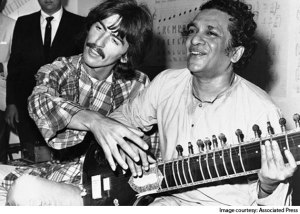
The great sitar master Ravi Shankar and his most famous student to the left, Beatles guitarist George Harrison
I was 13 years old at the time and followed everything The Beatles recorded with passion, including who wrote and sang each song, and who played what instrument on them. On the back cover of the Rubber Soul album, under the song “Norwegian Wood, one of the credits read; ‘George on sitar’. Sitar, I thought. What is that?
Well, in a world back then where any and all news about The Beatles and their latest exploits in musical reached us in lightning speed, it wasn’t too many hours or days later that we found out that George Harrison had begun studying how to play this exotic Indian instrument under one of its masters, Ravi Shankar.
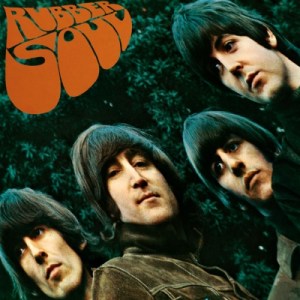
Rubber Soul, the 1965 Beatles album that opened a door to some of the more exotic sounds from other regions of the world.
In a matter of days, George and those rudimentary first notes he played on a song that was mostly written and performed by John Lennon, opened a door to musical sounds outside the Western world, and Ravi Shankar would be the foremost teacher through performances at the legendary Monterey Pop Festival of 1967 and Woodstock Festival – the high-water mark of the counter-culture movement of that era – in 1969.
It was the first door many Westerners opened to a more inclusive blend of musical sounds from other regions of the world – to what is often referred to as ‘World music’ today.
A decade ago, Ravi Shankar made an appearance for a special memorial concern for George Harrison, who had died of cancer the year before, and he told those attending that ‘George’s spirit is still with us (and) why wouldn’t it be when there are so many people here who loved him.’
Let’s hope that the spirit of this kind, softs-spoken ambassador for music remains with us too.
P.S. – If you only own one CD featuring the music of this great artist, make it a two CD set titled ‘Ravi Shankar – Rare and Glorious’.
(Niagara At Large invites you to share your comments on this topic of this post below. Please remember that we only posts comments from individuals who also share their first and last names.)

