
By Doug Draper
It may be one of the important questions the residents of Niagara, Ontario and their municipal councillors should address in the weeks and months ahead.
How should we be governed at the municipal level in the future? Should we stay with the current system of two tiers with 12 local councils and a regional council? Or should we move to fewer local councils and regional council? How about eliminating the local councils and having only one regional council to govern all of Niagara or keeping the local councils and saying goodbye to 42 years of regional government?
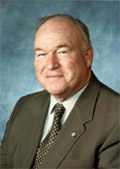
St. Catharines Regional Councillor Tim Rigby, a former mayor of that city, will argue at public forum for one ‘City of Niagara’
So one must applaud long-time Niagara resident activist Gracia and the St. Catharines and District Council of Women for attempting to bring this important issue to the fore with a panel discussion it is holding this coming October 10, featuring three regional councillors with three different views on how we should be governed in the future.
The three councillors include Tim Rigby of St. Catharines, a former mayor of that city who has long favoured amalgamating all 12 local municipalities into one “City of Niagara,” Peter Kormos of Welland, a former provincial NDP representative for the Welland Riding, who is a strong supporter of local municipal governance, and veteran St. Catharines regional councillor Bruce Timms, who favours a variation of the current two-tier system where the only elected representatives at the municipal level will serve on both local and regional councils.
If you are a resident of Niagara, Ontario and if you live, work or go to school, this governance review which Niagara regional chair Gary Burroughs promised when he got the chair’s job two years ago, is all about your future the quality and cost of key services that are important to our everyday lives.
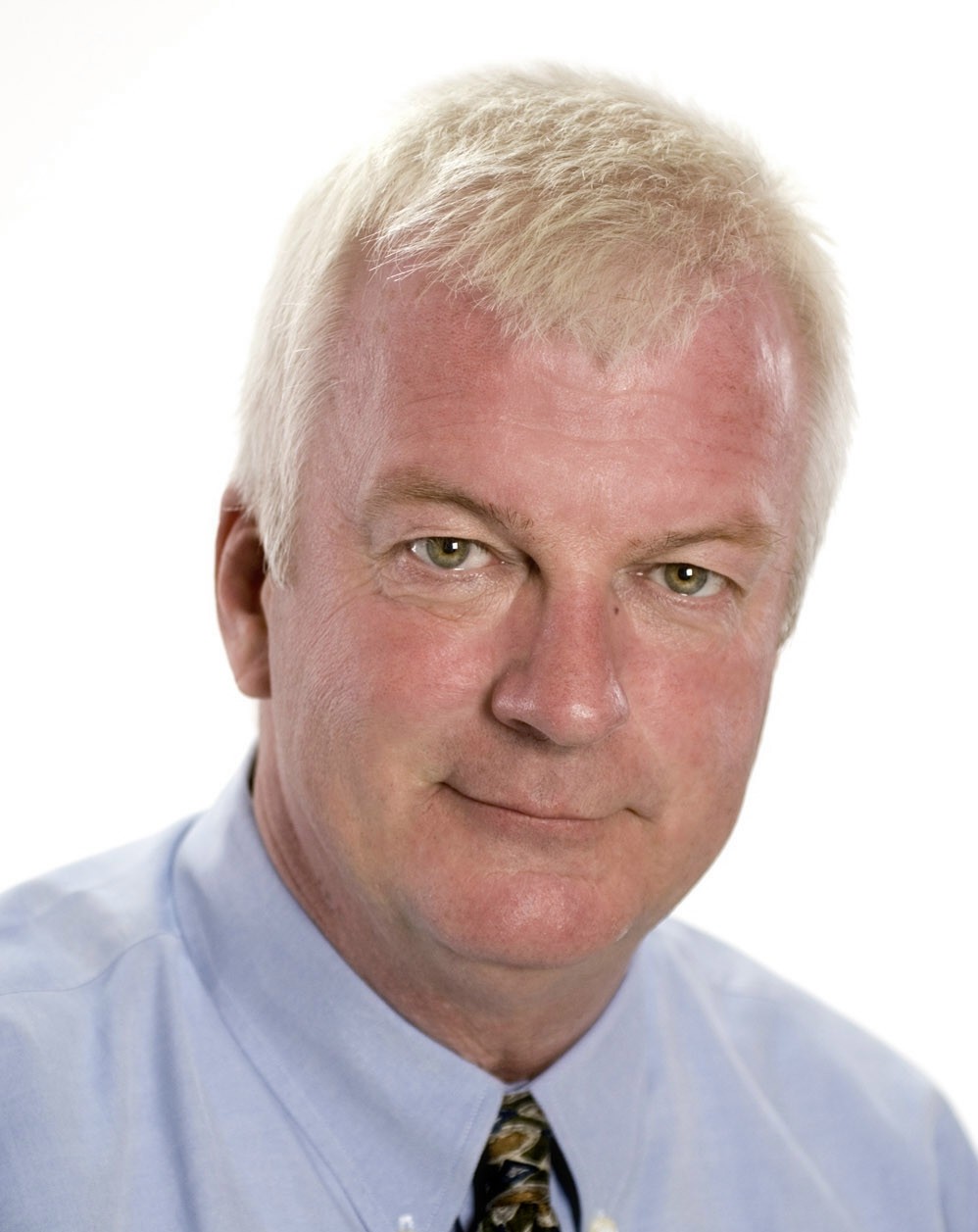
Welland Regional Councillor Peter Kormos, a former provincial NDP representative for the Welland Riding, will make the case for keeping local municipalities
Niagara At Large is posting a media release from the Council of Women directly below, detailing the date, time and location of this forum and offering more information on what the forum is about.
PUBLIC MEETING ON MUNICIPAL GOVERNANCE IN NIAGARA
Wednesday October 10th St. Catharines Centennial Library 8:00 p.m.
Three Niagara regional councillors have done their homework on potential changes to Regional governance methods , as assigned by Regional Chair Gary Burroughs in July, and are ready and willing to give their findings/opinions at a public meeting at the St. Catharines Centennial Library on Wednesday October 10th , at 8 p.m.
Long-time St. Catharines’ Regional representatives Bruce Timms, who favors our current regional/local governance system, and Tim Rigby, who has long advocated for a single tier-Regional structure, will be joined by our most recent Regional Councilor from Welland Peter Kormos, who wants a return to local council governance.
St. Catharines Regional Councillor Bruce Timms will argue for a reformed version of Niagara’s current two-tier municipal system.
All three will have taken part in a Regional Council survey on a potential governance restructuring, and also possibly voted in , as Regional Chair Gary Burroughs noted at a July meeting, “governance” as the Region’s 3rd highest priority.” They will also have heard the preliminary views of the well-known expert on municipal affairs Dr. David Siegal , who asked Councilors to consider the benefits of the current system at both local and regional levels.
Background:
Since its establishment in 1918, the St. Catharines and District Council of Women, representing at present 21 Affiliated group members and 35 Individual members, have operated to research and provide information to the public and seek change for the betterment of the community. In doing this Council has approached a variety of Niagara governance bodies e.g. pre-1972 Counties , Towns and Cities and the current Town/City and Regional governments about important issues with varying levels of success.
And, debates in Municipal and Regional Town Halls/Council Chambers have gone around and round, with many arguing for just one Regional level of governance, due to the perceived –but debateable- overlap and expense of two tiers of service, and others wanting local governance as politicians know what’s going on closer to the action and to their constituents. Others favor the current two-tier Regional/Local structure feeling this has the best elements of both worlds.
Currently regional councillors have been asked to prepare for a Fall meeting to hear Dr. David Siegal’s final report and the ensuing debate will possibly, for better or worse, set the stage for big-or small incremental – changes in many areas of municipal government services, and the lives of Niagara residents.
(Niagara At Large invites our readers to share their views on this post below. Remember that NAL only posts comments from individuals who also share their first and last names.)
 Niagara At Large
I admit to being at a loss as to how these changes, if any, would be enacted. Does the regional government have the legal authourity to impose any decision on the municipalities?
A Note from NAL – There are legal channels for change. Any recommendation for a change in governance can be subjected to approval via a ‘triple majority’ that would require a greenlight from a majority of regional councils and a majority of local councils representing a collective majority of residents in the region. The recommendation would then have to go to the province for final approval through the Ontario Municipal Act.
LikeLike
Is it then that 1 or several smaller communities opposed to regional amalgamation could have no choice in the matter if outvoted by the rest?
LikeLike
On governance, why reinvent the wheel? There was a study done in 1976
on the restructuring of Essex County by Dr. Peter Silcox and John Jackson. 21 Councils down to 7. It seems to be working.
LikeLike
In reply to Nick, don’t discount the votes of those smaller communities in Niagara when it comes to the triple majority process. In fact, the last time the Niagara Region attempted a triple majority (to introduce specialized transit), two of the biggest municipalities–St. Catharines and Welland–were opposed yet it carried thanks to smaller municipalities like the township of West Lincoln. Most of us in favour of specialized transit thought it was lost when those two big cities said No until West Lincoln voted, whose support put it over the top. The same could happen again if the Region were to attempt another triple majority–and that’s a big IF because at the moment there is not a majority of regional councillors in favour of amalgamation.
LikeLike
It’s really difficult to imagine a majority of municipalities agreeing to this:
First off, bigger cities like Niagara Falls, St. Catharines and Welland need to be convinced to give up their own local governments. I find it hard to believe that people from Niagara falls want councilors people from Wainfleet, Grimsby or St. Catharines running their city.
Smaller municipalities meanwhile just need to look at the Niagara Health System to see what they have in store for them. After amalgamation Port Colbourne and Fort Erie were told that there wasn’t enough money to run their hospitals anymore. This wasn’t their fault either, regional amalgamation simply led to budget deficits and Port Colbourne and Fort Erie naturally got the worst of it.
Does anyone know if any municipalities are actually for this right now? I keep hearing the word “Discussion” but it sounds like it’s the region on one side and the municipalities on the other. You can call that a discussion, but most people would call that a power struggle.
LikeLike
I am not discounting anything. I am asking if the scenario I described is correct. Would West Lincoln (if voting opposed) be forced to join the City of Whatever?
LikeLike
I guess nobody here knows the answer. When I find out the answer I will inform you so that you too can be educated as to the possibilities.
LikeLike
Matthew, I agree that the larger municipalities will not want to participate, nor should they. They are established. Amalgamate with smaller municipality surrounding them. The rest can join where they will do the most good for taxpayers. I can dream can’t I? Where do you see Niagara-on-the-Lak going?
LikeLike
Gerry, given the three options, I think yours makes the most sense. It eliminates the problem with two tiers of local government and still allows people to elect their own local officials. With regards to Niagara on the Lake, interesting question. If you watch where traffic goes the majority is to St. Catharines. This might not hold true in small towns like Queenston and St. David’s.
I don’t think there was a problem with Regional government either as long as it was a place for the local municipalities to forge agreements on issues that required cooperation.
LikeLike
Welland is in the process of forming a committee to make changes. So much for protecting their own local government. Get ready to become part of the SSR of St. Catharines.
LikeLike
I would say the easiest process would be is amalgamate service by service, until it is shown that governance can be managed competely at the regional level for all the communities.; Right now, Niagara is too fragmented to even discuss this question. This is exactly why we are underfunded in almost all areas when compared to the rest of the province, because this silo thinking has led to us being unable to even speak with one voice.
LikeLike
In answer to one of Nick’s questions where he asks if a smaller municipality like West Lincoln would be forced to join a city of Niagara if this somehow happened. The answer should be easy to deduct from previous successful triple majorities. During the last triple majority, two of the big three municipalities voted against inter-municipal specialized transit but it carried in the end thanks to the support of West Lincoln. The service is paid for by all residents of Niagara, regardless if the municipality they live in voted for or against it, and is open to all eligible residents of Niagara.
It’d be pretty hard to conduct a triple majority–which again requires a majority of regional councillors followed by a majority of municipalities who represent a majority of the region’s residents–and then decide ‘we’re not going to participate because we voted against it.’ While not exactly the same, that’d be like deciding you’re not going to follow legislation approved by two of the three parties at Queen’s Park representing a majority of MPPs, ridings and Ontario citizens.
The only way for a municipality that was really opposed to such a premise–which again, considering the dynamics at Regional Council is about as likely as James Cameron returning to Niagara to run as Mayor of the city–would be to petition the province to separate from the region. Note that the last municipality in Niagara that contemplated this (Fort Erie) is still very much part of Niagara. There’s a greater chance the province would completely ignore such a request than there is a majority of regional councillors or even municipalities agreeing to the idea of one Niagara.
LikeLike