
A Foreword by Niagara At Large publisher Doug Draper
I’ve expressed my share of doubts about the direction Tim Hudak and his Ontario Conservatives, but I think they are standing up for the interests of most of the province’s taxpayers on this one.
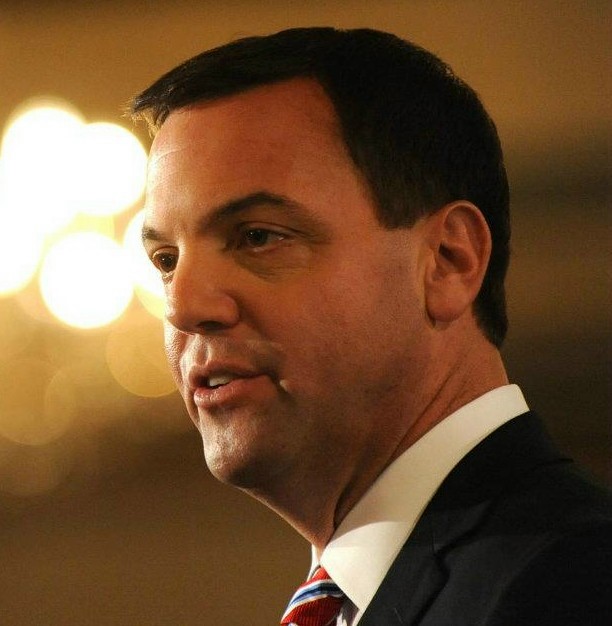
Ontario Conservative Party leader Tim Hudak
Hudak and his party are tabling an “Ability To Pay Bill” this September which is calling for what many municipalities across Ontario, including municipal governments across Niagara, have been calling for from the province’s Liberal government for past eight years – changes to an arbitration system that bases the wages and benefits of police, firefighters and other public sector workers on taxpayers’ ability to pay.
In recent years, Niagara’s regional council, along with some of the region’s local councils, have expressed increasing frustration over their attempts to keep the wages and benefits of police and firefighters, in particular, in line with what they feel area property taxpayers can afford. They feel the arbitration system in place typically gives the unions representing police and firefighters virtually everything they want despite cases municipalities have tried to make on behalf of taxpayers.
Municipalities in Niagara and other regions of the province have repeatedly pressed the Ontario government to reform the arbitration system in ways that would make provincially appointed abitrators give more consideration to a region’s ability to pay, but the government has so far made no move to reform the system.
In Niagara’s case, these arbitration decisions have often left taxpayers in this region paying salaries and benefits for police and firefighters that are on par with those paid regions where wages are higher and unemployment rates are lower than they are here.
And here is another important thing that should be taken into consideration. Unlike the salaries for teachers, for example, that are paid for by the province through income taxes (a progressive tax that are based on a person’s income and ability to pay), the salaries and benefits of police and firefighters are paid through property taxes, which are regressive in the sense that a senior on a fixed income or a person who has lost a good paying job and may not be working for minimum wage to keep their home, is paying the same for these wage hikes as someone with an income of $80,000 or $90,000 a year.
Some municipal representatives have speculated that one of the reasons the provincial government has not taken their call for reforming the arbitration system seriously enough to do anything about it is that (outside of the Ontario Provincial Police) they don’t get stuck with the bill for police and firefighter salaries. That tab is picked up by municipalities and their local ratepayers.
So it will be interesting to see how an attempt by the provincial Conservative Party to get a reform bill for arbitrating these salaries benefits, based on municipal ratepayers’ ability to pay, will be received by the government Liberal Party and NDP.
For our readers’ information, Niagara At Large is posting a September 17 media release on this proposed bill, submitted by Tim Hudak and his Conservaties, below.
FOR IMMEDIATE RELEASE, September 17, 2012
PCs’ ABILITY TO PAY ACT STANDS UP FOR TAXPAYERS: HUDAK
QUEEN’S PARK: It’s time to stand up for taxpayers by fixing a broken system that awards unaffordable contract settlements to government union employees, Ontario PC Leader Tim Hudak said today. “And to do it, we are bringing forward our Ability to Pay Act.
“We need a freeze on new government spending and a mandatory, across-the-board government employee pay freeze for two years,” Hudak said. “But what comes after? Without bold reforms to the things that drive wages to these heights in the first place – such as the way arbitrators arrive at settlements – we’ll be right back where we started from.”
With a million employees and one out of every three workers considered an essential service, Ontario’s salary and benefit costs make up more than half of all program expenses, Hudak noted. “While the economy is barely growing, these workers continue to receive pay increases. And when government employers and their unionized employees, like police and fire fighters, cannot agree on new contracts, the disputes wind up before arbitrators, who often award increases that taxpayers cannot afford.”
For the last nine years, the government has ignored the calls of local officials to change the system, Hudak noted. “The government knows full well some councils have been forced to increase property taxes, impose user fees or cut services to pay for these contracts – at the taxpayers’ expense.”
In just one such example, an arbitrator gave a six per cent pay increase to TTC unions, which will cost taxpayers’ a $100 million, Hudak added.
Ontario PC House Leader Jim Wilson, the sponsor of the bill, said “once again the Ontario PCs’ are pressing ahead with bold ideas that now include our Ability to Pay Act – another important step to get our fiscal house in order and ensure scarce tax dollars go to the things people care about, like front-line health care and classroom education.”
The Ability to Pay Act makes this its goal, in three key ways:
- First, arbitrators’ decisions must factor in specific economic and budgetary factors, like the taxpayers’ ability to pay, when making decisions and explain those decisions in writing;
- Second, establish a panel of independent arbitrators to decide public sector cases within three months; and
- Third, dedicate an Ability to Pay Division would publish comparative information on compensation, as well as proactively disclose all arbitration decisions – call it sunshine and fairness.
Hudak concluded that “the Ability to Pay Act is about standing up for taxpayers and restoring economic prosperity. We need all parties in the Legislature to get behind this bill and pass it into law, so we can help rein in overspending and build a solid foundation for private sector job creation.”
(Niagara At Large invites you to use the space below to share your views on this post, remembering that NAL only posts comments by individuals who also share their first and last name. With very few exceptions, NAL does not post anonymous comments on this site. You can visit our ‘Comment Policy’ at the top of our front page for a further explanation of this rule.)
 Niagara At Large
An independent system was set up to govern Provincial Insurance and that commission was by appointment (Another Joke) When the insurance industry Inc decide they want a rate increase the apply to the Commission who in turn to a consulting group set up by them to determine the merits of this increase. The only problem is this consulting group according to the commission is basically composed of Insurance agents…Talk about the foxes guarding the Chicken roost.
This Commission is made up of one time executive officers and past leaders of consulting companies
SO MUCH FOR “INDEPENDENT” Commissions
LikeLike
I have to say that if I owned a company that had employees, and those employees threatened me with a strike if I failed to provide them them what they wanted in terms of compensation, I would show them the door.
There is a lineup to become a fireman and police officer. I suggest that if these departments, who are massively overpaid in most juridictions, threaten to strike, show them the door and bring in some new blood. Then there would be no need for an arbitrator. Please note that I do feel that in some juridictions like Jane/Finch officers should be recognized for the danger they are exposed to. However, sitting in a parking lot tagging people with a radar gun and writing seatbelt tickets could be argued as being as safe as any job out there. Niagara on the Lake and Grimsby are pretty dangerous parts of the region!
You know it’s all about perception and the unions ability to persuade the powers that be that these jobs are more dangerous and more important than others. That is a myth. I can’t imagine life without a roof over my head and food on the table. Do the research… on a per capita basis construction, truck driving and farming are more dangerous careers and result in more injuries and death than being a firefighter or police officer. So where is the justification for the outrageous salaries and benefits? Unions flexing muscle that they shouldn`t have. Muscle (charter rights) that they should be stripped of.
So my point is…. get rid of the unions then there won`t be any need for arbitrators. If people don`t like their compensation package, they can quit and someone I am sure will fill their shoes at a reduced rate happily.
On a side does anyone know how much a police officer makes in Lewiston New York? About half of what they make this side of the border.
LikeLike