
By Doug Draper
A public survey conducted for the Niagara Health System this spring concludes that residents in the four Niagara, Ontario municipalities that may see their hospitals closed – Fort Erie, Niagara Falls, Welland and Port Colborne – are most opposed to NHS supervisor Kevin Smith’s recommendations for restructuring the region’s hospital services.
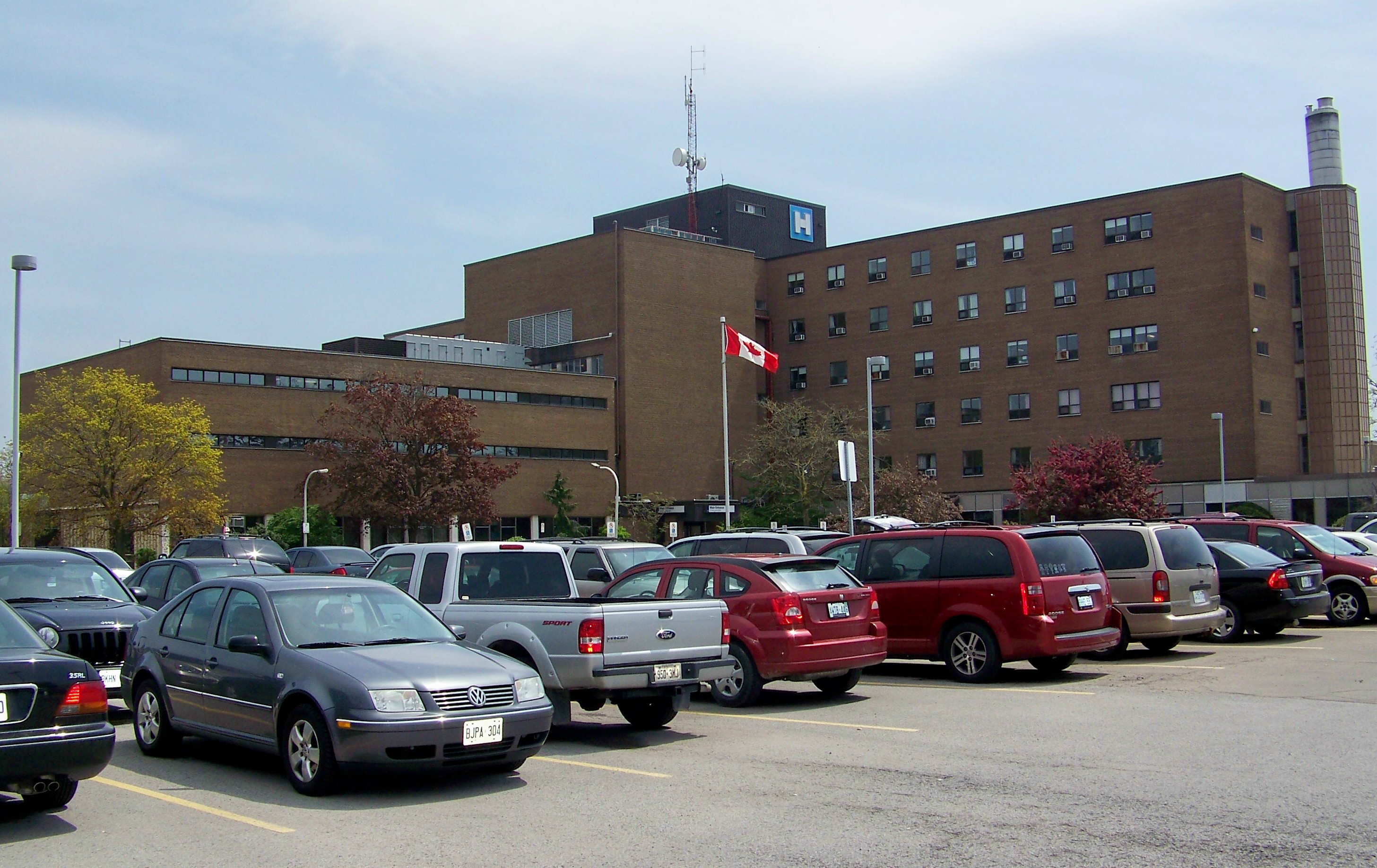
The Welland hospital site is one of four current hospitals in the region that would be closed if a new hospital is built in Niagara’s southern tier. File photo by Doug Draper
The phone survey, conducted by the polling firm Pollara between May 25 and June 5, after Smith tabled his hospital restructuring plan in early May, also found that less than half of the residents contacted have a positive impression of the NHS as an administrative body. The most negative impressions were expressed by survey respondents in Port Colborne, where less than three out of every 10 residents held a positive impression, and in Fort Erie, Wainfleet and St Catharines. The best impression scores were recored in West Lincoln and Grimsby where, interestingly enough, those municipalities are mainly served by the West Lincoln Memorial Hospital which is one of the only hospitals in the region that is not run by the NHS and which has often received praise from the residents it serves.
On the other hand, the survey shows that a majority of residents in Pelham, Niagara-on-the-Lake, St. Catharines and other Niagara municipalities tend to support Smith’s restructuring plan, and many Niagara residents say they would be willing to travel farther to get to a hospital if they believe the quality of care they will receive will be higher.
“I am overall very encourage by the findings of the (Pollara) report,” said Smith in a statement you can review the full text of on the Niagara Health System’s website at http://www.niagarahealth.on.ca/ and under the heading ‘Community Engagement Results’. “Though communities where existing facilities would close are, as expected, concerned or in some cases opposed, there is almost universal support for the building a a new hospital serving South Niagara.”
“Residents polled say they are willing to drive further – almost double the time. To their local hospital and three quarters of the people polled say they would drive as much as 30 minutes longer for the highest quality care possible,” Smith added. “Unquestionably, our goal with our community and staff is in ensuring that quality remain our number-ond priority. It is clear to me that the fewer sites are an essential part of improving how we care for patients and how we create an environment of high quality work life, including reasonable on call-responsibilities.
Smith is the CEO of St. Joseph’s Hospital in Hamilton who was appointed by the province last year to temporarily supervise a beleaguered NHS last year and attempt to get the body back on a favourable track with its staff and the residents they serve. As part of the restructuring plan he tabled this May, he recommended closing what remain of four aging hospitals in Niagara Falls, Welland, Port Colborne and Fort Erie, and replacing them with a new hospital somewhere in the region’s southern tier. The mayors of those municipalities and the municipalities of Wainfleet and Pelham recently recommended two possible sites for that new hospital, if it were ever to be approved by a cash-strapped provincial government already involved in building a new hospital in Niagara’s north end in west St. Catharines. Those sites include an area of the QEW and Lyons Creek Road in Niagara Falls and off East Main Street and Highway 140 in Welland.
The following are some of the main highlights of the Pollara Survey, based on interviews with more than 75 residents in each of Niagara’s 12 local municipalities.
Highlights of Survey –
- Although NHS sites comprised 68% of the hospitals used most often by patients, they are considered “My local community hospital” by 83% of Niagara Region residents.
- The overall impression rating for the NHS is 4.5 out of 10, which can be considered below average compared to other hospitals in Ontario. Impressions of key NHS attributes were also below average except for the quality of doctors and the nursing staff.
- The key attributes to focus on in order to improve the region’s overall impression of the NHS are “meeting the health care needs of your community,” “the quality of hospital administration within the NHS” and “the ease and speed of access to health care.”
- Improving perceptions of other attributes will not have as great an impact on overall impression as these.
- Currently, it take residents 11:41 to drive to their local hospital on average, but they are prepared to drive as much as 19:35 to their local hospital. In fact, three quarters say they are willing to drive as much as 30 minutes further if they knew they could get the highest quality of care possible.
- Respondents overwhelmingly prefer a model of care based on a distribution of programs and services across sites focused more on quality over quantity.
- As such, residents of the Niagara Region support the principles behind the supervisor’s proposed restructuring plan. Support for the plan itself, however, is a different story, as outlined on the next slide.
- Despite a stated preference for quality over quantity and a willingness to travel further to receive better care, most Niagara residents oppose the supervisor’s recommendation to close the sites in Port Colborne, Fort Erie, Niagara Falls and Welland and replace them with two new facilities in South Niagara.
- The four directly-affected communities are among the most opposed. Meanwhile, Niagara-on-the-Lake and Pelham are the only communities in favour of the restructuring plan.
- The main reason for opposing the restructuring plan is location. Gaining public support will depend largely on a careful study and selection of optimal locations for the new sites that are well within the region’s travel time threshold of 19:35.
- The proposed closures represent the primary hospital sites used by residents of Fort Erie, Niagara Falls, Pelham, Port Colborne and Welland, as well as secondary sites used by Niagara-on-the-Lake, St. Catharines and Thorold. Taking such broad regional
- considerations into account when selecting new sites will be an important challenge to overcome.
- If residents are to accept longer travel times, the “highest quality of care possible” part of the promise must be kept. In other words, trading off quantity must yield quality.
To read the full survey click on http://www.niagarahealth.on.ca/uploads/NHS-2012-Public-Opinion-Survey-Final-Report.pdf .
(Niagara At Large invites our readers to share their views on this post below, remembering that we only post comments by individuals who are also willing to share their first and last names.)
 Niagara At Large
I think a very telling statement here is that people have “an average drive of 11:41” to get to their local hospital. DON’T WE WISH!!!! That is absolute BS for anyone in Port Colborne, Wainfleet, Fort Erie, Ridgeway, Crystal Beach, etc. Perhaps that was true for these towns years ago but no longer. The 19:35 drive would be a blessing!
The survey also states that people would not mind driving an additional 30 minutes to get access to quality care. Obviously these people have never had the experience of an acute illness or trauma. When you are having a myocardial infarction and feel like an elephant is sitting on your chest the terror is indescribable and every minute you experience that pain, your heart is suffering irreparable damage. Even worse, what if your heart stops? Hell, what’s an extra 30 minutes here or there?
The NHS was the worst creation in the history of health care in Niagara, not unlike Regional government where St. Catharines got the roads and the rest of us got the potholes.
Why could they not have just built their mega hospital to replace the aging St. Catharines General and Hotel Dieu and left everything else alone?
LikeLike
My partner has been waiting for surgery at the Welland County Hospital since May 2011 to repair her cardiac sphincter which causes her severe acid reflux. This is extremely uncomfortable, causing difficulty sleeping, plays havoc with her asthma and potentially could led to esophageal cancer, which killed her father in 1989.
The chronology is two re-scheduled dates in May 2011 until a cancellation in while sitting in pre-op May 24, 2011. After that several re-schedules until she finally postponed due to her fears concerning the outbreak of Clostridium difficile. She requested a new date for late fall to mid December 2011 or after April 2012 because she prepares tax returns each year. Any late 2011 dates were subject to re-schedules so spring 2012 was to be the time to have this resolved. The first date was given for June 13 this year but was cancelled late afternoon on the 12th with a re-schedule for June 22 at 1pm. My step daughter and I took her to WCGH at the prescribed time of 11am. She was prepped, medicated and put on an IV drip. We sat with her until she was taken to surgery at 2:05 pm. When I arrived back in Port Colborne there was a message to come and pick her up as the surgery had been cancelled again, this time right at the surgical theatre.
I immediately returned to Welland and brought her home very groggy, distraught and angry. She recounted that as she was about to go into the operating room and officious administrator argued with the surgeon that there was no time available for the surgery so it was cancelled at 2:30pm. She was given an anonymous letter before going back to pre-op stating that WCGH was only allowed to perform surgeries until 3pm whereas both St. Catharines and GNGH were allowed to go to 5pm.
Since that episode she has had two potential dates cancelled. She is inclined to cancel the surgery completely and live with the consequences of her condition. I will state categorically, we both appreciate the care and professionalism of staff at WCGH. Apparently this is an all too regular occurrence at WCGH and to a lesser extent the other NHS hospitals.
I am certain countless others have the same experiences. and would like to assemble their sagas as I lodge a complaint with the NHS and the Ontario Ombudsman.
This survey is utter nonsense. If, under the current conditions, the NHS cannot perform the basics like allocating surgical times to meet demand and provide those services equitably, then how the hell is a new, less accessible hospital, going to improve anything.
If you have any similar stories and would like to share, kindly forward them to me at jdlevick@gmail.com
LikeLike
Of course the average time to drive to the local hospital is around 11 minutes. More than half the residents in the region live in St. Catharines and Welland, where the two hospitals are. That is not an accurate way of looking at the situation.
LikeLike
Driving is not an accurate reflection of access for everybody. Thirty percent of the driving age population of Niagara does not drive either due to not having a license, having a suspended license or having access to a personal vehicle. For me, it is how much will it cost me in taxi fare to get to a hospital if I lived in Port Colborne, Fort Erie or some area around there.
Most visits to hospitals are non emergency visits, such as for tests, treatments or elective surgery. Some of these visits are repetitive, if a person has to go in for multiple treatments or assessments. In addition, people who are hospitalized should also be able to enjoy visits from family and friends, particularly if they have to stay there for some time. If the hospital is in the middle of nowhere, after the person had to pay $100 in taxis to get there, what if their family doesn’t have access to transportation which is true particularly for some 10% of households in Niagara, where zero car ownership is a reality?
Even for those that can drive, if you live alone or your spouse is out of town and you are in labour with contractions at less than five minutes apart, will you be able to drive yourself to the hospital? Ambulances are expensive. I know this because this happened to a few friends of mine, who ended up having to call 9-1-1 and their babies were delivered at home! The same question would apply if you feel you are having a possible stroke or heart attack. I can’t see anybody reasonably be able to drive themselves …
I was fortunate that I was able to grab a cab from downtown when I had those issues a few years ago and paid $20 to get there. Thankfully, it was not a stroke or a heart attack, although it certainly felt like it. My spouse was also hospitalized in isolation for several weeks one year. If I was not in town and able to visit him each day, I don’t know how he would have coped as he had few other visitors that were able to see him regularly. These days, you almost have to have family spending a lot of time with you because they do next to nothing for you after surgery or if you need ambulation and so forth. They should just keep the existing hospitals in Niagara South open.
LikeLike