
By Gary Screaton Page
Who is Lynden Dorval? He’s a man of considerable courage. He’s theEdmontonteacher who had the chutzpah to give several of his students the grades they deserved.
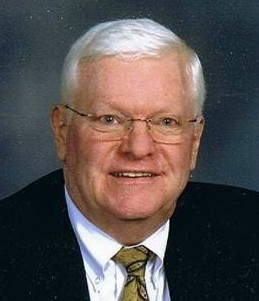
Gary Screaton Page
You see, some of Mr. Dorval’s students failed to turn in assignments and he had the audacity – at least according to his principal – to give those students a failing grade of zero. Why is that such a brave thing to do? Well, Mr. Dorval’s principal has had him suspended because, so the principal seems to argue, students who fail to turn in work should only be evaluated on the work they do turn in.
In one case, this bizarre approach, taken by the principal let to one of Mr. Dorval’s students being transferred from another teacher with only 40% of his work completed and turned in and yet had received a passing grade.
The situation Lynden Dorval faces after more than 35 years as an educator has some similarity to one I encountered here in Niagara. In one of my more than 40 years as an educator, I had one rather challenging class in which 12 students received failing grades for not completing assignments and for failing tests. One student who had submitted nothing at all, had missed most of classes, and failed each test—at least those he was present to take—receive a mark of 8%. Of course this is not a good situation and indeed I had never encountered one like it in all my years of teaching. However, the principal at the time–in his wisdom, or lack of it–saw fit to raise every one of those students’ grades to a minimum of 40%.
Now, think about that. That’s akin to your boss giving you 40% of your pay for doing next to nothing because you should be judged not on the work you produce but on the fact that you are an employee who sometimes shows up to work. Okay, perhaps that’s a little strained as a metaphor, but you surely get the idea!
In another equally bizarre situation, there was a time when teachers in high school were to evaluate students using a template that had a minimum of 50%. If a student did nothing at all, based on that approach, he/she would get at least a passing grade.

Suspended teacher Lynden Dorval and one of his infamous Zeros
Even stranger, but not perhaps so strange if you understand just how stupid some Education Ministry bureaucrats can be, was the memo that once came across my desk that said teachers should not fail students for not doing their work. Incomplete work was to be taken as a “management/discipline problem” not as an academic shortcoming.
Do we not yet get it? Young people want to be accountable—certainly the responsible students do, and they are the majority—they want to be measured, they want to show what they can do and to receive suitable recognition for doing it. Yet, increasingly the more difficult students are not being held accountable. We all need to learn there is no free lunch. Giving anyone credit for doing nothing flies in the face of the realities of life; “If you don’t work, you won’t eat”—at least not well and not very much.
I have never met a student who begrudged getting credit for the work done. I have met very few who felt very worthwhile when they got credit for doing anything they knew was below a standard of which they knew they were capable.
Seems to me, the one that needs to be taken to task—perhaps even suspended as was Mr. Dorval—is the principal who wants to give any student something for little or nothing: who wants to give credit where no credit is due. One has to wonder whether that principal is getting paid for a job he is not doing. Or, is that principal more concerned about having all his students graduate whether they deserve it or not. Certainly, every student passing would look good, but would it serve the students or the community well? I think not!
We, who value education, need to support Mr. Dorval for his courage. We ought to send a strong message to all teachers. We support their belief that standards matter. To give credit where credit is not due is dishonest; it is, moreover, a great disservice to students who do earn their way.
And, what happened to those students in my one class where the principal raised their marks? They all failed to pass the next term! In fact, their average marks were lower and the number of assignments completed fewer.
In those classes where students were given the opportunity to earn their marks and erase those zeros with subsequently completed work, rarely did I have a student neglect to do so! As a bonus, many learned that they were capable of doing better than they even thought possible. They also enjoyed the benefit of having earned their way.
Thank you, Lynden Dorval, for your love of learning and your courage to expect the best of your students.
Gary Screaton Page is a Niagara, Ontario resident, an award-winning educator and Registered Psychotherapist.
(Niagara At Large invites our readers to share their views on this post. NAL only posts comments by individuals who share their first and last names.)
 Niagara At Large
One would think the student should be suspended, not the teacher. Today’s little darlings are told they deserve self esteem. Remember when you had to earn it? I’m glad I won’t be around long enough for these idiots to be the workforce.
LikeLike
I too may get suspended but it was always my understanding that before I got a credit for a subject, there was criteria that, through assignments and tests I had to prove I knew.
Any time I did less worked than was required (and after, say a month of having any student I believe the teacher also has a sense of that students commitment to learn the material through in-class participation), say four tenths of the work, I was graded on the work I decided I wanted to do, assuming that I HADN’T made a reasonable attempt – just missing the boat – I should and did back in 1978, not expect to be rewarded with anything higher than the four tenths work I actually did. In fact, if I knew I was going to be moved on – passed automatically, why would I even show up to sit in a science room, do any assignments or stress myself about tests? Any student that is moved on – passed to enhance the Principal’s appearence is being given a receipt that is only going to bite them in the backside when real life comes a knockin’! I just hope my personal doctor was as fortunate as I was to have a teacher who graded his workmanship based on his effort and not the Principal’s legacy.
And, as I finally wrap up ~ WOW… what a small world – this Gary Page guy from Niagara, claims to be an award winning educator… in 1978 he was one of the finest teacher and people I have ever had the opportunity and priviledge to meet. Thank you Mr. Page!
LikeLike
Thank you for your very kind words, Barry.
LikeLike
I used to think that there was some merit to political correctness, or maybe I just believed that we should all be nice to each other and not say or do things that would offend others (even though we’d been doing it for years without realizing it).
But I think that passing students who fail courses and punishing teachers who grade students truthfully is going too far.
As you point out, would an employer continue to employ a worker who does only 8% of his or her job? I think not. This world is full of rules and, like it or not, when you break them or don’t contribute what is required, you pay the price.
LikeLike
In a large rural school in the near north of Ontario, a teacher had her first teaching years, and discovered, to her horror, that there were students age 14 and 15 who didn’t know just grammar, but even in one case, the alphabet. They were kept on, in a ‘holdng pen’ until they were old enough to just leave. All teachers were required some time with these poor souls, but of course, the school wouldn’t let them go until they had to. Feh.
LikeLike
That the education system so often underestimates the potential of even “special needs” students never ceases to amaze me. Giving students credit where credit is not due is not only unfair and dishonest — both poor examples to set for children — but more, insults their intelligence and cheats them of the opportunity to grow.
One of my own “special needs” students in my 4th and 5th years of teaching was scheduled to go to a sheltered workshop after grade 6. She didn’t. She went on to jr. high, then high school, then off to work. She worked for an insurance company for twenty-five years until they closed out her department. All those years she was not the “burden” on society she might have been in the sheltered workshop. Rather she earned a living, lived on her own, and paid taxes. She has a social worker now who helps her but she still lives on her own and participates in her community doing what she loves.
How close we came to underestimating her potential!
She never got a “free lunch” although she got a helping hand. That’s why she still does her best today and continues to enjoy life. She continues to be an inspiration to me — some 40 plus years later — and is living proof of what I have always believed about young people — indeed all people — when called upon and expected to do what they can for themselves and others and to do it as well as they can. Nothing more, nothing less!
I believe the majority of good teachers — and good teachers are in the majority — feel pretty much the same way. They respect young people and believe they should get what they earn, but they must earn it.
LikeLike