
(Niagara At Large is posting this release from the Buffalo, New York/Fort, Erie, Ontario Peace Bridge Authority on efforts to improve air quality, impacted by the emissions from idling trucks and cars at the bridge crossing. The impact on air quality from traffic congestion at this heavily used Niagara River crossing has been a subject of concern for residents on both sides of the Canada/U.S. crossing for many years.)
From the Peace Bridge Authority
BUFFALO, NY/FORT ERIE, ON, May 21, 2012– Today the Buffalo and Fort Erie Public Bridge Authority (Peace Bridge Authority) announced that it has engaged the U.S. Environmental Protection Agency (EPA) in order to exchange information on previous air quality improvements at the Peace Bridge corridor and also share ideas and best practices regarding future “green” stewardship opportunities at the port.
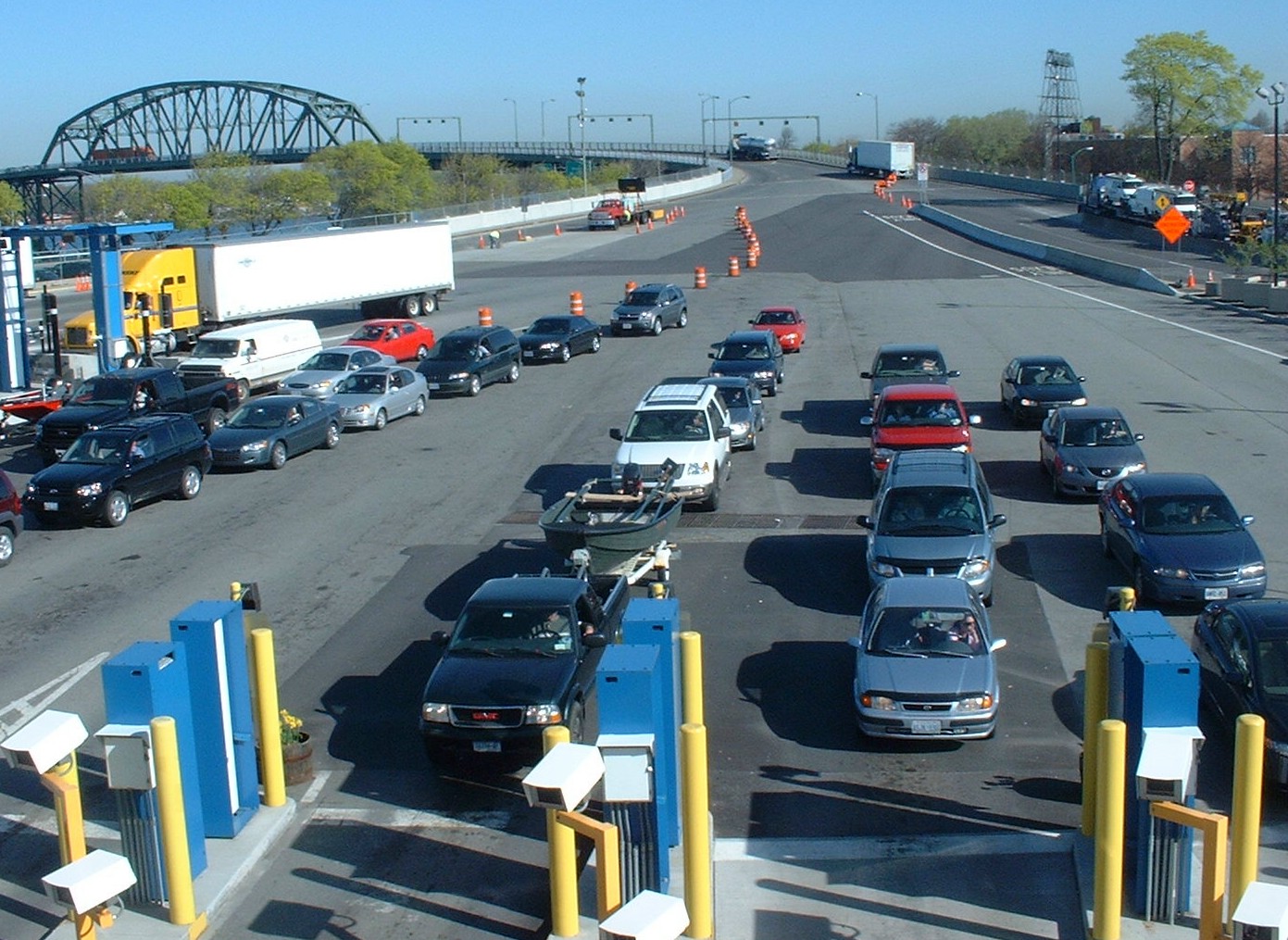
Traffic lineups at the Canada/U.S. Peace Bridge crossing.
“Much has been done at the Peace Bridge over the last ten years to mitigate traffic and environmental impacts on the host communities,” said PBA Chairman Sam Hoyt.
“However, with the help and guidance of the EPA, NYSDEC, and other community organizations, we believe even more can accomplished on this important issue.”
“The EPA is very pleased to be working with the Peace Bridge Authority to help identify ways that they can reduce the environmental impacts of the bridge on the environment and particularly on neighborhoods around the bridge,” said U.S. EPA Regional Administrator Judith A. Enck. “I look forward to continuing to work with the authority
in a way that fully engages the public to make this project a model of environmental sustainability.” During preliminary conversations between the PBA and EPA, a number of suggestions were offered regarding ways to immediately address related buffering and commercial idling concerns at the port. Such proposals include:
Expansion of the “Spare the Air” idling reduction program sponsored by the PBA.
Added landscape buffering in and around the corridor.
Greater idling enforcement by the New York State Department of Environmental
Conservation within the plaza and adjacent neighborhood areas.
Clean construction specifications and approaches.
Utilization of a “green” consultant to assess building plans and operations to
identify new opportunities for sustainable practices.
Potential affiliation with the SmartWay Program to encourage commercial fleet efficiencies and fuel savings.
In addition, the PBA expressed an interest in promoting a fleet upgrade/retrofit grant program or similar port-specific project, as has been implemented by EPA at numerous other land and marine trade hubs throughout the United States. The Buffalo and Fort Erie Public Bridge Authority, a binational bridge authority, has owned and operated the Peace Bridge since 1933. The bridge, which was opened to traffic in 1927, spans the Niagara River between Fort Erie, Ontario, and Buffalo, New York, and is a key international border crossing.
For more information on the Peace Bridge Authority visit www.peacebridge.com . You may also visit –
□ Facebook: /PeaceBridge □ Twitter: @PeaceBridgeAuth □
□ YouTube: /PeaceBridgeAuthority □ Traffic: Mobile.PeaceBridge.Com □
Niagara At Large invites readers on both sides of our Niagara River border to share their views on this post. Remember that we only post comments by individuals who also share their first and last names.
 Niagara At Large
Duh, the greenest solution is building another bridge.
LikeLike