
An Open Letter to All Niagaras Municipal Councillors from Elaine Manocha, a citizen of St. Catharines, Ontario
(Niagara At Large is posting this open letter it received from Elaine Manocha because it focuses on one of the most important issues Niagara, as a region, has to address in the months ahead. We hope the thoughtful points this Niagara residents raises in the letter adds meaningful to the discussions and debates we should all be joining in on the question of how our region should be governed in the years ahead and we encourage you to share your views in the comment boxes below.)
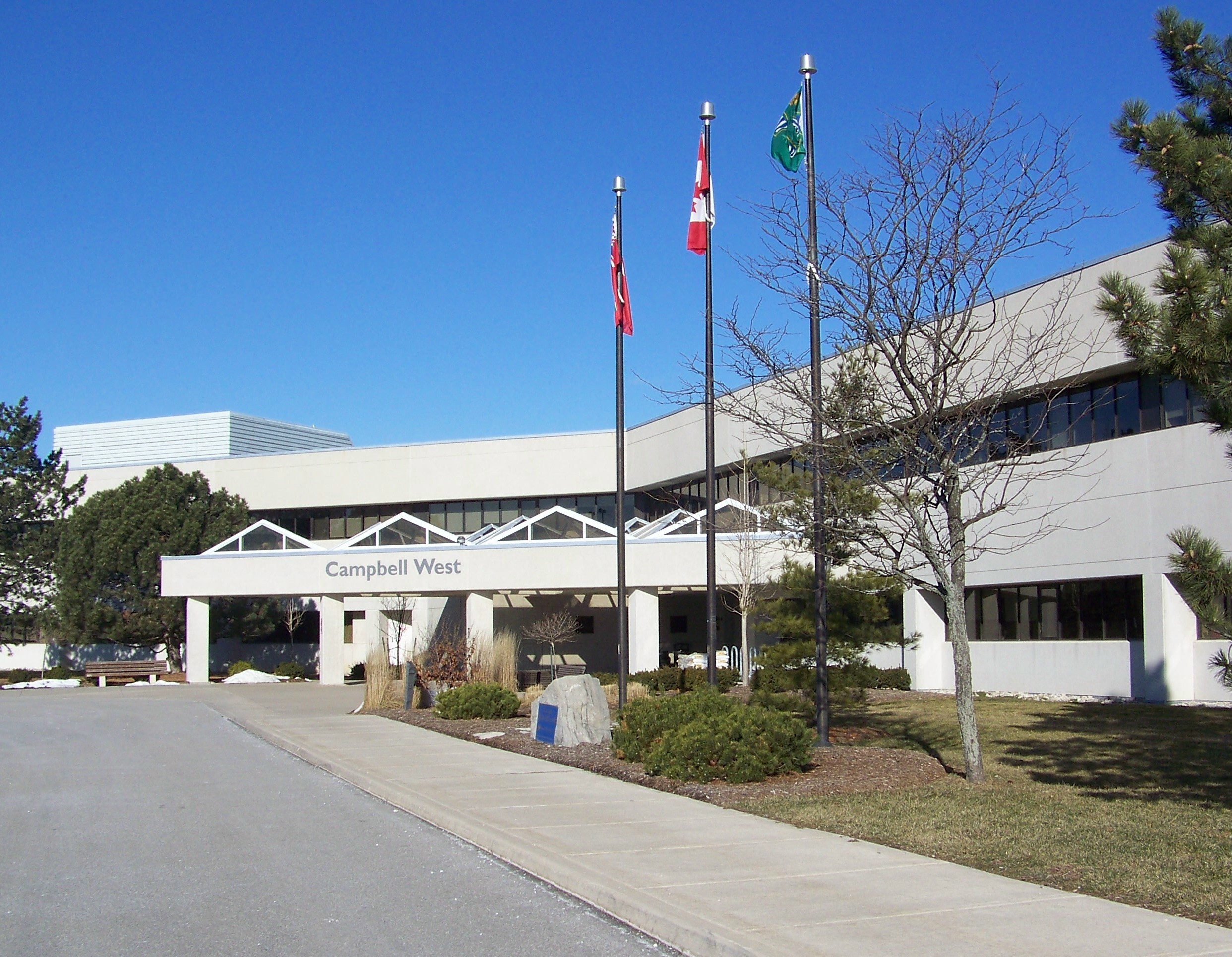
Niagara's regonal headquarters. Is it time to put all of Niagara's governance under one roof?
Reduce Local Government Duplication and Cost – A Call to Action!
We ask for leadership in elected officials to reduce the costly duplication of local government in Niagara.
How? By combining the current 13 municipalities into a single City of Niagara
Why? A streamlined, less complex government system is good for all taxpayers – home owners and businesses.
Action? #1. The ask is that the following motion be put before every municipal Council with a recorded vote – NOW: To enact a single tier city government for the 2014 municipal election that reduces service and job duplication and reduces cost.
#2. We ask that every citizen of Niagara make their voice heard – write letters / blog your elected officials (local and provincial) to the newspapers – OFTEN! Asking that the motion be approved by every municipal Council.
How Much Duplication? We have 12 city/town municipalities + 1 regional municipality to govern and service 430,000 citizens. That’s a duplication of positions, service delivery, facilities to house the people, technology / materials to run the operations and decision-making bodies.
Duplication of 13 times:
| Elected Officials: That’s 13 Councils, 13 Mayors and 100+ councillors. Regional Council alone has 31! Our City of Hamilton neighbor only has 16 elected officials to govern 504,559 citizens. City of Mississauga has only 12 officials to govern 668,549 citizens. We have 113+ municipal elected officials to govern 427,421. Population source[1]. |
| Senior Administration: That’s 13 Chief Administrative Officers, Regional/City Clerks, Fire Chiefs, Deputy Fire Chiefs, Treasurers, Commissioner/leads over Parks, Public Works, Planning, Legal, Building, Human Resources, Information Technology, Library and more. When you look at the next level below, the numbers and the duplication balloons. |
| Buildings: Everyone always needs a new one! City Halls (13), Works Yards, Fires stations, Libraries, |
Services, Technology, Materials:
|
Decision Making: What is the track record of 13 decision-making bodies? Bureaucracy, parochialism and red tape!
- Battles over water rates, conflicts over land development
- Can’t agree to have 1 transit system – we have 3 separate systems and had to have a pilot with the region to get them to even start co-operating
- Increases in taxes (for the last 4 years Niagara Region has had 0 to .01% impact on taxes yet all 12 municipalities increased it)
- Losses in commercial/industrial tax base with business closures and businesses moving out ofNiagara– business has to deal with 2 levels of government – 2 sets of different rules (we need 1 economic development centre!)
So How Much Duplication? Here is a small sample:
|
Reduce the Duplication |
Current Estimated Duplication[2] |
Estimated Reduction[3] |
|
Reduce 113 councillors to 13 to (1 mayor and 12 councillors likely 1 from each current municipality) |
$3.1 Million[4] |
$2.1 Million |
|
Chief Administrative Officers reduce from 13 to 1 |
$1.6 Million |
$1.3 Million |
|
Fire Chiefs – only need 1 |
$600 Thousand |
$450 Thousand |
|
Treasurers – only need 1 |
$1.2 Million |
$900 Thousand |
|
Senior Parks – only need 1 |
$700 Thousand |
$550 Thousand |
|
Senior Planning – only need 1 |
$860 Thousand |
$600 Thousand |
|
Sub Total (rounded) |
$ 8 Million |
$ 6 Million (savings!!) |
Impact on employees? Now is the time to act. Take advantage of the retiring baby boomers and normal attrition so position reductions can be made without terminating people. To maintain services during a transition, hire a temporary replacement into impacted positions.
This action is a conflict for elected officials – there will be a reduction in elected official seats – their loss for the taxpayers gain. However isn’t that what we elect them for, our best interest? People will raise 100’s of reasons to not do this – we‘ve just shown you more than $6 Million reasons to do it (and that’s with reducing the duplication of only 5 common senior roles and Council. We need to stop competing against ourselves for scarce resources and putNiagara on the map! Our population is getting too big to think and act so small and divided. Keep and promote the local charm of each municipality but govern and service without the duplication, at a reduced cost and without reduction in services!!!
Who will take action for the citizens? Make sure it’s you!
Elaine Manocha is a resident of the City St. Catharines located in Ontario’s Niagara Region
(Niagara At Large invites you to share your views on this post in the comment boxes below. Please remember that NAL does not post anonymous comments or comments by people using pseudonyms. Only comments attached to real names will be posted here.)
 Niagara At Large
Elaine, I read your letter and I appreciate the detailed analysis. I for one don’t like big centralized governments so I would like to forward a few responses.
1. Your letter focuses on the savings we could have by eliminating redundant jobs across the region, It’s a good point, but don’t you think there could be a down side to amalgamation as well? We need to discuss the good and bad side of things to have an honest discussion.
2. To get these savings the municipalities would have to give up their right to govern themselves. But would we ever see this money aain? I think this is the biggest deceptions of your letter. The Niagara Region could waste $6 million dollars in seconds and all the Municipalities could do is watch powerless.
3. When the hospitals in the Niagara Region were amalgamated, it was done with the promise of saving money and providing people with better service. Neither of these happened. Can you explain what the Niagara Heath System did wrong that lead to them not realizing their goals. Was it mismanagement? politics? Unique unforeseen circumstances?
I think before you advocate taking the entire region down this same road we better discuss what happened with the hospital system first.
4. With the amalgamation of the Niagara Health System the worst victims appeared to be the smaller cites in the region. Fort Erie and Port Colborne both had thousands of people living in them, but it was decided that it wasn’t efficient to provide them full hospital services. Grimsby, somehow escaped amalgamation and ended up running one of the most efficient hospitals in the area. Doesn’t it concern you that you are asking these cities to agree to amalgamation all over again?
LikeLike
Any amalgmation must be done carefully over time, with services uploaded one by one. By-laws being aligned with one another. Street names reviewed, so we don’t have 13 Lake Streets, 13 Main Streets and 13 Ontario Streets, etc. Policies and procedures and job descriptions aligned, with senior staff positions eliminated through attrition. The formation of local boroughs to replace the former municipal councils, so there is some local representation and a voice for each geographic area. Move to the amalgmation vote for 7 out 13 municipalities comprising the majority of population base and then apply to the province (as the province needs to approve it) and create the new City of Niagara.
The way some amalgamations were done were shabby and did not respect democratic processes, such as the one in Toronto. It was imposed from above and the time line predetermined. Let us choose our own process that works for us, as well as our own time frame that we believe can best represent our needs.
LikeLike
It is no surprise that this “Case for One City” was fielded by “a citizen of St. Catharines”. Having despoiled some of the best agricultural land in Ontario to build their “mistake by the lake”, having indulged in parasitic political practices at the expense of the other 90% of Niagara, these urban elites are now asking “please sir, can we have more?”
• What urban elitists from St Catharines call duplication, we here in the sticks call democracy.
• What smarmy urban elitists call parochialism, we in the sticks call accountability. We still know what our reps look like and can talk to them at the market or over the fence. More importantly, they still know who we are.
• When urban elitists ask “can’t we all just get along and sing kum-ba-yah”, we here in the sticks respond by asking, “just when should we sacrifice our communities on the altar of efficiency?”.
• St Catharines elitists took away our court house, our land registry, and assaulted our French community, all in the name of “efficiency”.
• St Catharines elitists have gerrymandered federal and provincial riding boundaries to consolidate power through the QEW corridor, at he expense of the remaining 90% of “Niagara”. Should you not be surprised that we here in the sticks are pissed at being disenfranchised?
• When urban elitists praise their new and improved QEW that by-passes 90% of Niagara, their billion dollar new hospital built out of reach of the taxpayers of the South, Go-Transit that excludes 90% of Niagara, the marginalized voters of Niagara South say “enough! – You have used your political weight just about long enough”. We here in the sticks know that One Niagara is all about big money and consolidating power. Putting a smiley-face on it doesn’t change things.
Elitist One-Niagara amalgamation rhetoric is deep enough to require hip-waders. For the benefit of urbanites, hip-waders are long rubber boots needed to wade through their incessant pious bushwa.
Perhaps the way to restore fairness to the Niagara Region is to divide it back along pre-1970 county lines.
Perhaps the answer is to restore the original pre 1970 boundries. The St Catharines amalgamationists can play “king of the castle” in Lincoln, while the rest of us hayseeds can get back to the heavy lifting required to restore our hospitals, schools, highways and communities generally.
At the end of the day it is all about retaining a bottom-up system that constantly reminds elected officials where their legitimacy comes from. In a “One Niagara” Godzilla monster, that ain’t gonna happen.
LikeLike
This article causes one to wonder if Elaine Manocha has ever read or even heard of the study of this matter that the region spent $200,000.00 on to examine this proposal.
The result of this study done by experts in the field determined that “One Niagara” is not the way to the future. It also determined that there would not be any great cost savings if this idea were implemented.
LikeLike
When I hear “amalgamation” I can’t help but think the mess it caused for Toronto, which is why I’m dead against it.
Sorry but as a resident of St. Catharines, I know my needs are different then someone in Fort Erie. Would I really want a mayor running things for St. Catharines from a smaller more rural area?
It is similar to Toronto where you have ford (suburbs) ruining things for the city itself.
Amalgamation IMO works only on a smaller scale. When Cambridge, Preston, Galt etc. all became one city.
@Chris, unless I misunderstood you, when you say GO transit excludes 90% of the population, how do you figure?
It runs to St. Catharines & Niagara Falls which have a combined population of around 214,000. Assuming the regions population is at 427,000, that puts GO transit at reach of at least 50% of the population.
LikeLike
Geographically, Go-transit marginalizes 90% of the region and all but 3 member communities. It duplicates the already well developed QEW, and competes with private carriers, However, try catching a Go-bus from Wainfleet or Stevensville on a bad weather day in winter.
As to the old canard that nobody from there is clamoring for transit, perhaps that’s by design, in the name of “efficiency”. Perhaps, amenities such as transit and hospitals are only awarded to those who vote appropriately.
Perhaps you are making a good case for the return to the Lincoln & Welland two-county model, guaranteeing some modicum of local accountability.
Thank you.
LikeLike
I Agree with Elaine, that Amalgamation is an economic necessity. As for her (and likely my own) detractors – this is not about elites getting their own way. It is a fact that the Niagara Region is the most inefficiently run region in all of Canada, mainly because of its ridiculously high duplication of services. I am not an urban elite, but I am a professional in the field of rural economic development. I recognize that Niagara is facing many of the same challenges as other rural regions in the world.
I currently live in the city of Niagara Falls, which is itself an amalgamation of many small communities, such as Stamford and Chippewa. I don’t recall the city becoming any less democratic when past amalgamations took place. All 400+ thousand of us in this region are paying a very large price today for our meagre services and our sense of small town pride.
I am not confident that potential savings would be used to our benefit, but under the current structure we have a 100% guarantee it will be wasted. Time will tell if the health system amalgamation works or not – it’s hard to say, since it is still transitioning, and has had management challenges. I think that better GO transit (and other services) would result from amalgamation – just look at all the political bickering about, and inefficiency of our new regional transit system.
I think that the current debate between municipal leaders about whether or not to amalgamate is a farce. There is a conflict of interest, since they are the ones whose positions are at risk if amalgamation occurs. This farce is neither democratic, nor an example of decision-making from the bottom up. I think amalgamation and its timeline must be mandated from elsewhere, if it is to happen, but agree with Angela, that Niagara should be able to decide for itself how to do so. Niagara is a unique region with unique needs, and therefore shouldn’t be required to adhere to a “one-size-fits-all” approach mandated from above.
I believe that amalgamating would have many benefits, but agree with Matthew, that we need checks and balances in place to ensure the downsides are mitigated. I agree that there would need to be a fair representation of the smaller communities, such as Fort Erie, Thorald, and Niagara-on-the-Lake. I’m actually not convinced the smaller communities get treated fairly under the current system – an issue that needs addressing with or without an amalgamation.
As for Chris, I’m not even sure how to respond to your ranting, and as for Nick, I am unaware of any public study showing amalgamation would not bring cost savings. That would be a great read, so please post some details if it exists.
LikeLike
It’s not about saving a few bucks. It’s about responding to the needs of the community, not placating bean-counters. It’s about access to and accountability by elected officials.
As to ‘ranting’, that is in the eye of the beholder. A rant by definition is violent or extravagant and it could appear so to someone living in an urban setting with no contact or understanding of rural issues. Invalidating the concerns of the geographically disenfranchised as the rantings of hayseeds is the soft bigotry of low expectations.
Coming from Niagara Falls with all the amenities, QEW, Go-transit, and so forth it may be difficult to see what it is like when your hospital has just been defunded, wards closed and trust fund taken away. That is not extravagant but factual.
Cobbling together 3 adjacent ‘burbs into a town is not quite the same as appropriating 50 or 60 villages located in 12 geographic centers separated by hundreds of thousands of acres of farm land and pretending it’s a city.
But I digress. Too often politicians get elected only to turn their backs on the voters that got them there. Reducing democratic imperatives to spread-sheet determinants, and not respecting the electorate is one of the reasons Niagara Region is in the situation it is.
LikeLike
The article regarding the study was written by Allan Benner (QMI Agency Niagara) and published in The Review. I suggest you obtain and read. The study was done by the Berkeley Consulting Group and called “Good Governance For The Future” and was commissioned by Niagara Region.
LikeLike
The sheer size of Niagara Region is one of the most difficult problems to overcome when discussing amalgamation. At 1852 sq. km. and a population of about 430,000 it becomes an unwieldy proposition to satisfy the needs of distinct communities separated by relatively long distances.
For comparison sake here’s a matrix of other Regions in Ontario
Hamilton 1138 sq. km. pop.520,000
Waterloo 1382 sq.km. pop.478,000
Halton 960 sq.km. pop.501,000
Peel 1246sq.km. pop.1,296,00
What these other regions share are distinguishable urban and rural communities, but with a significant difference. The urban populations are largely geographically concentrated so amalgamation of services was much easier. They also have a single divide between rural and urban concerns, whereas we have these same concerns within our individual municipalities and with other municipalities as well. In a single word complicated.
The rational argument can be made that combining service will lead to economies of scale, hence lower cost to the taxpayer. Experience tells us that has been a mixed bag but generally speaking those savings have never been fully realized.
Perhaps, the answer is not in a one size fits all solution -One Niagara, but instead examine the commonalities of municipalities within the region and look at amalgamation of smaller components. If we look back to the original political structure pre-1971 at the two counties Lincoln and Welland, we may find a template for to begin this debate..
LikeLike
Interesting idea John.
It was followed by Haldimand and Norfolk a few years ago.
They amalgamated as Haldimand-Norfolk, but after awhile, decided to disengage and revert to Haldimand County and Norfolk County.
Maybe Niagara North (Lincoln) and Niagara south (Welland) should do the same.
LikeLike
Thanks Nick, for sharing about the “Good Governance for the Future” report. I’ll get a copy pronto.
LikeLike
Thanks again, Nick. I did get some information about the “Good Governance for the Future” Report.
The report was completed in 2000, and is one of many such reports commissioned by the regional municipality since its creation in 1970. Some of these reports, such as the 1989 report commissioned by Harry Kitchen supported a single tier system, and made recommendations on issues such as revenue problems, economic development, city council composition, lack of inter-municipal transit, social planning and boundary change.
Similar topics resurface in the Berkeley report, which was commissioned in 1999 to develop and evaluate optional governance structures for municipal administration and to make recommendations about governance
structure. Its recommendations were a counter-current to the amalgamation craze of the 1990s. It does not support the current structure of 12 municipal centres, nor does it support the idea of one Niagara Megacity. It stated that local municipalities should not be replaced by a single tier government at the regional level in Niagara, that the number of lower tier municipalities should be reduced (to about three), and that the number (not quality or extent) of regional services should be reduced to eliminate overlap and duplication.
Although more recent reports have been more focused on issues pertaining to equitable democratic representation of regional municipalities (see the 2002 report, “Reshaping Regional Council”), as of 2010 the issues related to amalgamation resurfaced in discussions of Niagara’s “new regionalism”. The main issues of the current debate include:
1) Less emphasis on boundaries and more emphasis on visioning, strategic planning, resolving conflict and building consensus.
2) Accepting that boundaries are open and elastic and building cross-sectoral governing coalitions.
3) Emphasizing collaboration and voluntary agreement among equals
4) Building trust as a binding element in relations among regional interests
5) Empowering neighbourhoods and communities and drawing them into
regional decision making
Getting back to the “Good Governance for the Future” report – It is important to remember that this report is only one of many that have been commissioned, and that many others argue in favour of greater (or lesser) amalgamation. Also, the report was conducted 12 years ago, before many of the economic and social changes wrought by globalization and the internet changed life within Niagara and Niagara’s relationship to the rest of Canada and the world. It raises some good points in an ongoing debate.
LikeLike
I wonder if there are any reports on this matter done since the “Good Governance” report. By this I mean reports prepared by professionals in the field. Most of the things I read today are authored by Regional Committees that by their very definition are not independant.
LikeLike
Excellent discussion regarding “One Niagara”.
Put me on the side of those who are skeptical of “One Niagara”.
I remember moving to Port Colborne in 1956 and the municipality was a thriving, vibrant, soon to be city. Several substantial industries, including INCO, Algoma Steel, Robin Hood, Maple Leaf Mills, National Harbour Board, as well as car dealerships, clothing, hardware and department stores, and a full service hospital. There wasn’t much you couldn’t get in Port Colborne including a driver’s license test, be tried in court or file for unemployment. The list could go on and on. By 2009 none of these businesses or services are available now except for a skeleton staff at INCO or Vale as it is now named.
In 1970 regional government was foisted on us with the understanding it would be more efficient, reducing duplication and more cost effective. At the same time employees from the city’s water works department were thrilled that their salaries jumped substantially to the “regional rate”.
When a decision was made to build a new headquarters to house regional government, where was it built to provide equitable access for the citizens of Niagara? Was it built in the geographic centre of Niagara? The answer of course is no, it was built in the southwest corner of St. Catharines….ooops, sorry across the street in Thorold.
Through the years Port Colbornites sat back and watched businesses and services disappear northwards, but the final piece de resistance was when a provincial decision was made to amalgamate hospitals within Niagara in 2000. Once again the purpose of this exercise was to reduce duplication and costs.
By 2008 the newly formed Niagara Health System had acquired a long term debt of $160 million and in 2003 made the decision to build the mega super hospital in the bowels of west St. Catharines (right beside a busy train track). In the process our hospital and others were dismantled to nursing homes. Staff at Welland and Niagara Falls hospitals also know their hospitals are on the chopping block to pay for this new “centre of excellence” in St. Catharines. This then means many people in Port Colborne will have to travel close to an hour to the new hospital in St. Catharines. A man from St. Catharines recently wrote me, if you want to live close to a hospital move to St. Catharines. What an ignorant statement. Wouldn’t it get a bit crowded if we all did that?
This is where regional government and amalgamation has led us. Traveling to access services and costs escalating out of sight and hospital services reaching dangerous levels.
I would love to find a way to get along, but am highly skeptical of “One Niagara” because of the past history, where all roads seemed to lead to St. Catharines.
Convince me that Port Colborne and other Niagara communities will get their “fair share” under “One Niagara”.
Remember the old adage, Fool me once, Shame on you. Fool me twice, Shame on me.
LikeLike
A lot of the good jobs are moving out of St. Catharines, so I can’t see that St. Catharines would remain dominant in any ways. If you can’t get to the good jobs, you certainly are not better off under the current system.
LikeLike
Maybe if everything we build Hospitals ,Schools ,Government Buildings and so on did not have to be a one off design we could afford to have more services in all our smaller Communities. The hospital is a prime example of one time of HUGE engineering costs , not to mention the extra costs in construction of something that is unique. Once completed the next hospital is again built as a signature building with all the engineering costs associated with it. If we standardized a number of designs and they were assigned to certain catchments (100-250 ,300-600, 750 -2million people) or what ever was the best wouldn’t money be saved? The Government of the day could
have a clearer idea of costs and completion time therefore awarding more schools ,hospitals and other infrastructure to all communities not just one. o
LikeLike
I just thought I would add that if schools adopted a more homogenized design ,again based on the catchment area, this would also reduce costs .But when it came time to close the school it would be of more value on the market because of it’s more functional design.
LikeLike
They won’t get their fair share. It will all go to the Kingdom of St. Catharines. St. Catharines is so smug that they say they want the Region to work together and then they send a letter to other municipalities to inform them that St. Catharines has formed their own committee to “DECIDE HOW THE REGION SHOULD BE GOVERNED”.
LikeLike
Sure the hospital is located by a train track, but it’s not like trains ever get de-railed.
LikeLike
Not that there will EVER be a de-railment, but just in case, does anyone know the NHS plans to
– provide hospital services for the injured?
– move the existing patients of the new St.Kitts Hospital, away from potential explosion & contaminating chemicals? (eg. apparently, they’ve moved the Operating Room equipment from the former Fort Erie & Port Colborne general hospitals, and stowed it in the basements of GNGH, etc. so that they can’t be used)
LikeLike
If someone wants to eliminate the number of politicians in Regional Niagara I know a Taj Mahal where they should get rid of ALL of them permanently.
LikeLike
The comments have been insightful and constructive. As a resident of Port Colborne and Welland prior to that, I share many of the concerns Chris W. expressed in his contribution. There is a real and visceral resentment in the south towards St. Catharines. Nobody knows better than Pat Scholfield the difficulties of the one Niagara solution at the NHS in our version of hospital wars. St. Catharines contributors, I sense, don’t understand the frustration, the dis-connect between north and south, hence, tend to favour or accept the amalgamation proposition.
The only measure we currently have is the NHS example. Regional government failed on every level to recognize what is best for the entire region. The entire process was a disgraceful display of mismanagement, cronyism and political horse trading that contravened accepted rules on planning, logistics, transportation and common sense. The rail way line adjacent to the new hospital is a good example. I made a submission in 2007 to the NHS with site GIS mapping data, Canadian rail derailment statistics with some studies performed from other jurisdictions. Ignored. The Third Avenue interchange from the 406 is the latest self inflicted FUBAR, Regional government has created. The back and forth about whether this is to be paid by the province or the region is an absurd discussion to have in 2012. If we pay, the Regions road budget will be severely compromised for at least 5 years. You can bet that shortfall is going to be felt greatest below Hwy 20.
If we are going to go down this path, I would like to see a regionally representative citizens committee struck to work and study any proposals that emerge. The committee has to have teeth with strict governance and transparency. The politicians won’t like it, that’s why it’s so appealing.
LikeLike
Mr. Sinclair, I would like to commend you on finding a copy of “Good Governance for the Future”, making a datailed comparative analysis of other reports and finally showing how the reports need to interpreted and ignored in some cases.
Can you tell me how you did this in 45 Minutes? Is anyone connected to the Niagara Regional government helping you with your posts? lol
LikeLike
Some very good comments here.
I think that the current multi-municipal system and amalgamation to any degree will never work unless the decision making process becomes more inclusive. Government decisions currently fail to meet the needs of smaller municipalities and rural areas. Period. Grand schemes like the New Hospital make financial sense on paper because they compartmentalize services and ignore those costs that citizens face, but for which their branch of government is not directly responsible. For example, In the case of the new Hospital, the health care system isn’t responsible for increased transportation costs, but for the majority of people in the Niagara Region, who live outside of St. Catharines, these are very real costs.
I don’t live in St. Catharines, but the attitude of some posters, who stereotype all people who live in St. Catharines as urban elitists does concern me greatly, though. I understand your frustration, and your need to vent it, but stereotyping is NEVER productive, it oversimplifies and ostracises those who belong to that group, who might otherwise have become your allies.
LikeLike
Unifying Niagara will work about as well as the unification of the Balkans or the unification of Fort Erie.
LikeLike
Empire builders, idealists, students and bureaucrats … these would be about the only ones who would try to amalgamate Germany and France without considering cultural differences. As for elites who do not grok the existential realities of Niagara, all I can say is that a couch is a difficult place from which to understand disenfranchisement.
LikeLike
Jeffrey, re- I would not characterize the vast majority of people in St. Catharines as urban elitists, but geography has benefited them, hence they tend to be less supportive or oblivious to the plight of South Niagarans.
LikeLike
I agree with Mr. Snyder about the good comments on this topic .I thought that the ideas that Mr. Holbourne shared had merit and is worthy of a second look not ljust here in Niagara , but all across the Province!
LikeLike
Thanks Charles I am not trying to be Mister idea or looking for a badge , I just feel suggestions go a little farther than comments in certain situations. I truly felt for those communities that lost their hospitals and who must have felt a sense of abandiment by their health care system. If the ones who choose the designs could refrain from choosing these signiture buildings time and time again moneys could be invested in many communities as opposed to just one.
LikeLike
Im all for it I wish everyone would get on board and pitch in unfortunately this will be a huge ugly battle but I think it should be done.
LikeLike