
(A coalition of 36 American environmentalists, including the Buffalo, New York-headquartered Great Lakes United and Buffalo Niagara Riverkeepers, is calling on the U.S. Environmental Protection to strengthen proposed regulations for ships discharging ballast water that may be hosting zebra mussels and other invasive species from waterbodies elsewhere in the world to the Great Lakes.
Niagara At Large is pleased to post the following February 23 news release from the groups for our readers’ information. Canada’s federal government and the Ontario government have shown little interest to date in joining the U.S. in further regulating the discharge of ballast water to the lakes.)
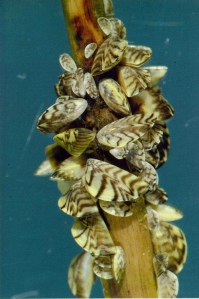
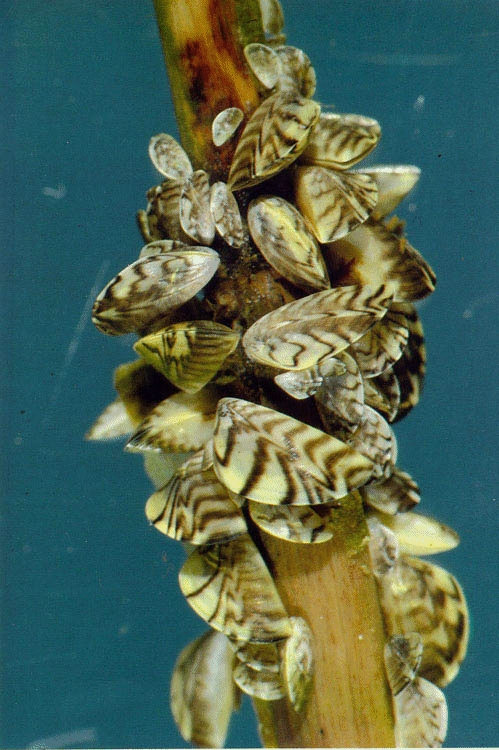
- Zebra mussels like these have clogged up water intakes and other infrastructure in the Great Lakes basin, doing incalcuable hundreds of millions of dollars worth of damage over the past two and a half decades since they entered the lakes in the ballast water of an overseas ship.
Thirty six diverse organizations from across the Great Lakes and St. Lawrence River region joined together to call on the Environmental Protection Agency to strengthen a proposed permit regulating ballast water discharges from commercial vessels. The group letter was sent on the last day of the EPA’s comment period on the permit. The EPA must now issue a final permit by November 30, 2012.
Invasive species introduced and spread via ballast water discharge are wreaking havoc on the Great Lakes and other U.S. waters. A litany of non-native invaders—including zebra mussels, quagga mussels, spiny water fleas, and round gobies—have turned the Great Lakes ecosystem on its head, altering the food web and threatening the health of native fish and wildlife. Non-native ballast water invaders cost Great Lakes citizens, utilities, cities, and businesses at least $1 billion every five years in damages and control costs, according to research by the University of Notre Dame.
The EPA’s proposed ballast water permit takes steps to reduce the risk of ballast-mediated introductions, including:
- The significant transition from physical ballast tank management requirements to technology requirements. Under the EPA permit, ships will be required to install technology that meets the International Maritime Organization’s standard to treat ballast water before it is discharged.
- Requiring ships entering the Great Lakes to employ, in addition to technology, the added protection of exchanging ballast water to flush out and kill non-native freshwater organisms before treatment.
Conservation groups assert that the permit still leaves the Great Lakes and other U.S. waters vulnerable to the introduction and spread of invasive species. The groups are asking the EPA to make the following improvements to the permit:
- Adopt a zero-discharge standard for invasive species
- Adopt more protective technology standards nationwide, at least as strong as those proposed by New York and California
- Develop standards for lakers, ships that ply the Great Lakes
- Develop a faster implementation timeline to implement new technology standards.
Great Lakes United would like to thank these groups, and the many other organizations and individuals from across the region, who submitted comments to the EPA. Thank you for your longstanding efforts to protect the Great Lakes and St. Lawrence River from invasive species!
You can read the letter Great Lakes United and other 35 groups sent to the EPA by clicking on http://www.greatlakes.org/document.doc?id=1138 .
(Niagara At Large invites you to share your views on this post in the comment boxes below. Please remember that NAL does not post anonymous comments or comments by people using pseudonyms. Only comments attached to real names work here.)
 Niagara At Large
Anyone truly interested in pollution and pollution entering the great lakes should take a look at: http://www.mayorgate.blogspot.com/
Maybe Mr. Draper should interview Mr. Alexander Davidoff for further disturbing information.
LikeLike
Sorry, Mr Draper. Once again it appears some correspondents have difficulty staying on topic. This, I thought, was more about ballasts, The St. Lawrence Seaway, water pollution, and the EPA, not making political points about petty partisan politics.
I trust you will forgive me.
LikeLike
If anyone is truly interested about pollution being discharged into the Great Lakes have a look at what The Ontario Drainage Act has done to our rivers and creeks ,which are the life blood of the Great Lakes. This Act allows for the draining of wet lands by dredging and channelling our living watersheds and turning them into inert ditches . With very little vegetative buffer land use opperations impact directlyon the quality of water entering the Lakes Ecosystem. This effect is compounded by this ditching of these creeks thus eliminating there ability to act as NATURAL FILTRATION SYSTEMS.
LikeLike
The list of invasive species that have impacted the Great Lake system is huge and done a lot of damage that can never be undone, Quagga mussels, Zebra mussels,Lampreys the common Gobi and now the grand daddy of speciies the Asian Carp.the mussels are toxic filled with poisons they have filtered out of the water and now killing the water birds that are eating the Quagga mussels.the ballast water is the source of most of these foreign species.
LikeLike