
A Commentary by Doug Draper
Let’s say you live in a rural community in Ontario like West Lincoln or Wainfleet and you find out some out-of-town company wants to build a wind farm for generating electricity near your backyard.
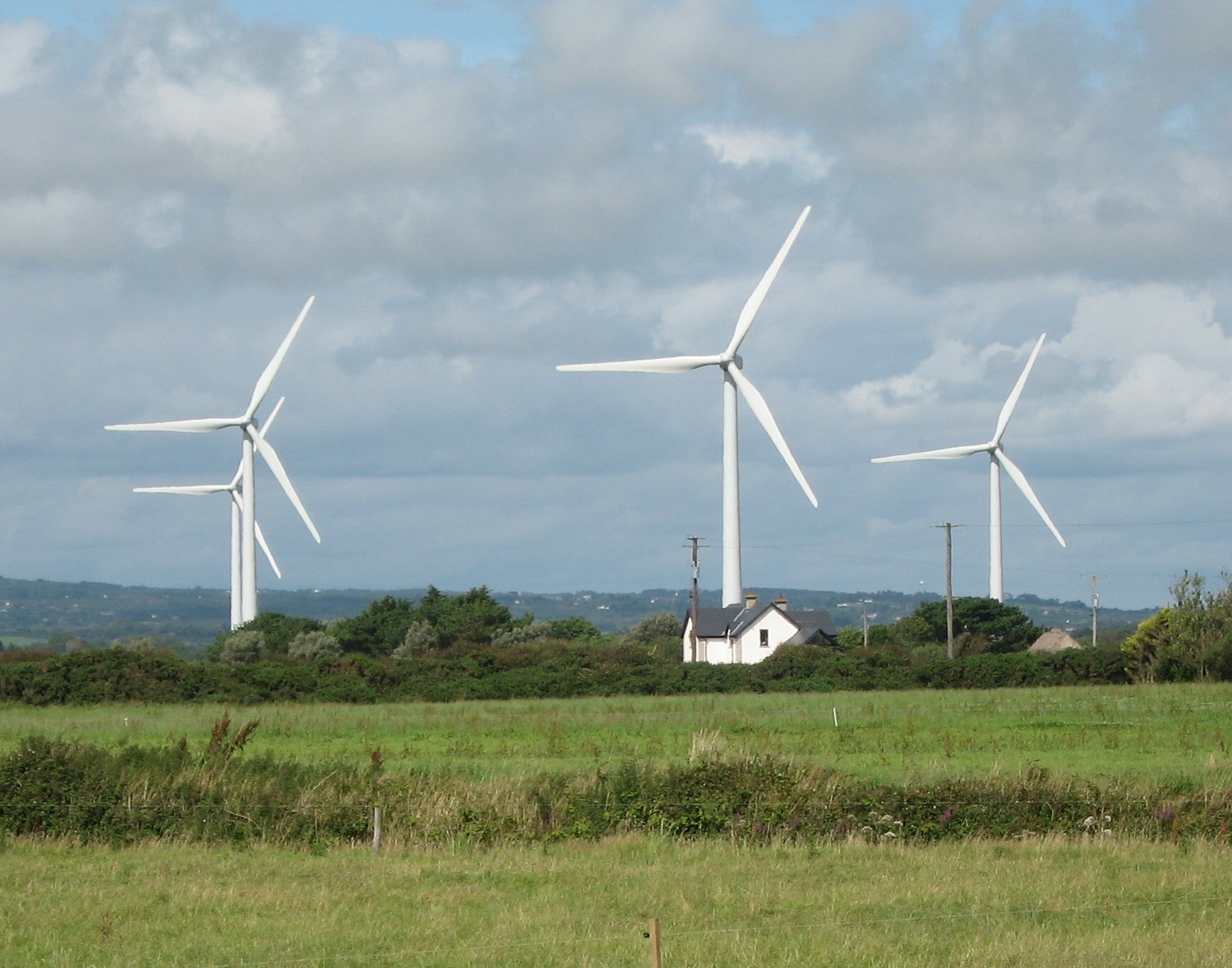
A wind farm in the country
You’ve heard all of the concerns raised by wind farm opponents about these towering turbines keeping people awake all night, and causing headaches and other health problems. You’ve heard charges that wind energy is driving electricity costs up and that the looming turbines used to generate that energy is dragging surrounding property values down.
That’s enough to have you paying a visit to the local municipal hall to find out what your mayor and council can do about this wind power plan. The answer you get you’re your municipal leaders can be summed up in one word – “Nothing.”
Welcome to Premier Dalton McGuinty’s Ontario where, thanks to his Liberal government’s three-year-old Green Energy Act, the usual planning rules for siting homes, businesses and industries in a community have been swept aside, zeroing out any real say municipalities have over where a wind farm can go.
This January, the Ontario Federation of Agriculture, representing farmers across the province, asked McGuinty’s government for a moratorium on siting wind farms until a number of concerns were addressed, including the health impacts, how close wind towers can be located to home, the cost of wind-generated energy and the right of municipalities to have a say in siting wind farms. But so far, the OFA’s call for a moratorium has gone unheeded and Jim Bradley, a St. Catharines MPP and the province’s Environment Minister, was recently quoted saying the government “is certainly committed to green energy and the creation of green energy jobs” and is moving ahead with wind farm projects. The province’s chief medical officer of health has concluded there is no evidence to showing wind turbines cause health problems, he added.

Ontario Environment Minister and St. Catharines MPP Jim Bradley
This past December, Tim Hudak and his provincial Conservatives tried to have an amendment past to the Green Energy Act, allowing municipalities more say in the location of wind farms. “I believe in local decision making (and) I believe that local families, businesses and municipal councils know what’s best for you and your neighbourhoods – not Dalton McGuinty and a bunch of bureaucrats,” said Hudak during a rally at the time of people opposed to wind farms in their rural communities. “Local residents have more say over where a Tim Horton’s or a chip truck goes in town than they do over the location of an industrial wind farm,” the Conservative leader added. “It is an injustice and it is wrong, and it should be fixed.”
Even so, the Hudak Conservative’s proposed amendment to the green act was defeated by the governing Liberals and the NDP, which has been a proponent of developing cleaner sources of energy longer than the Liberals have.
The Liberals and NDP both reasoned that passing such an amendment, allowing municipalities a role in the siting of wind farms, might slow the province’s push to become a North American-wide leader in developing alternative sources of energy. There was also concern that the real motive of those supporting the amendment is to stop any further advances in green energy in the province altogether.
I’ve no doubt, based on some of the rhetoric I’ve heard out there in recent years, that there are individuals and groups in this province who oppose any and all green energy programs based on questionable information about the costs, health and financial impacts on people and properties, and a view that those raising concerns about climate change and greenhouse gas emissions from the burning of carbon fuels are fear-mongers and kooks. Some of these opponents decry any government subsidies to kick-start green energy projects while never saying a word about the billions of dollars that have been spent and continue to be spent on nuclear and coal-fired power plants.
There is no doubt that some of these individuals and groups would try to use an amendment like the one the Conservatives tabled to block any and all future green energy projects in Ontario.
At the same time, there is something to Hudak’s charge about the injustice of not letting local municipalities and their citizens have more of a say in the siting of wind farms or solar farms for that matter.
I am a long-time supporter of green energy too, yet not at the cost of denying local communities a say in where and how it is developed. Public interest groups across Canada are now protesting plans by the federal government to weaken the country’s environmental review process to a point where environmentalists and others have little or no say in plans to build oil pipelines and other big projects that could have a negative impact on communities and the natural landscape. From the standpoint of giving people a fair and democratic say, how is this any different that leaving communities out of the decision-making process when it comes to developing green energy facilities in Ontario?
Allowing local municipalities and their residents more of a say in siting green energy projects may very well slow things down. It certainly did in the case of a proposal by a provincial Crown corporation two decades ago to build a huge toxic waste treatment and disposal plant in rural West Lincoln. Yet is was largely the input of area residents, and of local and regional governments at public hearings that uncovered flaws in the proposal and stopped Niagara from becoming a host to a giant toxic waste facility that could have been a disaster for this region and its residents for decades to come.
It is a shame the provincial government doesn’t take the initiative on its own and amend the Green Energy Act to allow more of a role for local municipalities in the proper development of wind farms and other clean energy projects. By freezing local municipalities and their residents out of the process, the government runs the risk of giving further ammunition to green energy opponents and making enemies out of people who may otherwise be persuaded that green energy is the only way to go for a healthy and economically sustainable future.
(We welcome you to share your views on this post. Please remember that we only post comments by people willing to share their real first and last names.)
 Niagara At Large
Thanks for this thoughtful, balanced article, Doug.
LikeLike
I suppose they could choose between wind tribunes or coal plants. I’d be more then happy to live near wind turbines.
I’ve yet to see any evidence of ill health effects and I don’t find them unsightly in the least.
Also Hudak comparing more choice between a Tim Horton’s & wind tribunes is a bad example.
With Tim Horton’s you have massive line ups of vehicles sitting idle at drive-throughs which causes far more pollution than any wind tribune as well as more noise.
I also don’t recall Hudak listening to all those against the mid-Penn when he kept saying he’d build it if elected. I hear more opposition to the mid-penn then I do support, yet where was the local decision making going to be for that?
LikeLike
My understanding is that residents were given input which resulted in some accomodations.
I believe the Green Energy Act was needed because too many people in Canada don’t believe the dangers (and expenses) inherent in human-caused global warming. If more Canadians had the mentality of, say, those in Denmark or elsewhere in Europe, then incentives probably wouldn’t even be necessary. And wind farms have been studied ad nauseum by the medical/scientific community. There are no legitimate negative health impacts that can be attributed to wind farms. But again, currently many Canadians have a certain disdain for science. Rev the engines for car races, or another highway, but don’t approach those dangerous wind turbines.
LikeLike
Green initiatives take no prisoners. There is no room for compromise. Wait for the justifications to begin.
LikeLike
Some pictures distort the appearance of wind turbines, making them closer together etc. than they are. This pic makes them look relatively close together; the ones I’ve seen are located far apart. A professional photographer could explain the effect.
LikeLike
I find it hilarious that Ontario wants to move to the forefront in wind energy. Other jurisdictions are more than 20 years ahead of us! And they will stay ahead. The McGuinty Liberals are an absolute joke! We have all kinds of fiascos and problems in our medical system thanks to George Smitherman – you remember him don’t you? And now they think they can become a leader in alternate energy? I am sure that within a couple of years, the financial shenanigans from this will start showing up. But the voters will keep on voting for the Liberals as long as Hudak remains leader of the Conservatives.
I realize I am rambling a bit here, but I am so totally fed up with our political system that I want to just scream!
Nowadays all we get are “professional politicians” who have never done an honest job in their life! It is all about the “politics” (and money), not about doing what is right for the taxpayers!
LikeLike
It ‘s interesting that while many decry the lack of democracy in Canada,, many of those same people fully support legislation such as the Green Energy Act. To those unquestionably believe in the theory of man induced climate change/CAGW it is perfectly reasonable to suppress the rights of individuals under the banner of the greater good.
Many people remain unconvinced of the impact of climate change as presented because none of the dire predictions have come to pass. Human nature drives our aversion to the preachiness and those imbued with the sense of some secret knowledge that failing to comply will lead to catastrophe. It ain’t the Koch brothers that’s the problem.
I am not against alternative energy, but am against the manner in which the Green Energy legislation was put forth. It lacks a clear strategic objectives when taking the entire energy sector into consideration. A perfect example is the Nanticoke coal burning plant. The McGuinty government cannot close it down because we still require it to compensate for wind powers intermittency.
P.S.-As Will correctly points out, George Smitherman was the driver of this legislation and like every portfolio he held in the McGuinty government he left a path of destruction from Infrastructure to Health to Energy. Perhaps the worst Ontario politician in a generation.
LikeLike
Doug – without offering an opinion either way on the merits of wind power, I must say that comparing public input on wind turbines to public input on toxic waste plants is somewhat spurious.
Some might think you are comparing the two as if their effects on the environment might be similar – and they are not, remotely.
Bit of a red herring.
LikeLike
A Reply to Tom Braybrook’s comment –
Tom, I certainly agree with your final point that the potential health environmental impacts (not to mention the possible cost to surrounding property values) of a wind power farm are in no way comparable to the damage a toxic waste treatment and disposal site could cause.
Yet you and I would likely never convince those who are adamently opposed to wind farms of that. Based on information I have been sent by wind farm opponents and the concerns they have repeately raised in public, I think many of them would be more likely to accept hazardous waste in their community than a wind farm. They would also be more likely to accept a coal-fired or nuclear power plant in their community since many of them go on to argue that these conventional sources of energy are more acceptable than wind or even solar. This may be hard for us to comprehend but try having a discussion with someone who is convinced that a wind farm near their home is more dangerous than someone washing chemical pesticides into their water supply.
That being said, the larger point I was attempting to make in my commentary is that whether the proposal is for a hazardous waste site, a wind farm, a municipal landfill site or a high-rise condo in a neighbourhood of single family homes, it is not right or fair to cut local municipalities and their residents out of the decision-making process. In fact, as I said in the commentary, local residents can often help by pointing to flaws in a plan that may lead to a better plan or the defeat of the plan due to flaws that cannot be corrected.
– Doug Draper, publisher, Niagara At Large
LikeLike
One point, and then I’ll likely leave the discussion because I choose not to debate Anthropogenic Global Warming. All of the dire precitions about global warming ARE happening. Scientists have erred on the side of caution, and human-casued global warming is happening much faster than earlier predicted. History willl show that the “Radical Fringe Groups” are not the environmentalists, but rather the Climate Change Deniers (those who deny AGW). First and foremost, this inaction is costing lives world-wide, but it is also costing Canadians dearly in terms of good jobs in the alternate energy/conservation/research sectors of our economy.
LikeLike
Just a note on the Wainfleet situation. I know several people who are concerned about the proposed wind farm more from the value of their properties being impacted. They are either on the lake or with a lake view and pay have paid proportionally higher taxes as a result over many years.
My suggestion is to have full appraisals done on their properties prior to the installation of the wind turbines in close proximity to their land. If, at a future date appraisals demonstrate a negative impact on the properties, they individually or collectively seek reductions on their property taxes. I have read some of the studies done in Ontario and they are inconclusive on how wind farms have impacted property values because they were mainly rural/farming as opposed to rural/recreational like Wainfleet.
LikeLike
John:
What a good suggestion.
However, they should be easily able to make those calculations by doing your research on the Haldimand wind farm at Highbanks that has been there for 3-5 years.
– How do property values/assessments compare before & after?
– How do the local residents suffer … or not?
– Have local residents sold and moved way?
– Do local residents want to have a turbine on their land (I’ve met one)?
LikeLike
A study by the World Health Organization and the University of Wisconsin at Madison claims that Global Warming contributes to more than 150,000 deaths a year and 5,000,000 illnesses.
LikeLike
Mark, I don’t deny climate change but rather am skeptical of the causes, there’s a huge difference.
LikeLike
John Levick makes an interesting point in the comment above and allow me expand on it.
Let’s do what we did with cigarettes and lung cancer and wait about 50 years until we are absolutely sure of the cause. By then it may be too late to do anything about it, but why should we care. Unless someone comes up with a pill for reversing aging, most of us won’t be around anyway and the joke will be on our grandchildren. Maybe the ever higher frequency of severe weather episode and the havoc they wreak on property, food growing etc. will toughen them up a bit and teach them some self reliance. They may even thank us.
– Author of post, Doug Draper
LikeLike
Doug, with respect, you’ve just presented the straw man argument. While claims of consensus on CO2 caused global warming are prevalent in the discussion, consensus is not causation. We have indeed seen warming in the last 50 years and I have no doubt that man has some influence. Every claim thus far made on the effects of CO2 and the dire consequences predicted have been wrong. We have seen earth temperatures stabilize since 1997 and recently seen a trending downwards as solar activity decreases.
The narrative that accompanies the CAGW mantra has changed to fit the reality. You’ve just used one yourself citing severe weather episodes as indicators of climate change rather than the initial hypothesis of dramatically increasing temperatures and catastrophic flooding etc..Suddenly,any severe climatic events are now all attributable to climate change and the demon carbon dioxide.
The other aspect of this debate is closely tied to political ideology. The far right denies while the far left calls for complete dismantling of our society and economy to fight the “the threat”. Everybody else is somewhere in the middle. Since I am slightly right of centre, I’m skeptical/cautious, but acutely ware of the concerns and challenges we face. I won’t even take offense to facetious comments.
LikeLike
Last comment. The legitimate scientific claims have erred ONLY on the side of caution. Scientists tend to be cautious. Unfortunately, global warming, which entails unpredictable weather, weirdings, storms, etc. is happening much faster than predicted, in part because of feedbacks. Example: The Arctic ice is melting, which results in dark water openings which absorb heat,and therefore amplify the effect. Previously the prediction for ice-free Arctic (in the summer I suppose) was for around 2050. Now I believe it is for our current decade. As a human race, if we value the lives of others (such as those living near the equator) we can no longer debate the science. We are all complicit. I see this as an issue for humanity, not one for any particular political party to endorse or reject.
LikeLike
I have a friend who is a mate on a Greenpeace ship, and noted that they had sailed into ice-free water at ~82 degrees N in 2010.
However, about that time, I saw a blog comment at the British newspaper Independent Online, which mentioned a log-book report from a ~1900 expedition where they had sailed to ~83 degrees N.
What would have caused the ice to melt so high in the Arctic 100 years ago with only 1B people? Certainly not the amount of CO2 that we produce today with 7B people who have cleared so many more forests.
-w-
What’s your response to the CERN scientists confirmation of the Danish theory that climate change is caused by cosmic rays striking atmospheric dust and creating cloud seeds that generate low clouds which reflect heat. The number of cosmic rays striking the atmosphere is affected by the amount of solar electro-magnetic-field striking Earth; we see this mainly as sunspots, which have apparently been reduced in the past decade….
I believe I’ve posted the URL for the original YouTube video of the Danish scientists on NAL, about a year before the confirming CERN experiments occurred.
It’s one thing to predict Climate Change,
another to find the Cause,
yet another to Adapt to it.
-w-
BTW, the Russian arctic methane plume articles were quite interesting.
Again, since there is no ‘recorded history’ on them, Many questions arise: – Have they just begun in 2011?
– Have they been around forever, or do they happen every year, unnoticed?
– Are they increasing in frequency or volume?
LikeLike
Hi again John – I was not trying to be facetious or insulting. I have truly given up on this country with regard to any meaningful action to curb carbon emissions. And by the way, the same emissions contribute to the smog that the Canadian Medical Association representing doctors across this country says contributes to the premature deaths of thousands of people each year who suffer from respiratory or heart disease. But most Canadians are not pressing our governments to act on that either.
People like me, who have been calling for action, make up a small minority in this country and we have little hope of winning the day. I have come to the conclusion that most Canadians could care less how much carbon and other pollutants we emit to the atmosphere as long as they can still drive to the shopping mall. In spite of what Maude Barlow and her supporters say about the big bad U.S.A. and how terrible things would be if Canada lost even more or all of its automony to that counntry, the United States has far tougher air pollution laws than Canada (and has had them since the passage of its Clean Air Act more than four decades ago) and it has far more citizens per capita who care about environmental protection.
So when I state that, in my view, those who favour the status quo in Canada with respect to the continued burning of oil and coal and the resulting carbon emissions are winning the day, I am not being facetious. I mean it. I have all but given up hope that Canada is ever going to show any leadership in the field of energy conservation and alternative sources of energy, and those who are around 40 or 50 years from now will be in a far better position than we are now to judge whether sticking with the status quo was good or bad for the country’s environment and economic competitiveness and stature in the world. They will be the ones who either reap the benefits or suffer, depending on the consequences. For us it’s just a roll of the dice. Doug Draper
LikeLike
Doug:
Like John, I lean right of centre, but to be fair to McGuinty, he Has shown great leadership with his Green Energy Act. Yes, he could have done it better, but he did it, and we’ll all have better health with cleaner air, water & soil because he’s closing most of our coal-fired generation.
The nub of our problem is Health vs Energy vs Jobs:
– our Jobs come from selling to the USA & competing with their companies.
– Ontario health care is paid from Taxes, while people & companies pay privately in the USA
– McGuinty’s trying to transfer Health costs from our Taxes to our Hydro bills by replacing/reducing Coal with Wind, Solar, conservation, etc.
– everyone in Niagara knows what happens if McGuinty drives our Hydro rates too high => we’ll lose employers who will move away … to the USA where they produce electricity from Coal, cheaply.
Niagara lost Inco, Welmet, Union Carbide, Atlas, Horton Steel, Nabisco, GM and many more as they equalised the power rates to favour Toronto when Pickering Nuclear came on stream ~1975. We’re still paying for the Stranded Debt from building those Nuclear plants and … they’re ready to be replaced. Wait til you see our power rates then! We’d better hope all of this Green Energy works well 7 cheaply in 10 years, or we won’t have jobs and won’t be able to afford to live in Ontario.
LikeLike
Real scientists tend to be cautious, climate scientists tend not be. Witness the cautious WSJ piece here- http://online.wsj.com/article/SB10001424052970204301404577171531838421366.html?mod=WSJ_Opinion_LEADTop
Anybody who is interested can look up the response from the so-called hyperventilating climate science community.. What, hyperbole is the new cautious?
LikeLike
Unqualified scientists, corporate PR. Tell that to the dead and dying.
LikeLike
Claude Allegre, for staters, is a French geochemist and politician (reviled by the French climate- scientific community). Media Transparency reported on the Op/Ed that you listed, John. “…Most of the (listed) scientists have never published aticles in peer-reviewed journals on the subject of climate change. One of the listed sources refers to the characterization in the op/ed as a “complete mischaracterization of my work”. It’s also refered to as climate fraud. The source of my info. is a disinformation database on DESMOGBLOG.COM
The disinformation that you are referencing, John, attests to the corruption and power of the corporate oil lobby. It’s very disheartening.
LikeLike
http://online.wsj.com/article/SB10001424052970204740904577193270727472662.html
John, you’ll find the definitive answer above. Can we please stop this ****?
LikeLike
http://online.wsj.com/article/SB10001424052970204740904577193270727472662.html
LikeLike
Mark:
Thanks for posting that URL. The article was a good attempt to ‘correct’ the fallacies in the ‘cautious’ article noted by John. However, I found the back & forth debate between knowledgeable scientists in the Comments, to be the really interesting part.
They debated the quality of each others’ argument, by discussing:
– the facts themselves,
– the correct use of logic,
– the overlapping of various fields of science,
– the right of scholars in different fields to express opinions in other fields … and a few other categories I’m sure I missed.
(It’s worth spending a few minutes following some of their 400+ thoughts;
I followed only ~20 threads.)
I repeat:
It’s one thing to predict Climate Change,
another to find the Cause,
yet another to Adapt to it.
Our climate seems to have changed – what changes do we need to make?
My personal prediction is that by getting off carbon fuels:
– we’ll have less air, water & soil pollution
– better health and longer lives
– less cause for wars
(although religion & mining rare metals could replace oil as cause!)
– little or no impact on climate change, which seems to be caused mainly by Sol’s variable flares and their impact on how many cosmic rays strike our atmosphere.
LikeLike
All scientists are unqualified unless they agree with Mark Taliano. James Lovelock, known as the “green scientist” is a highly honoured, greatly respected, world renowned scientist. He has broken from those that espouse many of the eco-green philosophies as like many other scientists he knows that the facts do not support the fiction.
LikeLike
James Lovelock would not be a good example.
I don’t think we’re going anywhere with this discussion, so we should not continue. It’s annoying to others on the blog. Besides, it’s quite clear that we’ve reached an impasse.
LikeLike
Mark Taliano has made a comment (immediately above) about the back and forth between he and Nick Strugar over what scientists are right and what scientists are wrong on climate change that I can wholeheartedly embrace.
He is saying to Mr. Strugar that the back and forth is going nowhere and might just as well stop as it has become annoying. Mr. Taliano might also have made his point by using an old saying that goes something like this – ‘the only thing good about repeatedly banging your head against a brick wall is that it feels so good when you stop.
Since I was somewhat responsible for this back and forth as the author of the commentary on Green Energy (one in which I feel I was rather generous and perhaps overly generous to those who oppose wind farms and want more say on siting them in Ontario) I have long grown tired of arguments over which scientists are wrong and which ones are right when it comes to the question of human activities and climate change. Where does it get us?
There are still sicentists around who insist that there is no proof of a causal link between smoking and lung cancer? It the tobacco companies went back to paying armies of scientists to declare there is no proof that smoking causes lung cancer, I am sure that even some scientists who’ve come to the conclusion smoking poses a cancer risk would go for the gold and take the ‘no proof’ position. I watched this happen during the years I covered environmental issues full time for a daily paper in the region where the same scientist that testified for a client at one hearing that a certain chemical pollutant posed little or no risk to humans would turn around and call it a risk for another client at another hearing.
It is also interesting to note, and this has been well documented through some good investigative reporting in Canada and the U.S., that some of the same scientists who were once on the payroll of the tobacco industry, saying there is no proof smoking causes cancer, have since been on the payroll of the petro-chemical industry to tell us there is no link between human activities and climate change.
So where does that get us?
One of my suggestions is this. Rather than go on with this ‘I’ve got my scientists to back my view and you’ve got your scientist to back yours’, why don’t we get to the bottomline. What I mean is this. Just come out and state your position bluntly. Instead of hiding behind the fog of science, come right out and say that you don’t believe human activities have any effect on the climate and that you feel so confident in that position that you are willing to risk taking no real action to address it. I have no problem at all saying that I feel there is enough evidence to suggest that our activities are having an effect on the climate that I would rather take a cautionary approach and see us work to reduce our contribution of carbon and other emissiions to the environment. I do not feel comfortable being a risk taker when it comes to this issue but more than a few out there are, including our federal government, and they are winning this battle. As I have said before, it will be our children and grandchildren who will judge whether it was wise to take that risk 40 or 50 years from now, and they likely won’t need scientists by then to make that judgement – NAL publisher Doug Draper
LikeLike