
By Mark Taliano and Tori Crispo
According to Conservative MPs Jason Kenney, and David Anderson, those protesting the extension of the Keystone XL crude oil pipeline — starting at the Alberta Tar Sands and continuing to the Ogallala aquifer in the Sand Hills of Nebraska, on to Texas to be refined, are extremists.
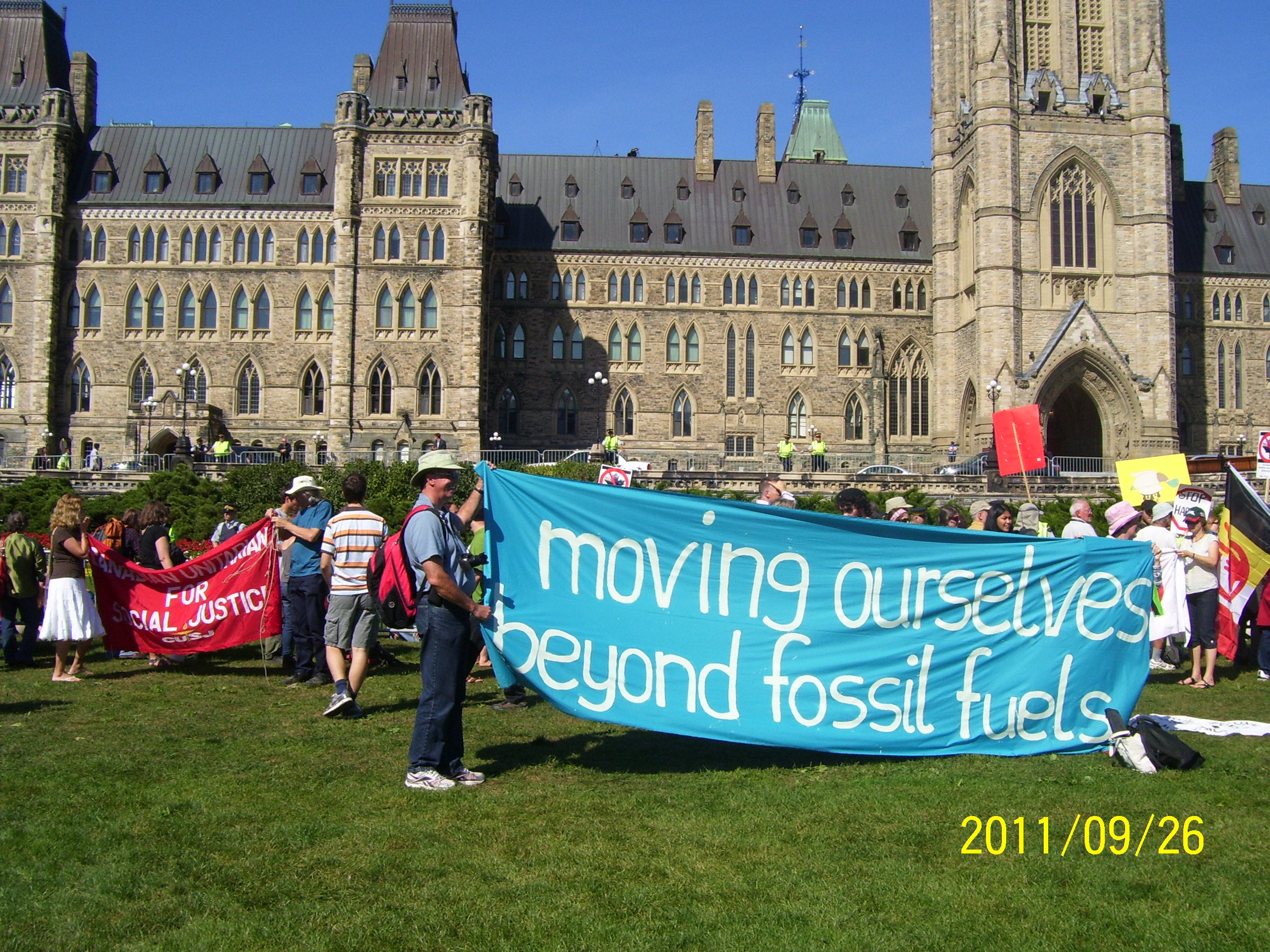
Pipeline protest on Ottawa's Parliament Hill. Photo courtesy of Mark Taliano.
Specifically, these “extremists” would be the large group of Canadian protestors from just about every demographic, who held a peaceful rally in front of The House Of Commons in Ottawa, on September 26.
The group included Maude Barlow, National Chairperson of the Council Of Canadians, and Senior Advisor on Water to the 63rd President of the United Nations General Assembly. Canadian native groups were also there and well-represented.
NDP MP Dennis Bevington (N.W.T/Arctic), was seen supporting the rally (from the other side of the barricade), and Green MP Elizabeth May was also there.
Possibly, MPs Kenney and Anderson were referring, as well, to the U.S. Republican Governor of Nebraska, Dave Heineman, (though he wasn’t at the rally), because he, too, opposes the pipeline.
Words spoken at the rally, however, strongly suggest that these “extremists” are not the real extremists.
Maude Barlow asserted that “energy companies are driving policy in this nation, and not the other way around,” and she accused Canada of violating not only the Kyoto Accord, but also its own Fisheries Act (the Alberta Clipper tar sands pipeline sends crude to refineries on the Great Lakes.) These are words of reason.
Native groups reasonably objected to the government’s violation of Article 29, Section 2 of the United Nations Declaration of the Rights of Native People, which declares that “states shall take effective measures to ensure that no storage or disposal of hazardous materials shall take place in the lands or territories of indigenous peoples without their free, prior, and informed consent.” The indigenous peoples at the rally insisted, “We’ve been informed, and we do not consent.” Most reasonable Canadians would likely feel the same way if toxic tailings ponds meandered through their communities.
NDP Member Of Parliament Dennis Bevington (N.W.T/Western Arctic), and the Green Party’s MP Elizabeth May reasonably oppose the pipeline on the grounds that it reflects a poorly conceived Energy Policy that doesn’t adequately support transition measures to alternate energies.
For his part, U.S Republican Governor Dave Heineman objects on the grounds that the pipeline would likely endanger the Ogallala aquifer, which has been described as “one of the most precious closed aquifers” on the planet.
Perhaps the Conservative MPs who accuse others of “extremism” should take a look at their own backyards. If civil protests and civil disobedience amount to “extremism”, then what words would accurately describe their collective actions of enabling (and subsidizing) the unchecked exploitation of Alberta’s Tar Sands in what was formally Canada’s pristine boreal forest?
Mark Taliano and Tori Crispo are residents of Niagara, Ontario and Mark is a regular contributor to Niagara At Large
(Niagara At Large encourages you to share your views on this post in the comment boxes below.)
 Niagara At Large
Well said. Words like “extremist” or phrases like “special interest group’ have no meaning at all. They are bureau-speak, used to political ends by every partisan organization to try to persuade people to their side.
LikeLike
I totally agree with Gail’s comments. Everyone has their “special interests”, there’s nothing wrong with that! Business has their special interests, and workers have their’s! We have the right to protest and let our views known.
LikeLike