
A Commentary by Doug Draper
Do we need one more reason to nix the idea of constructing a mid-peninsula highway aside from the cost and the environmental havoc it may wreak on the Niagara countryside?
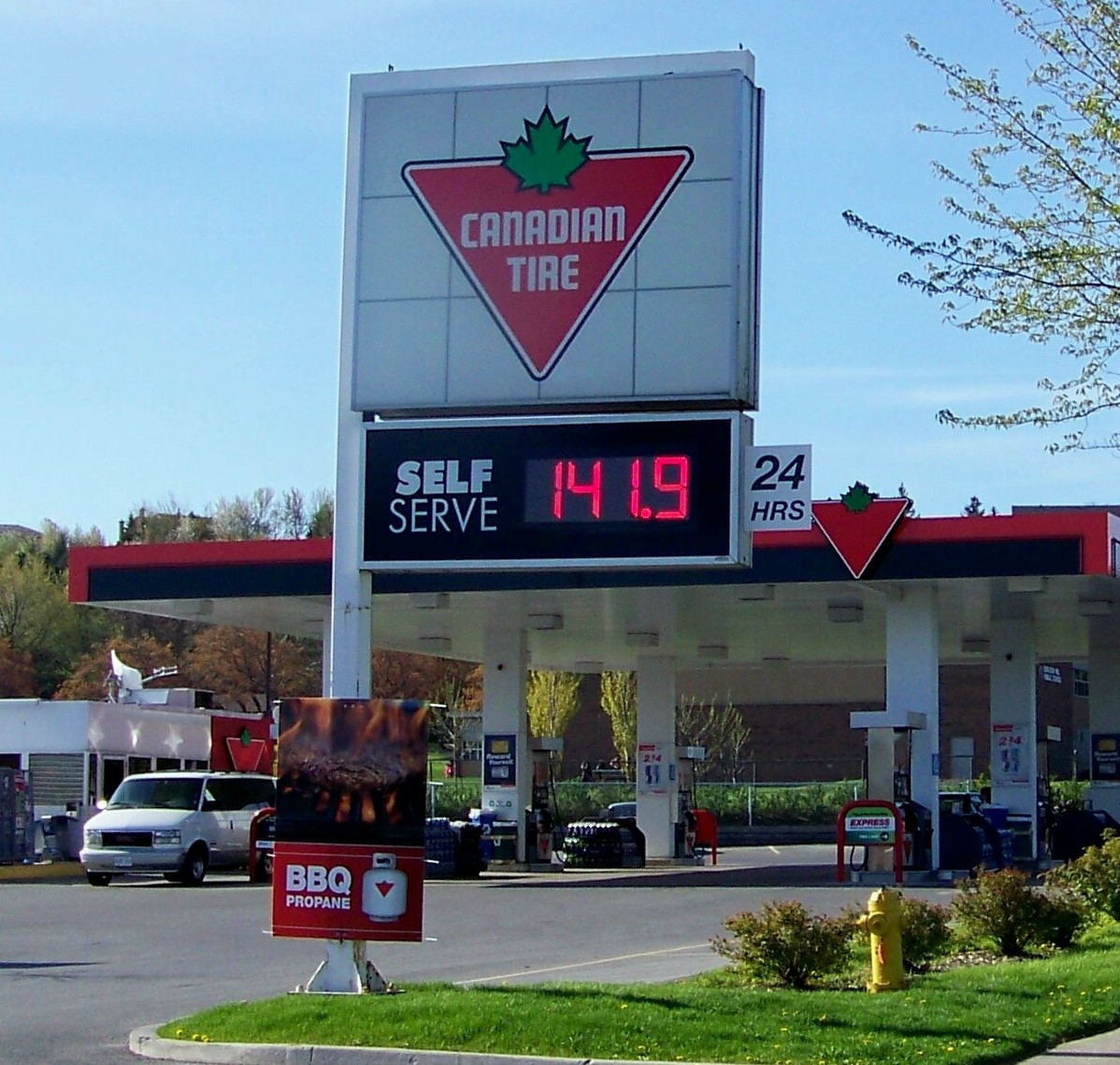
This record-high price for a litre of gas in Niagara, Ontario is now typical of the ouch at the pump for car and truck drivers.
Well, how about the soaring price of gasoline and diesel fuel? And at more than $1.40 a litre for a regular price of gas at most stations across the Niagara region this May 11 (that is more than $5.50 a gallon for our friends on the U.S. side of the border), we are experiencing record-high costs for fueling cars and trucks that many energy experts say could hit more than $2 a litre or $8 a gallon within the next few years.
So why on earth would a majority of politicians sitting on our Niagara regional council and Tim Hudak, leader of the opposition Ontario Conservative Party, continue pressing the province’s Liberal government to move forward with a mid-peninsula highway plan that is now more than a decade old and has been all but shelved completely following environmental assessment reviews steered by the province’s Ministry of Transportation?
Why remain stuck in the 20th century with a highway idea that could, by now, cost more than $2 billion to realize when the skyrocketing cost of non-renewable fuel is driving other jurisdictions, including New York State, to place ever more of a priority on high-speed rail, light rail and other public transit.
Not that our regional politicians are not pursuing transit as an alternative to the single-family car or truck, for example. Our regional government and the province are encouraging the expansion of Go Train services into the Niagara, and the regional government will be launching a “pilot” inter-municipal bus transit service later this year. And not that this commentator is saying no to highways. As much as some people in the blogosphere may want to make this a black-and-white or an either-or issue, it is not.
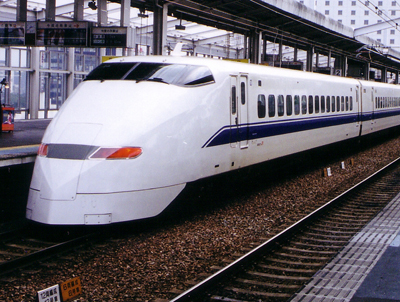
Across the Niagara border in New York State, they are focusng more attention on building a high-speed rail system. Why doesn't Niagara, Ontario join them?
Let’s be realistic. Cars and trucks show no sign of disappearing from the landscape in the near future. That is why I have supported the work underway to expand Hwy. 406 through to Port Colborne and the QEW in the border town of Fort Erie. One of the reasons I support this as an alternative to a mid-peninsula highway is that at least the highway footprint is already there. The environmental impact of expanding Hwy. 406 is minimal compared to cutting a swath through some of the nicest farm country in Niagara to build a mid-peninsula highway.
This May 10, while some of our regional politicians were at Queen’s Park for their annual ‘Niagara Week’, the province’s Liberal transportation minister, Kathleen Wynne told them she favours moving forward on something she referred to as a ‘mini mid-pen highway’, which means expanding Hwy 406 to connect with Port Colborne and the QEW near Fort Erie, rather than constructing a brand new mega highway through green lands in West Lincoln, Pelham and other rural areas south of the Niagara Escarpment. Good for Wynne, who I had a chance to sit down for an interview with in Niagara last year and who really sounds sincere in her desire to balance off truck and car corridors with other more economically and environmentally sustainable transit alternatives.
Earlier this May, New York State received millions of dollars of federal funding to move forward with plans to build a faster, more efficient train transit system between Buffalo and Albany, New York. It is another step toward a high-speed rail vision that state has been pursuing for at least a few years now.
There are members of Niagara, Ontario’s regional government staff who have kept tabs on the New York plans in this area and last year some representatives of the state spoke before the regional council. They expressed an interest in working together with governments on the Ontario side of the border to continue such a service through to Toronto and possibly other destinations (i.e. Windsor through to Detroit) in the province.
Surely, at a time when other jurisdictions in North America, Europe and China are looking at 21st century alternatives to cars and trucks, we should be looking at it too. Wouldn’t it be great, for example, that instead of vowing to get plans for a mid-peninsula highway on the front-burner again if he becomes premier, Hudak promised to invest in modern transit systems and work with New York State on a binominal high-speed rail system? Wouldn’t it?
(Share your comments on this issue below and visit Niagara At Large at www.niagaraatlarge.com for more news and commentary on matters of interest and concern to our greater Niagara region and beyond.)
 Niagara At Large
A mid-peninsula highway is regressive; a fast train is progressive. It sounds obvious, but then it also sounds obvious that Anthropogenic Climate Change is real, but it isn’t obvious to everyone.
LikeLike
Thanks Doug for this thoughtful and significant article on an important topic. The public consultation on the mid-pen expressway is not completed and the paving advocates are gaining ground. Although last year the province callled just to build an expressway in Burlington and Hamilton that would parallel and therefore provide relief for Highway 403, without any real transportation need anaylsis, this has now been expanded to a ring road around the City of Hamilton. This option calls for the highway now to make a second crossing of the Escarpment in Grimsby and then link up with the Niagara Escarpment.
LikeLike
There is a bit of a misconception that highway enhancements like the Mid-Penn or mini Mid-Penn are all about the movement of cars. The main reason for this highway is greater accessibility for trucks carrying freight between markets through and to the Niagara corridor.
LikeLike
We need to make more transitions from trucks to rail, for freight and people.
LikeLike
People will still use Cars and Trucks just as much as they do now – no matter how many rails you put in. They will still have to get to the rail stations which will be to far to walk in so many cases and that will offer the temptation to go on to the destination the easy way.The “pilot” inter-municipal bus transit service has been tried more than once and the traffic using it was not enough to sustain it. The cost of fuel may change this attitude or perhaps some government may ban car travel between cities. Just imagine taking a train to Beamsville and trying to get around when you get there. It’s not as simple as you make it out to be.
LikeLike
In the 80’s while working for a large company as a manager with a large production facility in Port Colborne, we performed a major study on logistics and distribution in and out of Niagara. We were able to establish that we had a disadvantage due to the road systems. While rail is a more cost effective means of transport, you still require trucks to disperse product from hubs. Rail also cannot compete with time sensitive freight plus the additional costs of double handling (intermodal).
I view an improvement to the road system purely as an economic driver for Niagara not as a means to allow more commuters go to jobs outside the Region.
LikeLike
My fiancee takes the Go train from Grimsby to Mississauga and back every work day, five days a week. It works for her and countless others, but a Fast train would be better.
When fuel climbs towards European levels, the amount of “time-sensitive” freight will likely diminish.
LikeLike
I am just tired, as a non-driver, of governments of various stripes using MY money as their own ATM to subsidize more and more highways, drivers, etc. When does NO mean NO? I am not opposed to ALL highways. I am opposed to the unbalanced transportation landscape this will represent. Some of us do not drive and we need a way to get around as well, and are tired of spending a fortune with the cab companies.
LikeLike
I have no problem with better public transit within Niagara as well as fast links to the GTA. It cannot be emphasized enough the importance of strategic development of roadways to assist Niagara re-inventing itself economically. I do like the concept of creating an intermodal hub along the Welland Canal corridor for ship, rail and trucking. Highways are only one facet of a modern, efficient transportation system.
LikeLike
John, you wrote, “Highways are only one facet of a modern, efficient transportation system”. Unfortunately, that is where it’s going to end because our provincial pot of tax dollars will run empty before that is even fully committed to, no more bucks for public transit and non-drivers are marginalized once again.
LikeLike