
(Niagara At Large is pleased to post this piece by one of the great matriarchs of heritage preservation in Niagara’s Ontario region as we approach Heritage Week in this province during the third week of this February. Here are a few words of wisdom all of us – young and old – should pause to reflect upon.)
By Pamela Minns
We hear that buzz word frequently – “heritage”; what does it really mean?
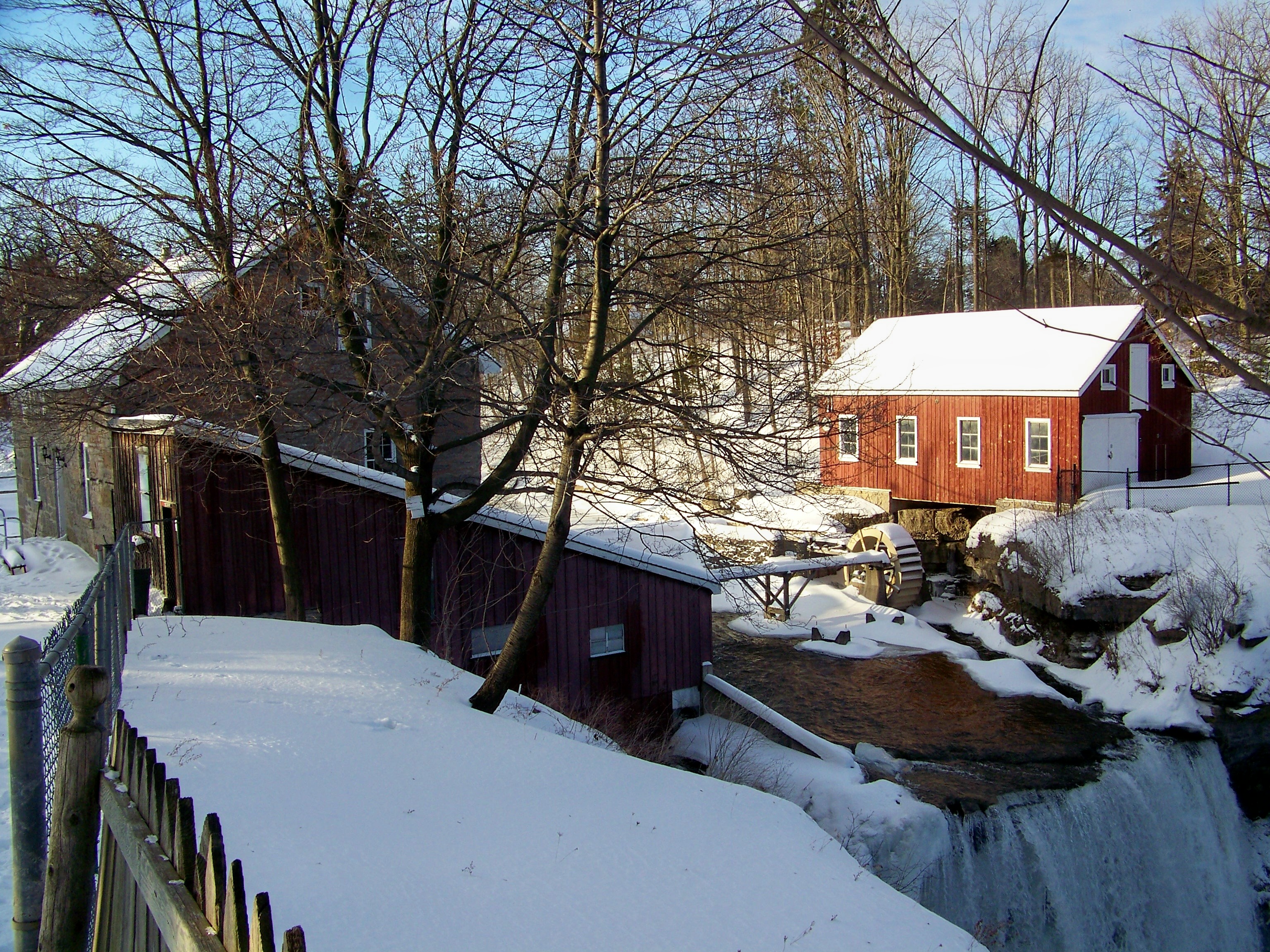
The Morningstar Mill In Niagara, just one of so many heritage sites in our greater region on both sides of our binational border worth preserving. Photo by Doug Draper
“Heritage” is what we inherit from the past and what we pass on to future generations. Our heritage is important to our every day lives…. it gives us a touchstone to the past and sense of place; it provides familiarity and is essential to mental health and to our quality of life. It is everywhere – it is what is familiar – in the close surroundings where we live our lives every day.
“Every community in Ontario has its own unique culture and heritage. Each city, town, township or county has places, spaces and stories that enrich it, inspire it, enlighten it and guide it in its growth and development” (Ontario Heritage Tool Kit)
Richard Moe spoke at a conference in Niagara a year or so ago. He has written books, he is head of the National Trust for Historic Preservation in the U.S., former Chief of Staff for Vice President – Walter Mondale, member of the Carter Senior Staff… a pretty important guy. His philosophy on livable cities is the best I have ever encountered. I quote Richard:
“It has been asked – what makes a city livable:
Well, it has to be safe of course, and attractive. It must provide the services we need, and it should be planned and built in a way that makes it easy to use and move around in. But there is something else – something very important and that is…. a truly livable city is one that makes us feel personally connected to it in a meaningful way. It is hard to feel that kind of connection to a place that has no distinctive character. Our built environment is becoming “homogenized”…it has been called “Generica” – a place where you can’t even tell what city you are in. Everyplace looks more and more like Anyplace and eventually they all wind up looking like Noplace. It is hard to feel connected to Noplace, and that is one reason preservation is so important. It is a means of saving and celebrating the history and traditions — the character, in other words, that makes every community unique, appealing and livable, and it is becoming increasingly apparent that community livability is the key to community survival…it is an economic imperative! “ End of quote.
I am sure we have all experienced the “Generica” which Richard refers to.
With the loss of much of our industrial base in Niagara, heritage has become an important tool in the development of a new industry called “heritage tourism”. Cultural tourism is a growing market; the entire Niagara Region is fortunate to be rich in heritage; we, in Thorold have an abundance of built and natural heritage, as well as the Welland Canal, with its twin flight locks, right at our back door.
The facade improvement program which makes funds available to owners of buildings in our business area, is moving ahead to make our downtown area, with its abundance of heritage buildings, more attractive and appealing to visitors, tourists and residents. We have a unique business area; with historic paint colours on the storefronts, as well as a small amount of work, for example, on windows and doors, these buildings can be transformed and brought back to their original grandeur.
Thorold now has approximately 50 sites designated under Part IV of the Ontario Heritage Act. The latest designation was that of the former Quebec Bank in our business area. An outstanding job has been done on the restoration… it has been brought back to original as closely as possible, and has become a show place, housing a beautiful art gallery on the main floor. The owners of all of our designated buildings are the keepers of our heritage; we need to respect them for this commitment that they have made. This time needs to be recorded in our history books as having a generation of people who respected and preserved our built, cultural and natural heritage. The way that heritage is treated tells volumes about a municipality and the people who are elected to make decisions about its direction and future!
A year ago the City of Thorold received a recognition from the province for their work in heritage preservation; as well, they were recognized for the extensive work done to promote Smart Growth and clean-up of Brownfield sites. We should all feel a sense of pride in our community for the great strides that have been made, and for the recognitions that have been bestowed on it by the Province of Ontario. Pride in our community will solve most problems; it tells us instinctively what is the right thing to do and the direction to take!
Consideration of built heritage goes hand in hand with environmental matters. Demolished buildings account for as much as 30% of the waste in our landfills. In Canada over the last 30 years, 20% of our pre-1920 heritage buildings have been demolished, a condition normally associated with war or natural disaster and one that most other countries would consider unimaginable. The demolition of our heritage buildings has a significant negative impact on the natural environment, is contrary to the fundamental elements of sustainable development and is, therefore, not in the interests of healthy, integrated and sustainable communities. (Source: Heritage Canada Foundation)
Our City is going to grow and grow in the coming years—this expansion has already begun, and the preservation of our built heritage makes our community unique, gives it character and shows respect for the hardships that our ancestors endured to develop our towns in the beginning. Not everything can be measured in dollars and cents. Improvements to and retention of Thorold’s heritage and the tourism market, which is available, produces far-reaching positive effects and economic benefits, as it does in any town or city.
Several years ago the Regional Municipality of Niagara formed a Culture Committee to deal with Niagara’s arts, culture and heritage. They have been working on Asset Mapping and a Culture Plan (approved by Regional Council) is in place; the Region is now looking towards its implementation. In addition, the historic designation of the Welland Canal is being pursued. The Region of Niagara is now in competition for the prestigious 2012 title of Culture Capital of Canada, which includes the $2 million in event funding which comes with this title. All of this means that arts, culture and heritage have become extremely important to the Region of Niagara and to each of their 12 communities. Smarter Niagara has named four pillars for a complete Niagara and they are…. 1) environment, 2) economic, 3) social and 4) culture (culture means – arts, culture and heritage).
Ralph Waldo Emerson said….”we did not inherit the earth from our forefathers…. we are borrowing it from our descendants. In the decisions that we make every day, we all have that very weighty responsibility to consider. Our future lies in our past! Let’s preserve it to assure a strong future for all the communities in our Region.
Heritage Canada Foundation first established Heritage Day in 1974 – the third Monday in February, and, in fact, the entire 3rd week in February each year is devoted to the recognition of our heritage. Let’s proudly recognize this time!
(Pamela Minns is a resident of Thorold, Ontario and longtime advocate for protecting and preserving heritage sites in Niagara.)
(Visit Niagara At Large at http://www.niagaraatlarge.com for more news and commentary on matters of interest and concern to our greater binational Niagara region.)
 Niagara At Large
This impassioned reply needs to be taken seriously by voters. It was quite tragic that one of our community’s most dedicated heritage activists Carlos Garcia was defeated in the last municiipal election.
LikeLike
An excellent article – a splendid rebuttal of “We can’t make a profit unless we tear it down and erect a generibox in its place” – and then they bugger off.
Carlos was defeated in the last election by big money and big consultants, not by the community’s lack of interest in the quality of its environment.
LikeLike
Heritage buildings help maintain a town’s character, which helps to keep people inside the towns, instead of fleeing to the suburbs. St.Catharines made a mistake by tearing down the YMCA near downtown. It was a beautiful building. Thanks for the excellent article.
LikeLike
Eloquent. Truthful. Non-political. Honest. A cry in the dark?
How many people have the backbone to stand up to the future and challenge it? Our heritage cries out for advocates. Who will listen and then take steps to continue in its preservation? Thank you, Pam.
LikeLike
Excellent article. Thank you.
LikeLike
It is truly an honour and pleasure to be associated with fellow heritage advocate Pamela Minns, whose honest and eloquent words are followed up with dutiful actions. A mere handful of people like her have fought so valiantly over the years against the onslaught of “post-war barbarism”, be it the destruction of our built heritage, natural environment or agricultural lands. I truly believe that we are undergoing a generational change in enlightenment, and although we have lost some battles along the way, we are going to win the war against the predatory peddlers of generic schlock. Thank you Pam, for once again bringing these truths to light.
LikeLike
It’s good to hear that Thorold has so many designated heritage buildings.
Ironically, Thorold is the living example of how poorly all Canadians value our heritage. The cairn marking the Battle of Beaver Dams (War of 1812) has been moved from its original site east of the 4th Welland Canal, and is now located in a park built over the filled-in 3rd Welland Canal … which we Niagarans failed to preserve ….
Any visitor to Thorold would naturally think that the Battle occurred in downtown Thorold.
~Lorne WHITE,
Heritage Port Colborne (LACAC) 1978-1997
LikeLike
My sincere thanks to all who responded to this article in such a positive way. I feel that my City has made great strides forward in heritage preservation. Like the environmental movement, heritage awareness has taken time; much of this has been accomplished by the great number of volunteers in Niagara who are dedicated to preserving our rich past. Our Mayor and Council in Thorold have been extremely supportive of our Heritage Committee, which makes us feel that our work is appreciated and worthwhile. We need stronger support from the province and federal government, which means that our future work is cut out for us. Do investigate the heritage in your communities during Heritage Week and be proud of it !
LikeLike
Thanks for the column….Got me off the couch and keyboarding an e-mail about heritage day. Like I took some the parts in Ur article….and gave U credit.
Just to let U know I sent it to the councillors in Muksoka Lakes and the District chair, also to others, like as a letter to the editor.
My ‘value added’ was this “At the conclusion of a recent Ontario Municipal Hearing in Port Carling, chairman Aristotle Christou declared “This is a beautiful area and we have to consider what is going on, to see if it is appropriate or not.” Now that rings true for me!”
Again, thanks for the push and the words, too!
LikeLike
Thank you Pamela for your truth in understanding heritage. When the
structure’s of our heritage are removed , we loose touch with our sense
of time and place, we leave our identity, a parking space. You are my hero!
LikeLike
Sad to say that many heritage buildings around Stevensville and Black Creek were set on fire by young people with gas cans and matches I know of at least 6 buildings torched by these vandals and fire bugs, one building 200 years old, the last log cabin from Black Creek, also the unique Stevensville Planing Mill in Stevensville. The loss makes me ill.
LikeLike