
By Randy Busbridge
After a curious and lengthy silence, the Niagara Region held a Public Information Centre on November 30 to provide a status update on plans to finally deal with Niagara-on-the-Lake’s troublesome Wastewater Treatment Plant. The facility is rapidly running out of capacity, and has long been a source of unpleasant odours.
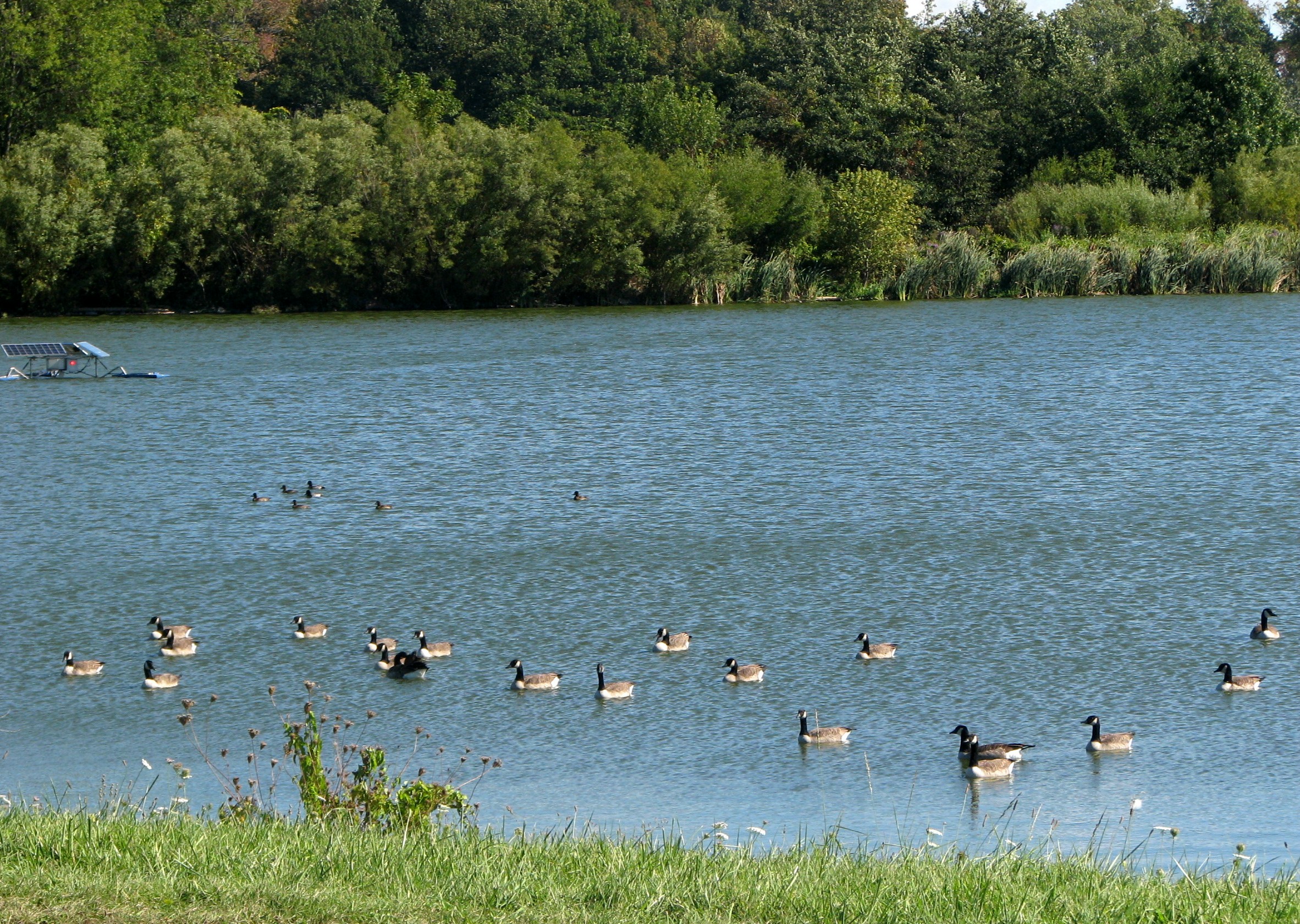
Could this Parks Canada land become a popular eco park?
The session confirmed what the rumour mill has known for some time: Region Public Works has narrowed the field down to two options. The first option is to build a new facility on the site of the current north lagoon. The second is to build a new facility nearby, in the southwest corner of the Parks Canada Lakeshore Road property. Both options deliver a new, modern facility to handle current and future needs. Both options require the draining of the current sewage lagoons and the decommissioning – and demolition – of the old wastewater treatment plant.
Much work remains to be done to establish a final plan, including detailed environmental assessments in co-operation with other levels of government. One of the key challenges going forward will be to determine how to drain and clean the old lagoons. Presenters at the Public Information Centre made it clear this was an area of risk, and also of expense.
So here’s an idea …
Instead of draining the lagoons and dredging up toxic waste to be disposed of heaven knows how, why not let nature do the work? Why not resurrect the late Dr. Edgar Lemon’s proposal and turn the lagoons into constructed wetlands? Instead of disrupting more habitat for birds and other creatures, why not continue to provide them sanctuary in a new, improved home?
Instead of viewing the new facility as just another expensive bit of infrastructure, why not view it as an education resource? Why not view it as a tourism draw? Why not leverage the project and link it to the Region’s laudable initiative to provide more waterfront access to the public?
Indeed, why not work with Parks Canada and the Province, and create a park?
Such a park would enable visitors to see a National Historic Site (The Battle of Fort George), enjoy a beautiful Carolinian forest, view some amazing wetlands, and connect with Lake Ontario. Coupled with a new sewage treatment facility and constructed wetlands, such a park could inspire lifelong appreciation and stewardship of both nature and history.
Wouldn’t that be nice?
The public has until December 20 to provide input to the region’s planning process. If you would like to provide input, contact: Mr. Eugene Chajka, Project Manager, at eugene.chajka@niagararegion.ca, or Mr. Don Cane, Project Manager, at don.cane@hatchmott.com
If you like the idea of a park, tell your Regional Councillors, MP Rob Nicholson, and MPP Kim Craitor.
Randy Busbridge is a resident of Niagara-on-the-Lake, Ontario and member of the Harmony Residents Group, a citizens group dedicated to preserving a tract of Parks Canada land in that town as a natural area.
(Visit Niagara At Large at www.niagaraatlarge.com for more news and commentary on matters of interest and concern to residents in our greater binational Niagara region.)
 Niagara At Large
As one ( or hundreds) might expect, the Niagara -on-the-Lake Conservancy supports the Harmony Group’s environmentally sound plan 100%!
And, the bonus of leaving the lagoons in place is their provision of an ecosystem that attracts and harbors ‘species at risk’ such as the Snapping turtle and the Red Shouldered hawk. What better place to foster public appreciation of a Carolinian ecosystem that is the last such forest on Lake Ontario.
Gracia Janes , President Niagara-on-the-Lake Conservancy
LikeLike
This looks like a win-win for residents, visitors, various levels of Government, the natural world and taxpayers in general. As we slowly emerge from these hard times, people are looking for good value for their recreational dollars. this would be a great complement to the saturated winery monoculture developing down here. lets hope that the various levels of Government, in particular, Parks Canada can see the one in a lifetime to cost efffectively facilitate the establishment of a multi-function historical/recreational asset to co-incide with the 1812 celbrations in the area.
LikeLike
Everything is going “eco”. I have to either use reuseable bags at stores, or am forced to purchase others. There are smart meters, funny lightbulbs, and I must keep track of my carbon footprint. So why is such a hard sell to create an eco park?!! Isn’t that the most GREEN and enviromentally sound thing that any person or government can think of?!!! If I had it my way, I would leave it fenced and to the animals, why must every bit of greenery be messed with! Barring that , then a eco park is the soundest way to go. With the least amount of impact to the area and the wild animals that indeed do exist on that piece of land.
LikeLike
Randy Busbridge’s eco/heritage park certainly has my approval as an ordinary resident of NOTL. It wouldn’t require $75 million handouts from the provincial and federal government, it wouldn’t cause a volcanic eruption of traffic to overload the infra-structure, nor would it disturb the peace of residential neighbourhoods. The idea has been in circulation for almost a year now , but where’s the gratitude from Parks Canada for a project so perfectly in tune with its founding principles, where’s the support of the Chamber of Commerce for an idea that will attract thousands of new visitors, where’s the support in principle from local and regional governments and where’s the support of the local press that kissed the feet of Project Niagara?
Like the above, I do have a few concerns, but nothing that would make me maintain absolute silence. The two alternative WWTP upgrades both have drawbacks from both a heritage and ecological standpoint. 2A, my preference, would require filling in part of the north sewage pond, which wouldn’t be too healthy for the at risk snapping turtles. 3A involves swapping a strip of land between the entrance to Niagara Shores Park and where Niven Road joins the Lakeshore for the sewage ponds,apparently, owned by Niagara Region, and criss-crossing the old roadways, ruined buildings and the remnant of Carolinian forest with force-main pipes and pumping stations to join up the new WWTP with the outlet pipe. If the new WWTP were located in the north-west corner of the old rifle range however, neither the criss-crossing nor the filling in would be necessary. But that would be wishful thinking. As someone once said, logic and NOTL rarely coincide.
LikeLike