
By Fiona McMurran
At this time of year, we pause to remember and give thanks to our veterans. While we are doing so, let us also honour them with more than patriotic rhetoric. Those who have fought for Canada did not do so in order that this country, and the world, be committed to unending conflict, with no resolution.
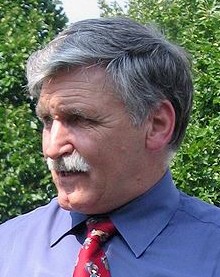
Canadian Senator, retired general, humanitarian and author Romeo Dallaire
Last week, I attended a presentation by Senator Roméo Dallaire, on a tour to promote his latest book. They Fight Like Soldiers, They Die Like Children: The Global Quest to Eradicate the Use of Child Soldiers focuses on the cause to which Dallaire has dedicated the last several years of his life. Yet he also spoke passionately and in some depth about Canadian foreign policy, especially in Afghanistan. Dallaire is highly critical of the way the Afghan mission has been handled to date, and cautioned Canadians to take a realistic look at our country’s international commitments, and to consider the human cost when invention is too little and too late, as in the case of Rwanda.
Perhaps surprisingly, Dallaire does not condemn the United Nations itself, but rather the member states that refused to lend support to stop the appalling Rwandan genocide. Dallaire believes that this tragedy could have been mitigated or avoided altogether by UN intervention at an earlier stage, when tensions were building up in the country. He reminded us that Canada took an important role in helping to redefine the terms and rationale for UN intervention in the affairs of sovereign states that fail to protect their own peoples. The recognition of the humanitarian failure in Rwanda was a powerful incentive for the reconsideration of the UN Responsibility to Protect.
Canada’s current foreign policy, including its implicit repudiation of the UN Convention on the Rights of the Child in the case of Omar Khadr, has deservedly damaged our reputation as an “honest broker” and a trusted mediator in conflicts around the globe. This was doubtless one reason for our recent failure to obtain a seat on the UN Security Council.

Romeo Dallaire's latest book - 'They Fight Like Soldiers, They Die Like Children'.
The recent proposal to extend our mission in Afghanistan comes as no surprise to most Canadians, although the timing of the announcement, is, to say the least, interesting—coming hard on the heels of the failure to obtain the UN Security Council seat, and immediately before the upcoming NATO meeting.
This announcement by the Harper government on the eve of Remembrance Day looks suspiciously like a calculated attempt to harness the emotions stirred by the focus on veterans, and thereby to stifle as “unpatriotic” any criticism about the extension of the mission. So let us not fall victim to the wiles of the political spin-doctors. Rhetoric will not keep our military personnel safe, nor guarantee that they do not jeopardize their lives in vain. Instead, let us demand to know in detail what it is that we are committing our human and financial resources to do, and why.
Like Rick Hillier before him, Roméo Dallaire deplores the waste of life and resources that has resulted in part from a lack of serious and long-term commitment to the Afghan mission. For instance, Canada and the NATO forces continue to prop up the Kharzai government which has shown itself to be both corrupt and ineffective. This must be openly acknowledged and dealt with.
Intervention in Afghanistan should never have been sold to Canadians as a quick “in-and-out” mission. According to Dallaire, to really help Afghanistan and its people move toward establishing a functioning state will take far more than three years – it will take a generation, or thirty years. Are we prepared to commit to that? If so, is Canada prepared to reassess its priorities to provide the full support such a mission requires? Is our government willing to put the safety of Canadian forces—whether acting in an officially “military” capacity or not (and the difference is a rhetorical fiction, as Hillier has pointed out)—as well as the real humanitarian needs of the Afghan people, above its own fallacious arguments about the necessity to spend $16 billion on F-35 fighter jets.
If we are going to continue to have a presence in Afghanistan, let us determine to make a positive difference. We need to know the requirements, in terms of human and financial resources, to assist Afghanistan in the slow process of gaining the strength and stability to stand on its own feet—politically, socially, and economically—and what part Canada can and should play in helping to meet these needs.
Above all, let our federal government stop playing politics with this mission and have the courage to give Canadians the facts. Real democracy, of the kind we claim we wish to see in those parts of the world in which we intervene, cannot flourish in a climate of secrecy and subterfuge. As Canadians, we need to honour our veterans by taking our current and future military missions seriously, and by demanding that our government do the same.
Fiona McMurran is a member of the Religious Society of Friends (Quakers), a historical “peace church”. Her nephew is a member of the Canadian forces and served a tour of duty in Afghanistan in 2007-2008.
(Visit Niagara At Large at www.niagaraatlarge.com for more news and commentary on this and other matters of interest and concern to our greater Niagara region. And share your views in the comment boxes below, remembering that we only accept comments here from those of us willing to put our full real names on the line.)
 Niagara At Large