
A Foreward by Niagara At Large publisher Doug Draper
The City of Port Colborne – one of the south and central Niagara municipalities, along with Fort Erie, Wainfleet, Welland and Niagara Falls, receiving the short end of the stick from the provincial government of Dalton McGuinty and company when it comes to hospital services – decided during a council meeting this August 23 to consider legal options that include suing the provincial government and the Local Health Integration Network it hides be
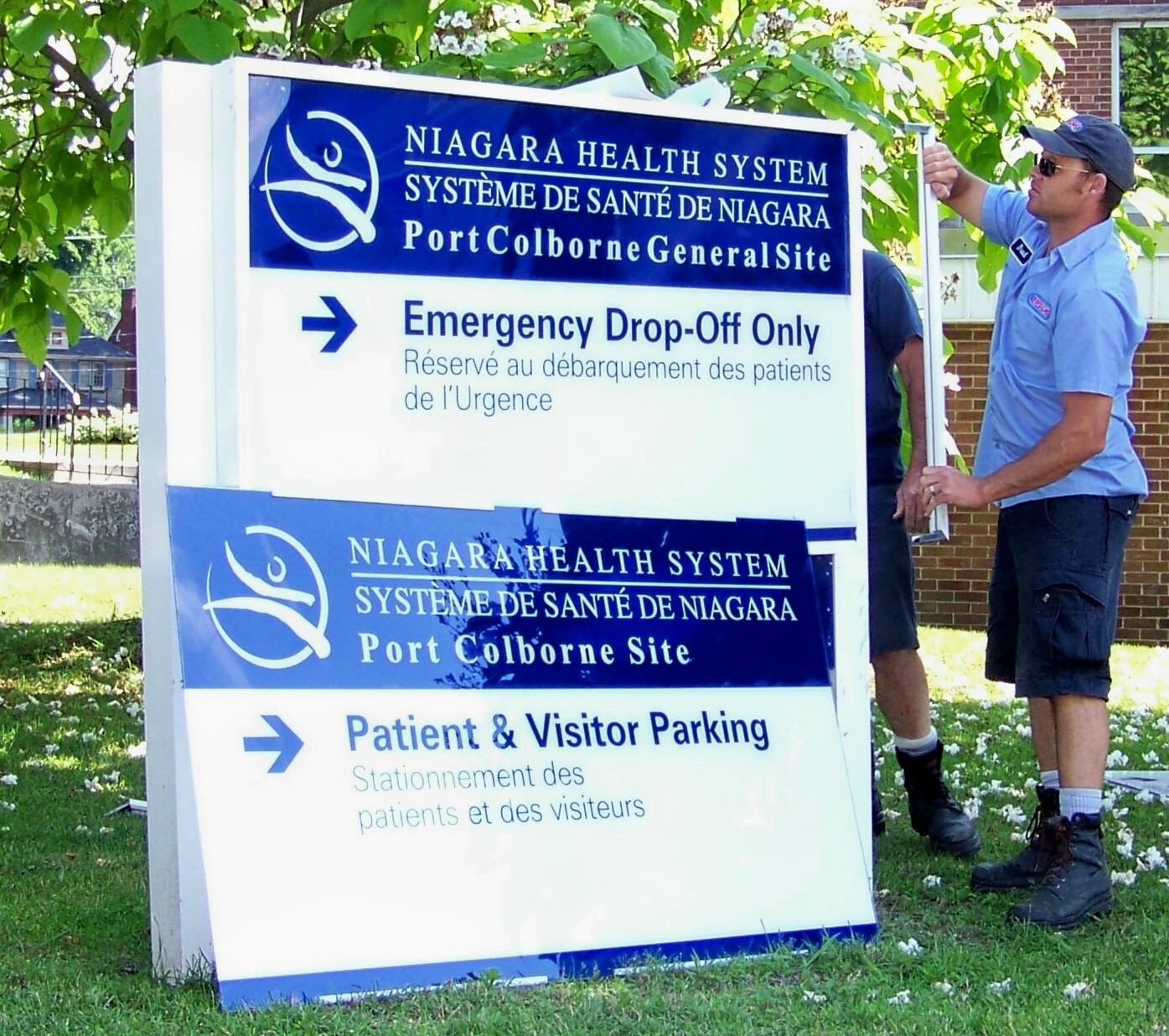
The Niagara Health System, with the approval of the area's Local Health Integration Network, removes the emergency room sign at the Port Colborne Hospital last summer. Photo by Doug Draper
hind.
The South Niagara city’s decision to seek legal advice on a possible lawsuit follows the release of a report by Ontario Ombudsman Andre Marin, the province’s official watchdog, charging that the LHI N representing Niagara, Hamilton and other surrounding areas acted illegally two years ago in excluding Niagara municipal councils and members of the public in participating in a fully open and transparent review of a so-called ‘hospital improvement plan’ for this region.
Marin’s charge that this hand-picked, McGuinty government body gave Niagara the bum’s rush when it come to having a full and open say in the future of hospitals services in this region is no small deal. The Niagara Health System, another provincial body now responsible for operating most of the hospital services in this region, has moved forward with its “hospital improvement plan,” since the tabling of this plan two summers ago, by closing emergency room services at hospital sites in Port Colborne and Fort Erie, and by continually closing beds and other services at those sites and others in the region.
Port Colborne Mayor Vance Badawey, in an August 26 interview with Niagara At Large, confirmed that his city council’s plans include exploring the options of suing the LHIN and possibly the province for their failure to provide residents in the south a proper opportunity to engage in discussions for ensuring fair and accessible hospitable restructuring across the region. Another option would involve a “class-action suit,” involving other southern Niagara municipalities, if they might want to join Port Colborne in such an action.
For the interest of all in our region – and since we know that some of the daily mainstream newspapers in Niagara are biased in favour of the LHIN’s , Niagara Health System’s and the McGuinty/Bradley government’s plan to shift many critical hospital services to a new hospital site being built in west St. Catharines, our region, we are including the full text of the address Port Colborne Mayor Vance Badawey presented to his city’s council this August 23 before it passed a motion to explore possible legal steps against the LHIN and province.
MAYOR VANCE BADAWEY’S REPORT
Council Meeting
August 23, 2010
Ombudsman’s Report – “The LHIN Spin”…
I was invited to Queen’s Park a week ago Tuesday, when the Ontario Ombudsman released his report on the LHIN process of accepting the NHS – Hospital Improvement.
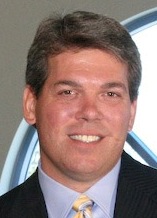
Port Colborne Mayor Vance Badawey
André Marin has called on the province to improve accountability and transparency of the LHIN.
Major changes to health care require a democratic process, engaging health care experts and health care committees to ensure the public has a say. Due process involves community engagement. Community engagement includes physicians, nurses, community residents and elected representatives.
Mr. Marin found the Hamilton Niagara Haldimand Brant LHIN closed meetings to the public for the purposes of education of its members. That was illegal, he said. Add to that – the meetings were, in fact, related to two controversial hospital restructuring plans involving Hamilton Health Sciences and the Niagara Health System.
As with all fiscal changes, we recognize the difficult task at hand, and understand difficult decisions need to be made. However, these decisions were not made with the input of those who had the most to lose: our own local health care providers, our own local health care committees, and most important, our own local residents who rely on the excellent care our hospital provides.
In a letter recently sent to Mr. Marin by LHIN Chair Junita Gledhill, she wrote that they “do not believe that the Board Education sessions are illegal. All deliberations and decisions have and continue to be made in the open Board Meetings and/or appropriately constituted closed sessions.”
Allow me to be clear – the LHIN claims they were educational sessions behind closed doors. They were not!
Marin stated in his report: “They used these secret meetings to discuss the restructuring plans with the key players away from public view.”
The method of defining our Clinical Services plans is illegal and MUST BE STOPPED.
The best education happens in an open ‘think tank’ forum where questions and comments can bring positive and productive change, and alleviate misunderstandings and misinformation. We are supposed to be in this together!
The complaints we forwarded to the Ombudsman were out of frustration with respect to the LHIN not engaging local health care experts or the community at large.
Even NHS CEO Debbie Sevenpifer sent an e-mail to the LHIN on June 23, 2008 expressing her concern with respect to the lack of time for proper public consultation. Here’s an excerpt from her letter: “given the materiality and the easily-understood nature of some of the changes contemplated as being included in the Improvement Plan, a court would likely expect a robust level of consultation to occur before the hospital board made a firm commitment to implement such a plan … something that is not possible in the time available.”
This process was driven from the top down. It simply was not inclusive. It was never meant to be! Therefore, in my opinion, the results have absolutely no credibility. The entire region is saying it. When will the province listen?
Here in the City of Port Colborne, when the HIP was released, we immediately established an inclusive, due diligent processes that included all of the above to ensure community engagement, in turn, bringing forward workable solutions so that residents will have equal access to health care. This process has become a blueprint for small communities throughout the province of Ontario and can contribute to the overall condition of health care throughout the Niagara region. It has credibility!
Make no mistake about it: the effects of the ER closures in Port Colborne and Fort Erie are negatively impacting all communities in Niagara. To think otherwise is being extremely naïve.
We have worked tirelessly with our local healthcare providers and the MOHLTC to increase the service level in our community. The LHIN failed to act in a similar collaborative manner.
There was no mention of community engagement or physician engagement in Section “E” of the LHIN’s Board Minutes dated July 16, 2008. Under their Accountability Agreement they must engage stakeholders before decisions are made. They did not! However, the minutes do show that their intent was to consult with one individual – Dr. Jack Kitts.
As Mr. Marin stated in his report: “the reality of community decision-making has fallen short of the political spin.” The very reason former Health Minister George Smitherman created LHINs across the province … and I quote…“that decisions must be made on the basis of public interest and in full view of the public.” Community engagement is actually written into the LHIN legislation.
However, with the release of this report, it clearly outlines the creation of LHINs has backfired. The LHINs, as described by the Ombudsman, are nothing more than “political spin.”
Credibility needs to be re-established within Ontario’s healthcare system, and it starts with the province.
Mr. Marin has called on the province to improve accountability and transparency of the LHIN. We share that call. However, allow me to take it a few steps further – to come forward with solutions:
· Eliminate the LHIN. May I suggest this provincial government take on the role of being transparent and accountable within public health care by eliminating the people who seem to be hand-picked to insulate them with absolutely no transparency or accountability.
Government is elected to be inclusive when making decisions, first by establishing a transparent, inclusive process, followed by a decision being made resulting from that process and being accountable for that decision – it is called leadership.
We are doing it here at the local level. There is no reason why the province can’t do it.
To have groups of people – not elected and duplicating the very work our government should be doing within their respective ministries is nonsense.
· Bring back local Boards. Bring our hospitals back to the very people who care for our residents – physicians, nurses, medical professionals, working shoulder to shoulder with community partners and local elected representatives to bring forward recommendations on Clinical Service Plans to the Ministry.
Our own local healthcare providers, our own local healthcare committees, and most important, our own local residents who rely on the excellent care our hospital provides will make decisions based on our community’s best interests – not the interests of someone else’s agenda(s).
This will ensure that decisions will be made on the basis of public interest and in full view of the public.
· Accept local solutions. Once again, we are proof of the success that will result in bringing back local decision making. I reiterate this most important element: we have worked with the MOHLTC, and most important, with our local healthcare providers to increase the service level in our community.
Communities such as ours should be afforded an opportunity to move forward with locally established recommendations. For instance, those recommendations contained within our own locally driven Health Care Services Plan, including the renovations needed at our hospital to allow the services to be properly provided.
Through our local efforts, we have brought partnerships together, recruited family physicians, specialists, and allied health care professionals. We have strengthened Community Based Primary Health Care. We have accomplished all of what we would otherwise expect the province to encourage. Under the current structure, it is simply offering lip service resulting in discouragement.
· The Ministry must mend its relationship with the OMA. The changes in the delivery in healthcare services in the province of Ontario must include those that are in the business, not just a clique of individuals with inflated salaries being paid to toe the party line.
The OMA is a conduit to local decision-making, taking advantage of all disciplines throughout the province of Ontario – and from all jurisdictions throughout the province of Ontario, regardless of size.
(Click on Niagara At Large at www.niagaraatlarge.com for more news and commentary on matters of interest and concern to our greater Niagara Region and share your comments on this and other topics.)
 Niagara At Large
If the entire part of the last part of this post is Vance Badaway’s, this is distressing. Local input is no more. Local influence or understanding of the Niagara Health system is no more. The overpaid CAO’s like Debbie S. have a lot to answer for. Of course, they will not.
Many of us do try to support our Niagara Health System in some small way, but it gets scarrier by the day. Gail B
LikeLike
Lucy McCarthy died in the St. Catharine’s General hospital emergency ward on May 25 2010, after waiting seven hours to see a doctor. Two days earlier, after a fall of more than 3 feet and a laceration that took two layers of sutures to close, she had been sent home without a CTscan even though she was taking Cumadin. Our health care is in total disarray. Christine
LikeLike
Our Mayor in Fort Erie is quite content to wait 2 more years, and wait and see, what crumbs the NHS will give us, while we the residents” bleed and die”‘, what a discrace! he recently got a letter from Debbie Sevenfifer thanking Russ Wilson and the Mayor Doug Martin for their cooperation and assisstance on the Hospital situation, in other words keeping the lid down on the residents here in Fort Erie. Playing politics with peoples lives is not acceptable. George Jardine running for Ward #6
LikeLike
I took my father into Emergency at GNGH two weeks ago today. He had an incision from a graft surgery in February in his groin that would not heal. That day it bled enough to soak his jeans with blood. Dad had an appointment for August 1st to see a specialist in Hamilton and wanted to know if he’d bleed to death before he got his appointment. The Doctor had an orderly put a bandage on his incision and sent us home with assurances he wouldn’t bleed to death instead of ordering an ultrasound on the arteries graft. The next day, my father lost three litres of blood, was rushed back to emergency where the staff managed to intubate and stabilize him in order to get him to Hamilton General where he endured a surgery to replace the grossly infected graft. The next day, more surgery for fear they might have knicked his bowel the day before. Then pnemonia, leading to further heart damage, lung damage, reinfection of his graft and then this past monday the decision to take him off life support. My father might have lived if they’d performed a simple scan and caught it that night.
LikeLike