
By Doug Draper
Niagara, Ontario’s regional government is spending more to treat and pipe water and wastewater across the region than it is getting back in charges for water use, and that can only mean one thing.
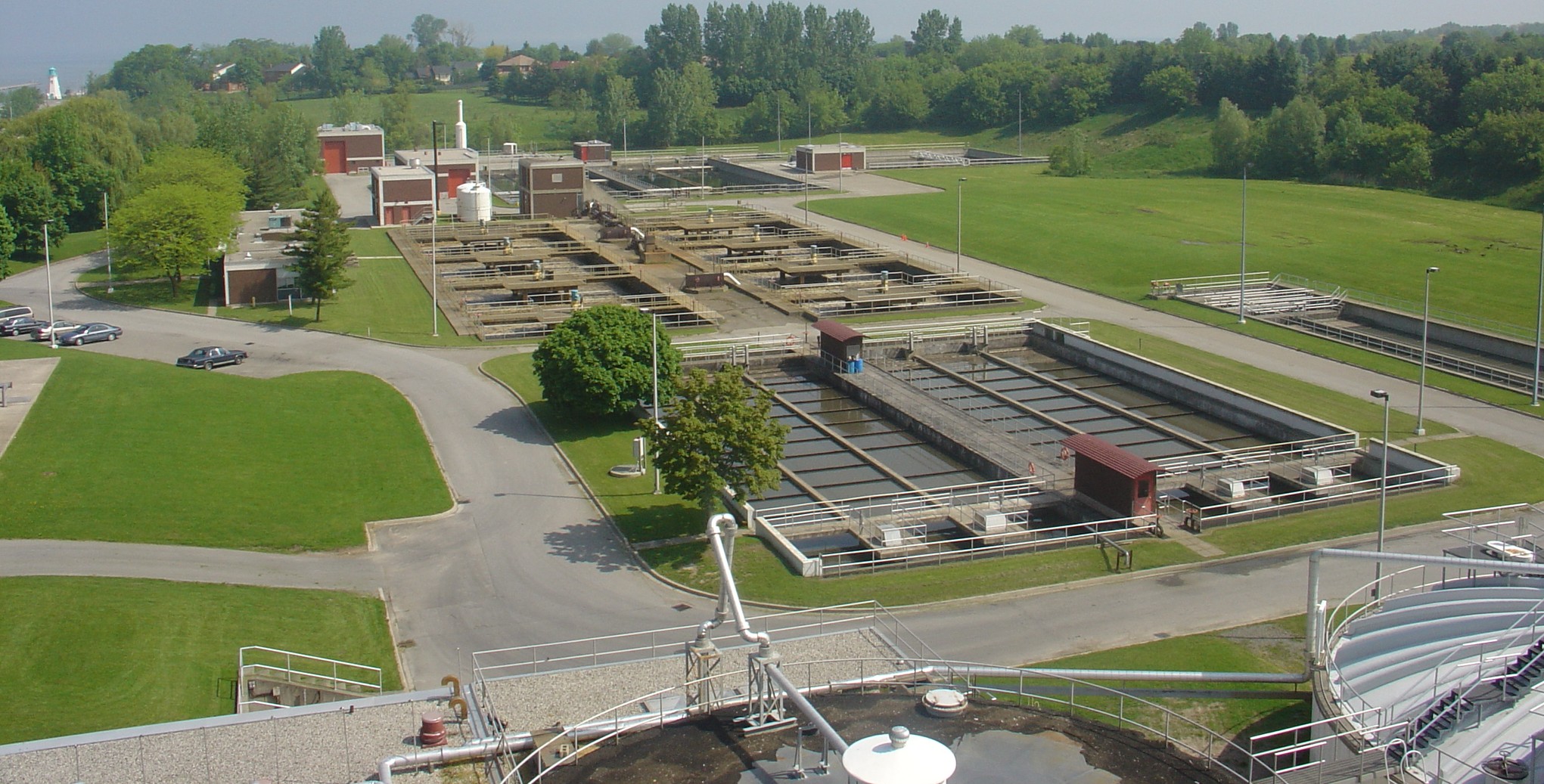
One of Niagara Region's wastewater treatment plants in the St. Catharines community of Port Dalhousie. Photo courtesy of Niagara Region.
Get ready to pay more – and in some Niagara municipalities, significantly more – for the water you use in your homes and businesses.
That was the overall message Niagara’s directly elected regional councillors and mayors of local municipalities received from the Region’s public works and corporate services staff at a special committee-of-the-whole session this July 20 to discuss how best to set water and wastewater rates over the next four years.
“We have got to get this right,” said the Region’s public works commissioner, Ken Brothers, of the need for a new way of charging residents and businesses for water – a way that addresses a shortfall in revenue for operating water and wastewater works that has added up to about $22 million over the last six years alone. “Without the appropriate revenue, we are heading down an unsustainable path.”
Getting Niagara back on a more sustainable course when it comes to covering the real cost of treating and piping water and wastewater would mean continuing to charge residents and businesses for the amount of water they consume. But here is what to watch for. If approved in the months ahead by the regional council, it could also now mean combining that charge with a new “fixed rate” that can be adjusted to make up for the shortfall that has been caused, in large part, by an overall reduction in water consumption across Niagara.

Inside the Rosehill water treatment plant in Fort Erie, Ontario. Photo courtesy of Niagara Region.
St. Catharines Mayor Brian McMullan said the new charge system being proposed could mean a 20-per-cent increase for water consumers in his municipality and significant increases in other larger municipalities like Welland and Niagara Falls. Lower –income residents, including seniors, would feel the most pain from these increases, he said.
McMullan wondered if the pain wouldn’t be eased if the Region and local municipalities worked harder to apply principles of “smart growth” when it comes to developing communities in Niagara. Those principles call for concentrating new residential and commercial development in already built-up areas, where the water, sewer and other infrastructure is already in the ground, rather than continue to sprawl into the countryside where more pipes need to be buried.
According to the Region’s figures, the consumption of water piped to homes and businesses from its treatment plants has been declining about five per cent annually in recent years. A significant percentage of that decline has to do with the closing or downsizing of major industries and water users in Niagara like John Deere, Atlas Steels and others.
But it also has a little to do with residents and businesses doing a better job of reducing their use of water for conservation reasons. Some may very well ask why their water and wastewater bills may go up if less water is being consumed. Why bother conserving or cutting back my use of water if, at the end of it all, I’m going to get charged more anyway?
One answer is that the Region still has 11 water and six wastewater treatment plants that need to be properly maintained and operated, regardless of how much water flows through them. The same goes for the maze of water and wastewater pipes running through our communities. The costs of operating those plants must be covered whether the quantity of water consumed goes up or down.
Then there is the fact that the Region is still treating 30 per cent more wastewater from our storm systems and sewers than it is treating water flowing to our taps. That raises questions about what more can be done at the local level to reduce the amount of water being flushed down sewers and storm drains.
Issues that were not raised during the July 20 committee session included the low fees Niagara continues to charge developers (compared to other regions in the province) for the water and sewer pipes and other infrastructure needed to accommodate new development outside of already built-up areas. Niagara’s development fees, amounting to about 62 cents for every dollar that is spent building this infrastructure, means that at least one third of the cost is being borne by already burdened ratepayers in the built-up zones of our region. That is a subsidy (a form of socialism) to the development industry that has nothing to do with free-market capitalism.
There was also no discussion by regional councillors or the Region’s staff of the fact that Niagara remains one of only two or three regions in southern Ontario where the jurisdiction for treating and delivering water is split between the regional government and local municipalities. An independent study completed for the province more than a decade ago concluded that water and wastewater could be handled in a more cost-effective way if the regional level of government had control over all parts of the water and wastewater system.
But Niagara’s regional government – just as it has when it comes to launching a truly regional public transit system – has bowed to the parochial impulses of local municipalities and has been afraid to entertain a full and open public debate on governance when it comes to services like water, wastewater and transit.
For those of you out there who are concerned about where Niagara is going with water and wastewater charges, get engaged by contacting your mayors and directly elected regional councillors to express your views and to obtain more information on the subject. Also keep an eye on opportunities later this year to make presentations to the regional council as it moves toward approving new charges for water and wastewater in its budget for next year.
Niagara At Large will also do its best to alert residents in the region to opportunities to express their views before the council on this issue.
(Click on Niagara At Large at http://www.niagaraatlarge.com for more news and commentary on matters of interest and concern to our greater binational Niagara region.)
 Niagara At Large
One way to be more prudent in spending this money is for the region to stop approving urban boundary expansions- as it intends to do in West Lincoln and Niagara Falls and is now wasting our money on in a confrontation with the province at the OMB!
LikeLike
The water and sewer set up was doomed from the start, The Region got the gold mine,treatment and waste water service +water plants, the munipalities got the sewer and water lines , in other words the shaft,hundreds of miles of pipes leaking like a sieve ,many were combined sewage and drainage water overloading the treatment plants,municipalities many clueless on how to fix this overwhelming situation, they could have offloaded this situation back to the Region in the early days of amalgamation but they did not do it.they tried water meters, people used less water they, then had a shortfall of water rates so they jacked up the water rates a catch 22 situation, some municipalities used to siphon money out of the water accounts , an illegal act under the Municipal Act for a slush fund. As people don’t understand that they are getting scammed by the municipality they got away with it, this whole mess is a shell game.
LikeLike
My guess is that loss of heavy industry aside (eg. John Deere closing), one simple cause of lower consumption is that the last 2 summers have been WET … lots of RAIN.
This means that we all need less water for gardens, but the Region still has essentially the same cost to purify our water. The only costs that reduce are fewer chemicals, and a bit of electricity for pumping. Buildings, plumbing and people remain the same whether they pump a little or a lot.
(Let’s remember that determining water bills by using water meters is only 1 way of billing us. They used to charge a flat quarterly bill to every home. Meters are fairer, and encourage conservation, but maybe we should explore other ways.)
After they Raise our rates, and El Nino creates a few years of DRY summers with High consumption, will they Lower our rates because of the surplus that will arise?
LikeLike
The citizens of Welland have been mislead and misinformed. The implementation of water meters did not resolves the overwhelming cost of treating rain water, which one the key factors in the uncontrolled cost to our water and sewer bill. The city and Region are looking for more increase cash flows and reserve but fail to control expenses. A water commission should be created with the public as the first partner in controlling this monopoly.An independent body of citizens guided by inpartial expert. Who can we trust Mayor Damian Goulbourne? Look at Welland mess.
LikeLike
Don’t forget to add the HST on too! We can’t keep going like this…
LikeLike