
By Doug Draper, A Commentary
Mark this May 17 down as a shot across the bow for those messing up hospital services in a Niagara, Ontario region that is home to close to half a million Canadian and American residents.
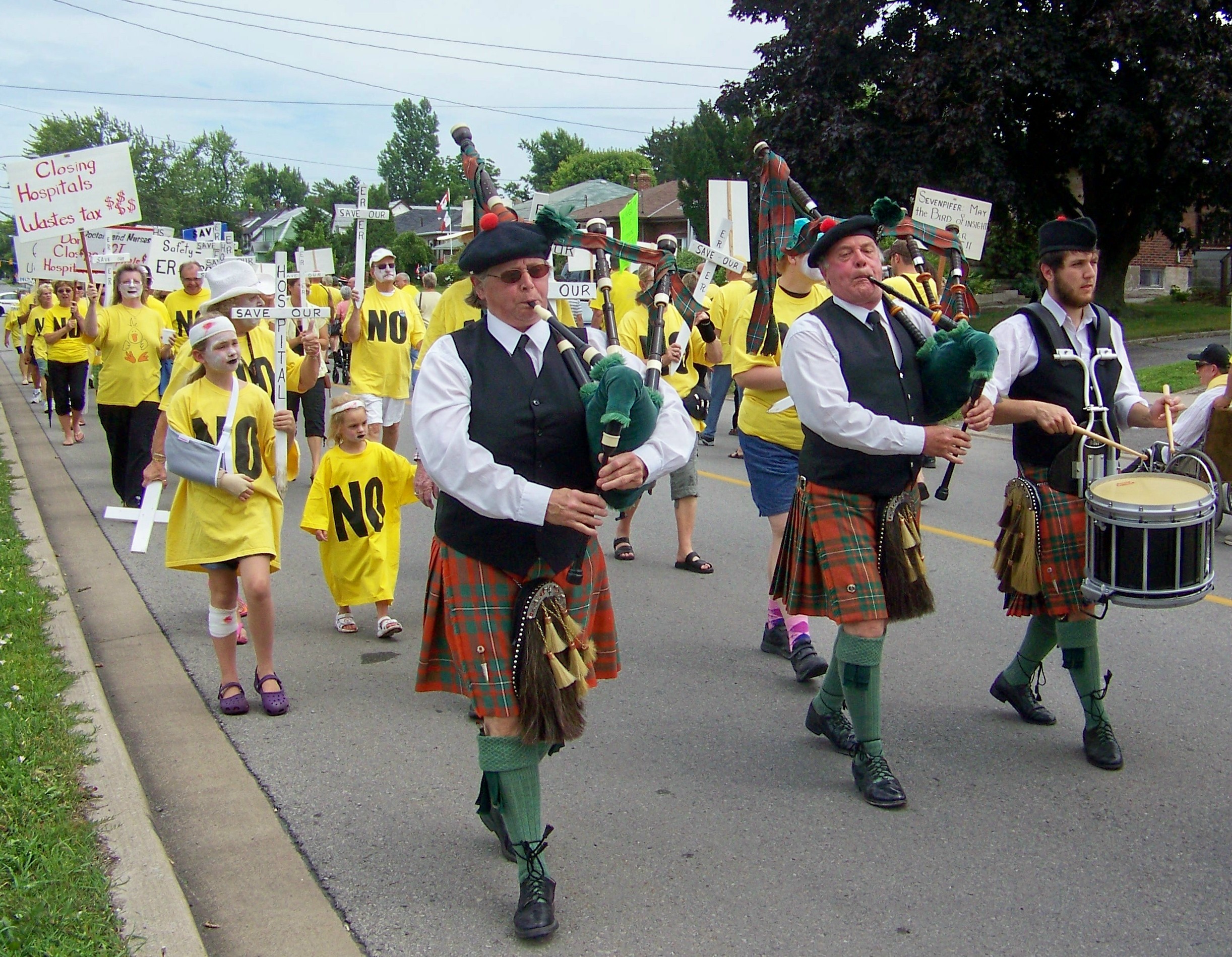
One of several rallies in front of the Fort Erie hospital to save its emergency room, and another that fell on deaf ears in Toronto. Photo by Doug Draper
On this May 17, a scathing report has been released on the mismanagement and lack of demonstrated concern for patient care by Ontario’s government and the lackeys this government appoints to regional hospital boards and local health integrated networks for what appears to be only one purpose – to cover this same government’s ass.
The report, entitled “Toward Access and Equality: Realigning Ontario’s Approach to Small and Rural Hospitals to Service Public Values” was prepared by a panel of people that have served as Liberals, New Democrats, Conservatives and others, was release this May 17 following the only true and open public hearings that have been held this past winter and spring across this province, to hear the concerns of the people of this region and province around the state of hospital care.
That report concludes that the state of hospital care in this region and other parts of the province has turned a trip hospitals for far too many patients into a long, suffering dysfunctional experience, and is literally placing lives at risk at many smaller and rural hospitals across Ontario, including those in Port Colborne and Fort Erie where the Niagara Health System (the board the province kisses up to for mismanaging most of the hospital services in this region) shut down emergency room services in those municipalities last year despite mass protests.
The report calls for the renewal of elected hospital boards and it calls on the province to put more funding into frontline health care instead of the kind of high-priced bureaucracy and administration (i.e. – Niagara Health System CEO Debbie Sevenpifer) that McGuinty lackeys like St. Catharines MPP Jim Bradley support over fair, accessible care for this region’s people.
The report also reflects how saddened the panel was by testimony they heard from the family of Reilly Anzovino, who died this past December, shortly after an extra long ride from her hometown in Fort Erie where she was involved in a traffic accident, to the nearest emergency room that is still open in this region in Welland.

Reilly Anzovino died last December at age 18 following an accident in her hometown of Fort Erie. She had to be ambulanced to an emergency room in Welland and the circumstances around whether she would still be alive if the Fort Erie emergency room was still open are now a subject of an Ontario coroners' hearing.
But it is unlikely Ontario Premier Dalton McGuinty and his health minister, Deb Matthews, who showed how much she cared earlier this spring when she spoke at a conference of blue bloods (about the only sub-group of better-offs in Ontario that might listen to her crap about how well things are going) at the Royal York Hotel in Toronto, while friends neighbours of Reilly Anzovino and others who have seen their hospital services go to hell were picketing outside.
That might not matter to McGuinty cabinet minister Jim Bradley either, who looked just plain pleased about getting his picture in his hometown St. Catharines paper last year for participating in the ground-breaking ceremony for a new hospital complex being built in his north Niagara riding of St. Catharines. Far be it from him to give a fig for the people concerned about hospital services in south Niagara. Not his riding. Not his concern.
But it is a concern for countless tens-of-thousands of people across this Niagara region and for many more across this province.
With that in mind, Niagara At Large is publishing the following media release and excerpts from the report by the Ontario Health Coalition for your information. We will also include the names and biographies of the panelists the OHC put together to hold the public hearings and help it produce this report.
Please follow up by wading in with your own comments.
Ontario Health Coalition
15 Gervais Drive, Suite 305, Toronto, Ontario M3C 1Y8
tel: 416-441-2502 fax: 416-441-4073 email: ohc@sympatico.ca www.ontariohealthcoalition.ca
May 17, 2010 For Immediate Release
Ontario Health Coalition: Throne Speech Response
Fears that New Hospital Funding System Threatens Patient Access,
Leads to Privatization
The Ontario Health Coalition released a report appealing for equity and improved access to hospital services in rural Ontario. The report “Toward Access and Equality: Realigning Ontario’s Approach to Small and Rural Hospitals to Serve Public Values” is based on input received from more than 1,150 people who attended 12 hearings in regions across Ontario in March 2010. The coalition organized its own public hearings after the government’s own rural and northern health panel, created after hospital closures in small and rural communities, refused to hold any public consultations. In total the coalition received 487 submissions into the state and future of local hospitals. Today’s report has been written and submitted to the Ontario Health Coalition by a non-partisan panel including doctors, nurses, health professional, representatives of each region of Ontario, and representatives active in each political party.
Key recommendations include:
• Create a basket of services available in every hospital, including the smallest and amalgamated hospitals. These services include an emergency department, blood, x-ray, ultrasound, inpatient acute and complex continuing care beds, palliative care close to home, rehabilitation and others.
• Ensure that these services are provided, at optimum, 20 minutes in average road conditions and at most 30 minutes in average road conditions from residents’ homes.
• Step up efforts to address shortages of nurses, physicians and health professionals.
• A moratorium on emergency department closures and revision of the closures of ALC/complex continuing care beds across the province.
• Phase out the LHINs within three years and create new local planning organizations with a new mandate that does not include closing rural hospitals.
• Restore democratic hospital boards and curb the powers of government-appointed hospital supervisors.
• Reform hospital performance measures to restore compassion and access to care as primary.
• Impose a hiring freeze on consultants and plan to increase hospital funding to meet the national average.
Quotes:
“We heard stories of poor care practices resulting from hospital bed cuts whereby patients are forced out of hospital too quickly in a bid to empty a hospital bed, then spend most of the rest of their lives in the emergency department with poor quality of life until they die,” said Natalie Mehra, director of the Ontario Health Coalition. “In the worst instances, we heard of patients left waiting on stretchers in emergency departments for days without food, without enough nursing care, under bright lights, with no privacy. Whole communities have lost access to vital services and now must travel 100 km or more to access care. The cuts are neither serving small hospitals well, nor are they serving larger and regional hospitals well; as patients are piling into already-overwhelmed hospitals in larger centres when their local services are cut. We have concluded that urgent change is required. We have put together a set of recommendations to restore the principles of access, compassion, equality and democracy in our health system.”
“Our panel has heard an overwhelming consensus that the millions of healthcare dollars spent to set up and operate the 14 LHINs could have been better invested in patient care. LHINs have not demonstrated improvements in care, only service cuts that leave huge gaps in service delivery,” said Barb Proctor, RN, and one of the panelists that traveled Ontario. “We heard over and over that individual citizens and municipal leaders trying to contact their LHIN with questions or input have been met with arrogance or received no response at all. The LHINs are viewed by rural and northern communities as “a firewall between the government and the people.”
“Closing services in small community hospitals downloads travel costs to patients,” noted Dr. Claudette Chase, another panelist. “It is my greatest concern that many patients cannot afford access to care when it is moved out of their local community.”
“The pride of people in the small communities we visited certainly is an inspiration to us all. We heard that we must not let the provincial government and its creature the LHINs destroy health care for those of us who do not choose to live in urban centres,” added Dr. Tim Macdonald, another panelist.
“We heard clearly the great frustration of communities removed from all control of local hospitals,” observed the Honourable Roger Gallaway, former MP and one of the panelists. “The McGuinty government has created a group of elites called CEOs who control hospitals even to the point of contriving their boards of directors. Communities now have no decision making function in community hospitals.”
“This is a wake up message that our health care system is in an ever-deepening crisis,” added Kathleen Tod, RN, another panelist. “Having spent half my nursing career working in a busy emergency department, I thought I had seen it all. After listening to the presentations across Ontario I realize it was not even close.”
“The coalition deserves thanks for its hard work in organizing the panels and for writing such a thorough report,” said France Gelinas, MPP and one of the panelists. “I am disappointed that the government’s own panel on rural and northern health care failed to consult the public about the future of their local hospitals and health system.”
FROM THE REPORT – Welland – including Niagara Peninsula, Grimsby, Hagersville and Burlington
Welland, March 9, 2010
Access to Care/Quality of Care
This panel wishes to make a special note that we are deeply saddened by the testimony of the friends and family of Reilly Anzovino who died in December 2009 en route to the emergency department in Welland from Fort Erie (where the emergency department had been closed).
We also want to recognize the other witnesses who brought testimony about the deaths of their family members. We thank them all for their testimony and we share the Reilly-Anzovino family’s hopes that the coroner’s findings will help to prevent any other families from similar suffering.
Witnesses in Niagara described the poorest access to hospital beds and emergency department care of all the regions we visited. Cuts have been and are being implemented without any protections for resident access to care and without funding agreements, functional protocols and enablers in place. This panel observes that hospital care in Niagara is chaotic, perilously short-staffed and under-resourced. The hospital system has lost public confidence.
It is this panel’s opinion that the provincial government should send an investigator into the Niagara Health System. There is a very high level of public anger at the hospital board. We heard complaints of disputes with the clinical staff that threaten access to care, including physician resignations in Niagara Falls, no functional protocols established with EMS and no ability to reach a funding agreement for the Urgent Care Centres in Port Colborne and Fort Erie, among other disputes. The hospital has severe financial trouble and there are many serious complaints about access to care and quality of care. Niagara’s emergency department wait times exceed provincial average. Surgeries are being delayed and cancelled.
In February, local surgeons complained about the postponement of serious cancer surgeries yet more beds are being closed in April. The death rate in Niagara is reported to significantly exceed the provincial average. In the case of emergency, 50,000 people are expected to use the three remaining emergency departments in hospitals that were already experiencing problems and have had serious staff cuts. Several physicians, the Ontario Nurses’ Association, municipalities and MPPs have all called for an investigator.
Port Colborne’s emergency department closed in July 2009 and Fort Erie’s was closed in September 2009. All surgeries and acute care beds have been removed. The Niagara Health System (NHS) – the local amalgamated hospital corporation – intends to close these hospitals (including urgent care centres) by 2013. However, funding systems and functional protocols are not in place, none of the identified “enablers” have been put in place after more than a year, and there is not the capacity at the other regional hospitals, nor in other health care settings, to take all the patients.
Frequent gridlock, long ambulance offload delays and extremely long emergency department wait times are occurring.
No funding model Urgent Care Centres in Port Colborne and Fort Erie has been negotiated. As of April 2010, funding for working nights will be reduced by half. Doctors are saying that they cannot work for this level of pay and the UCC will be closed down in Port Colborne at least at night. (This was the NHS plan from the beginning but the LHIN consultant recommended that it be open 24/7 subject to review.)
Planned renovations for Port Colborne’s Urgent Care Centre have yet to move forward, in turn, backlogging improvements to working conditions, appropriate delivery of care and expansion of the family health team.
Functional protocols have yet to be addressed or solidified between the NHS and the EMS (regional ambulance services).
One paramedic described the challenges facing EMS. Offload delays have been worsened by the closing of hospitals. Response times are worse. Long delays exist in the remaining emergency departments. There is a severe lack of staff and beds in the hospitals. They are unable to move patients out of emergency. There are not Advance Care Paramedics (ACP) in all ambulances. There is a goal of 68% ACP but that has not been reached. Even with ACP, paramedics cannot do what doctors can do to stablize a patient.
Many witnesses described long waits in the emergency departments in Welland , Niagara Falls and St. Catharines. To paraphrase one submission, there are clinical consequences of long waits in emergency departments. Patients endure in excess of 24 hours in brightly lit, noisy hallway, without proper bed and care, poor access to toileting facilities, dignity assailed. Care is sub-optimal, pain poorly managed, care plans delayed, health at risk of deterioration and likelihood of complications increased.
One witness was transferred to the Welland Hospital emergency department because of heart problems. In Welland Hospital, the patient’s medication was stopped without his knowledge (despite the patient telling the staff that his family doctor said not to do this). He waited for 22 hours without his meds, without being fed (he is diabetic) for heart specialist. If it wasn’t for his wife, he wouldn’t have received any food. There was no monitor for his heart. After 18 hours his heart started to race because his medication had been stopped.
One witness testified that her mother had been taken by ambulance on Friday August 29 to Niagara Falls Hospital from her home in Ridgeway. She thought she had a stroke. The emergency department was full with on doctor on staff for 35 beds and full waiting room, according to the witness. No medication was given. They waited until next day when she was sent for a CT scan and she was found to have had a stroke. She waited in the emergency department for 4 days before she was moved to a hospital bed.
Another patient waited all night on stretcher in Welland emergency department which was extremely busy. He has type II diabetes and was given nothing to eat.
One nurse described almost impossible working conditions in Welland. There are too few staff. There are too few rooms to examine people. Patients are left in the hallways or even put in storage rooms. Halls are filled with stretchers contrary to fire code. When the ICU is full, patients who have just had heart attacks are kept in the emergency department, contrary to care standards. In the ICU the staff ratio should be 1:1 or 2:1. Many ICU patients have several IV drips with potent drugs that require constant monitoring and minute-to-minute adjustment according to the patient’s condition. In ER each nurse has 5 –6 additional patients. Staff cuts mean nurses now do EKGs and lab and other procedures normally done by others. Housekeeping cuts leave the place “filthy” at times. People in the waiting room are angry and left waiting for many hours. The emergency departments in the peninsula are gridlocked and paramedics tied up because they can’t discharge. There have been extensive lay offs and bed closures.
Bed and staffing shortages are not only contributing to emergency department backlogs, they are also forcing inappropriate discharges from hospital when patients are too sick, long waits for needed hospital care, and poorer health outcomes.
One witness described an improper discharge without consulting the responsible physician and without a discharge plan that was appropriate. It resulted in her mother’s death. The witness’ mother was diagnosed with kidney infection and lumbar disc aggravation. She was in hospital from October 7 – October 15th. She was receiving physiotherapy as her legs were unsteady because she had been in bed for so long. She was discharged on October 15. Upon arriving home from the hospital she was unable to walk from the car into the house and her daughter was struggling to help her. She fell on way into house and wounded her leg. She was readmitted to hospital same day with a leg wound from the fall. She got an infection in leg wound led to sepsis. She died of septic shock on November 1, 2009. The witness believes that the premature discharge and fall resulted in her unnecessary death. The sepsis was also not diagnosed until it was too late. The NHS says there is an investigation.
One witness described her experience. On June 20, 2009 she fell down. She got to Welland Hospital emergency department at 4pm on Saturday. She was informed that her wrist was broken, had pain killers, intravenous, and x-ray. She was told that an ambulance would take her to Niagara Falls because Welland had no orthopedic surgeon on duty. There was no ambulance available so she was sent home with an IV in her vein to wait until 10 am next morning when her brother was to take her to the hospital in Niagara Falls. He took her in at 10 am. She asked for pillow for her arm (she was in pain) and a nurse told her they had no extra pillows. Six hours later, at 2 pm she was moved from waiting area to floor where she was to be operated on. When she was on the operating table the surgeon got a phone call. He told her it was an emergency and he would be right back. She waited for 45 minutes on table alone, cold and shaking. She walked out into hallway. A person in the hallway got her a wheelchair and she called her husband to pick her up. He did and they drove to St. Catharines General Hospital. She waited another 4 hours in the waiting room before orthopedic surgeon could look at her arm. A nurse and cast technician wrapped her arm in soft cast. She sent home and told to call the orthopedic surgeon’s office to make an appointment for the surgery. She made the appointment for the following Thursday (6 days after she broke her wrist). The surgery was done to put in three pins to hold shattered bone.
One witness called for a tool that accurately captures readmissions. He noted that patients are only counted as readmissions if they are readmitted within 24 hours. This does not capture properly the number of readmissions due to discharge too early and/or without adequate care plans.
Several witnesses raised cuts and poor access to mental health services. It was noted that people with mental health problems cannot be expected to navigate a complex health care system. They need support at home and help connecting with the continuum of clinical care and social support.
Services are seen as inadequate or non-existent.
Àƒ The NHS is proposing to close down the psychiatry unit at Welland. It serves Welland, Port Colborne, Wainfleet, Pelham and surrounding areas. Transportation is a major problem. They plan to centralize patients to St. Catharines. This is inconsistent with the attempts to move psychiatric services out of large hospitals and into communities. “This is going backwards.”
Àƒ The mental health services provided by the NHS are reported to be well below the standard required of the Ministry of Health.
o There is no regional psychiatric team.
o There has not been a chief of psychiatry for the last 5 years.
o There are no registered clinical psychologists in the NHS.
Àƒ There are only 15 psychiatrists in a region with a population of 450,000. The recommended number, according to provincial benchmarks would be 50 for this region, or 1 per 8,000 people.
Àƒ It was reported that the NHS is not making any sincere effort to recruit psychiatrists.
Àƒ There are no inpatient beds for mental health for children in the region. Children are either put in pediatrics or in adult psychiatric unit. This is a safety issue and falls far short of the standard of care.
Àƒ Niagara Health System cut a psychiatrist from Welland Hospital, affecting all his patients.
Witnesses called for clearer standards and protection of patient access to care, proposing that the provincial government set standards for accessibility to ensure safe and reasonable access to necessary services. Presenters noted that they are not demanding tertiary services, just timely and equitable access to adequate and safe health care services. One mayor called for a template for what’s needed for an effective emergency health care system. One witness questioned how a community of 40,000 people is considered to be too small to be worthy of an emergency department.
A physician noted that the warnings of unnecessary death as a result of emergency department closures have not been acknowledged. Local hospitals have a vital function in stabilizing patients before transfer. Time-critcal emergencies that require faster access to ERs include: stroke, heart attack, severe trauma to head, limbs, abdomen or chest, hemorrhaging, shock, patient bluish and gasping for breath, multiparous woman in premature labour, strangulating prolapsed cord. Paramedics not trained or equipped to stablize time-critical emergencies. He asked, “What good is a Centre of Excellence if a patient is DOA?”
o Simple pediatrics and internal medicine, obstetrics, geriatrics, psychiatry, brief intensive care, minor day surgery etc. should be kept close by a patient’s family. It is humane to do so. Family physicians with specialist back up are perfectly capable of doing this core work. It would be more economically viable for them to do so.
Problems accessing care should be measured and reported on.
Patients should be able to submit evaluations to the MOH on quality of care.
Witnesses called for the hospitals in Fort Erie and Port Colborne to remain open, with restored services and equipment. Lack of clinical staff and equipment were cited as a problem by several witnesses.
After a suspected stroke and a heart attack, one witness’ mother ultimately requested to go to Fort Erie. The witness described this hospital as the cleanest and most comfortable but seemed to have no monitoring equipment and little physician care. The week she moved in they laid off 10 nurses and the few remaining RNs were asked to work “ridiculous” shifts. The family felt the mother was overfed and complained to the nurses’ aides. They had no access to the dietician. She vomited into her lungs, this went undetected and caused her to decline further. She was moved to palliative care. She was not prescribed food or fluids. The witness conveyed her belief that funding cuts shortened her mother’s life and decreased her quality of life before she passed away.
One witness described his experience as follows: his wife had severe osteoporosis and her leg broke. He called 911, five blocks away from Douglas Hospital. The ambulance was sent from Ridgeway. At Niagara Falls they waited for an emergency room bed. His wife’s operation successful followed by weeks of recovery. Then she was sent to Douglas Memorial Hospital “to die”. She was on IV to keep her electrolytes stable. The IV was removed. On the 2nd floor IVs are not allowed. There are no resuscitating paddles. Nurses are allowed only to apply CPR and call 911. One nurse was on shift for four hours with 22 patients alone.
Community members are concerned that transferring patients all around the Niagara peninsula destroys continuity of care. Family doctors cannot attend to their patients in different hospitals. One witness asked, “Why have a family doctor when they cannot care for you in your greatest time of need?” Because patients are being moved far from their hometown to die, they are denied services and ministrations of their clergy.
Many concerns were raised about traveling distances and accessibility. There is no regional transportation system and there is poor bus ser vice to Niagara Falls and St. Catharines from the southern tier communities and poor bus service across the southern tier to and from Welland. Witnesses called for local driving conditions and distances for the elderly to be factored into accessibility of care. The cost is $45 for an ambulance to Welland Hospital from Port Colborne. A bus from Port Colborne to Welland takes entire day for round trip, with waits of hours in between buses. Travel costs are experienced as a hardship. The only paid parking in town is by the local hospital. (Fort Erie). The government should consider subsidies for low income families to offset travel costs for care.
63
Many submissions included concerns about the closure of Alternate Level of Care beds and services for the elderly.
Witnesses called for Alternate Level of Care (ALC) beds to be maintained to clear the emergency departments.
Witnesses questioned where patients discharged from ALC beds are going.
There are more than 1,000 people on wait lists for long term care homes in this area.
Retirement homes are considered inappropriate.
Witnesses believed that the Access/Restore program has been set up to get people off the hospital rolls not necessarily to get good care.
Case managers focus is on getting patients out of hospital not on getting the best or appropriate care.
The palliative care team is not set up (Fort Erie) There is no dedicated palliative care unit.
Improve supports for the elderly are needed, including additional supports to age at home.
Hospitals should implement volunteer “HELP” programs such as that initiated by KGH for frail and elderly.
Many witnesses described poor cleanliness or “filthy” conditions in the hospitals. One witness noted that fewer cleaners means one cleaner travels all through hospital cleaning, without washing hands or changing clothes. Another testified that staff are traveling from site to site without changing their uniforms. These witnesses feared the transmission of infections from one place to another.
Physiotherapy was described as inadequate. Physiotherapy at home is not an alternative to hospital-based services where there is equipment.
Witnesses support the enhanced use of health professionals to allay shortages. Some called for the use of Nurse Practitioners to improve care and reduce emergency department wait times in Welland. Another noted that allied health professionals would enable family health team to be a better model.
Misuse and overuse of drugs was reported as a serious problem and cost. The Ministry of Health should require physicians to do annual review of all medications for patients. Pharmacies should be mandated to do drug interaction studies with each new prescription. Public awareness regarding drug interactions and unnecessary prescriptions should be done through mechanisms such as medication awareness programs; harness seniors organizations and networks to do this.
Others suggested the government do more to promote wellness programs in the workplace and in schools. Encourage healthy lifestyles and roles.
One mayor noted that Urgent Care Centres (UCCs) operate more efficiently in urban centres in tandem with an ER, such as Trillium, Women’s College and Stonechurch. Triage nurses can decide whether a patient should be seen in the emergency department or UCC. One emergency trained physician can oversee both departments supported by nurse practitioners and physician assistants.
Grimsby Patients at West Lincoln Memorial Hospital (Grimsby) who need an MRI must be transported to Hamilton. The RPN who travels with the patients is not replaced and therefore patients remaining at the hospital get less care and longer waits. One witness queried the cost of patient transfers.
One patient took six months from the onset of a problem to get an MRI, then another four months to see a specialist. This patient had to go through this three times as the specialist rejected the first two MRIs because of the lengthy delay.
This report is submitted to the Ontario Health Coalition by the following panelists who conducted public hearings across Ontario in March 2010, investigating community perspectives on the future of small and rural hospitals.
Dr. Claudette Chase from northwestern Ontario, has spent most of her 15 years as a family physician serving remote First Nations communities and working in small rural hospitals. She worked as an outpost nurse for 5 years before starting a medical career. She was on the founding executive for Canadian Doctors for Medicare and was president of the Ontario College of Physicians in 2003.
Hon. Roger Gallaway holds a BA from the University of Western Ontario and an LLB from the University of Windsor. He practiced law before entering political life, initially as Mayor of Point Edward (1991) and subsequently as the Liberal Member of Parliament for Sarnia-Lambton in 1993. He was re-elected in 1997, 2000 and 2004. He served as a Committee Chair in the House of Commons, a Parliamentary Secretary and was made a Queen’s Privy Councillor by the Governor-General in 2003. He now teaches and does foreign development at Sarnia’s Lambton College.
France Gelinas, MPP Nickel Belt and NDP Health Critic is the NDP Member of Provincial Parliament responsible for Health and Long Term Care, Health Promotion, Autism and Francophone Affairs. She is a licensed physiotherapist and practiced in Sudbury at Laurentian Hospital, now part of Sudbury Regional Hospital. After graduation from Laurention Univeristy with a Masters in Business Administration she worked as the Executive Director of the Community Health Centre in Sudbury. She has served as a member of the United Way’s Citizen Advisory Panel, President of the Sudbury and Manitoulin District Health Council, President of the Francophone Reference Group of the Northern Ontario School of Medicine, and President of the Association of Ontario Health Centres.
Dr. Tim McDonald came to Ontario Canada in 1968 as a decorated serviceman and surgeon from Glasgow, Scotland. His commitment to the armed forces continued in Canada, unitl he retired from his successful military career in 1994. Dr. Macdonald currently helps to run the Charlotte Eleanor Englehart E.R in Petrolia, and in the past has served as president for the Lambton County Medical Society, District 1 Representative of OMA, Coroner for the Province of Ontario, and the former Chief of Staff of Charlotte Eleanor Englehart Hospital.
Natalie Mehra is the director of the Ontario Health Coalition where she has served for the last ten years. Prior to this she worked for five years as the executive director of the Epilepsy Association in Kingston, Brockville and area. She is the author of numerous reports on health policy, non-profit governance, disability issues and human rights. She has served as a board member for a number of disability, arts, housing, women’s, crisis and anti-poverty organizations. She currently serves on the Board of the Canadian Health Coalition, dedicated to protecting and improving universal public health care in Canada.
Barbara Proctor, RN has been a practicing registered nurse serving in administrative and mentor roles in Ontario hospitals for over 4 decades. She has worked in small, rural hospitals and larger urban facilities. She recently completed her nursing career as a visiting nurse delivering care to residents in her own community who were recovering from illness or surgery. She is the chair of the Friends of Prince Edward County Health Services, the appointed chair of the Municipal Healthcare Advisory Committee for Prince Edward County and recently appointed Municipal Advisor to the Board of Directors of Quinte Healthcare Corporation.
Kathleen Tod, RN is a retired nurse, serving in a variety of rural and larger hospitals throughout her career. She helped to fundraise, develop and build the Whitestone Nursing Station and presented to the Romanow Commission on nurse practitioners and nursing stations. She has served as the past president and founder of Emergency Nurses of Niagara; an executive member of the Registered Nurses’ Association of Ontario; past president of the Ontario Nurses’ Association local 32. Her extensive community involvement includes the Board of Management, Eastholme Home for the Aged in East Parry Sound; Grant Review Team, Ontario Trillium Foundation; District of Parry Sound Employment Services; Magnetawan Agricultural Society; Almaguin Highlands Economic Development Committee; Algonquin Health Services; Almaguin Health Centre and many others. She is the Warden at the Parish of the Good Shepherd in Emsdale and is the founder of the Friends of the Burk’s Falls and District Health Centre.
Recommendations From Ontario Health Coalition Report
I. ACCESS TO CARE
Set baseline requirements for access to hospital services and build upon efforts already underway to address nurse, physician and health professional shortages. Investigate, evaluate and rectify severe problems in access to care as a result of hospital cuts.
1. Create policy to ensure a basket of services are available in every hospital, including in the smallest and amalgamated or allied hospitals.
The role of the smallest hospitals, including the smaller sites of the amalgamated and allied hospitals, should be to plan to provide at minimum the baseline hospital services identified here. Amalgamation of governance and management functions should not be interpreted to mean that services are not needed and can be summarily withdrawn by hospital boards or LHINs. Small hospitals specialize in assessment, stabilization and transfer of critical cases, and provide basic hospital care close to home. Larger small hospitals and more remote small hospitals should include ability to perform minor surgeries, and a wider range of clinics, specialties and other services as determined by population need and the need for accessibility.
Baseline services to be provided in the smallest of hospitals include:
An emergency department and special care units/monitored beds.
Blood services.
Laboratory, x-ray and ultrasound.
Ability to admit for both acute and complex continuing care in patients’ home communities.
Diabetes programs, linked with family, physicians, mental health services and rehabilitation.
Palliative care close to home.
Rehabilitation.
Obstetrics close to home unless population demographics clearly indicate no need.
Services such as mammography and other diagnostics should be provided at least as visiting services (on mobile units) to small and northern hospitals, as a public non-profit service linked to or coordinated with hospitals.
Dialysis for stable patients and a chemotherapy/oncology program should be provided in the larger small hospitals, coordinated among hospitals where there is a cluster of nearby hospitals. In more remote areas they should be provided in every hospital.
The provision of minor surgeries, and simple geriatrics, internal medicine and pediatrics should be organized with a focus on accessibility, in tandem with other small hospitals where there are clusters of small hospitals nearby.
Similarly mental health services should be organized in coordination with other local hospitals, with a priority given to improving accessibility.
11
In the special case of northern hospitals that are more remote, surgeries, visiting surgical programs and specialties, the use of telemedicine and technological links, robust rehabilitation programs and access to allied health professionals should continue to be supported and provided along with development of improved addictions and mental health programs.
2. Set a provincial standard to measure access and assess capacity more meaningfully.
The measure of accessibility should not measure distance simply from the door of one emergency department to the door of another. Many patients have already traveled significant distances to get to the door of the first hospital. A tool is needed that includes such factors as distance for the total catchment population of the hospital, population demographics and assessed need, transportation systems and road conditions. Further, careful attention to other local or regional hospitals’ capacities must be included in planning decisions. Hospital cuts should not proceed if there is no capacity to meet need for services under the public health care system.
3. Create a provincial standard and a plan to provide at least baseline hospital services at optimum 20 minutes from residents’ homes in average road conditions and at most 30 minutes from residents’ homes in average road conditions. In the special case of the north, all existing hospitals should be maintained.
A multi-year province-wide plan to develop baseline hospital services should be created. The panel heard that ambulance response times can be 30 – 45 minutes for traumas from car and farm accidents in rural areas. Thus, at optimum, baseline services should be 20 minutes from residents’ homes in average road conditions, and, at most 30 minutes from residents’ homes in average road conditions. This would allow ambulances access to a hospital emergency room within the critical “golden hour” during which the intervention provided in a local emergency department can save life and improve health outcomes.
All the northern hospitals are needed and should be maintained along with the nursing stations. The medical centre on Pelee Island should be maintained.
Shortages of physicians, nurses and other health professionals should not be used as an excuse to fail to plan to provide services for rural Ontarians. Where shortages imperil the ability to deliver on planned baseline services, service planning should move ahead with enhanced planning to supply and recruit health professionals to meet the service planning targets.
4. Step up efforts to train, recruit and retain nurses, health professionals, physicians and support workers in areas that are suffering from poor access to care.
Severe shortages in some regions are creating a crisis in access to care and increasing costs.
The provincial government must intervene when disagreements between hospital managements and physicians threaten the loss of emergency and hospital services for entire communities.
Create emergency task forces for critically underserved areas first (including such localities as Shelburne, Hailybury and Minden) in partnership with municipalities, local physician recruitment committees, regional planning bodies and local hospital
12
management. Leverage the connections, knowledge, skills and resources of these groups to create and implement meaningful plans to alleviate shortages.
Àƒ Build on the recent success at improving medical school enrollment in family medicine programs. Continue to increase space for medical school positions to meet population need for family physicians, coupled with medical school recruitment processes to encourage rural and northern applicants and those committed to family medicine and practices in rural and northern communities.
Àƒ Continue and expand the work of Health Force Ontario and Ontario Medical Association programs that are providing better access through supporting recruitment and retention, mentorship, and locums.
Àƒ Support hospitals in developing partnerships with medical and nursing schools to bring interns, residents and nurses to small hospitals.
Àƒ Build upon the recent initiatives to improve the supply of nurses, including increasing spaces in educational institutions to meet standards of care, coupled with recruitment processes to encourage rural and northern applicants and those committed to practicing in rural and northern communities, and opportunities for clinical placements.
Àƒ Actively promote the team of health care professionals including nurse practitioners and allied health professionals working to their scopes of practice, by creating or expanding funding mechanisms and support targeted first to those areas with severe access to care issues and those at risk of declining access.
Àƒ Create clear planning targets for improving the supply of health professions.
Àƒ Continue to support the northern nursing stations and nurse practitioners.
Àƒ Recognize and celebrate the special skills and the vital contribution of rural and northern physicians, nurses and allied health professionals.
Àƒ Support family physicians to continue to provide emergency department coverage. Do not use the lack of specialized emergency physicians to justify closure of local emergency departments. Support the creation of technological innovations to advance specialized training for local emergency room physicians.
Àƒ Similarly, shortages of nurses should not be used as a justification to close hospital services. Instead planning should be undertaken to rectify shortages and maintain services.
Àƒ Restore access to outpatient rehabilitation in local hospitals.
5. Revise current practices of closing complex continuing care beds and long term care beds in hospitals and provide stable accessible services to seniors.
Care levels are inadequate to provide for chronic care patients in long term care homes. Patients end up back in emergency departments and their health can be irreversibly compromised. There are no dedicated complex continuing care hospitals in rural areas. Complex continuing care is a legitimate hospital service and should be appropriately funded and provided. The movement of long term care patients should only be allowed when there are adequate and appropriate placements available that are accessible to patient’s communities (spouses, families and friends). Retirement homes should not be used to take hospital and long term care patients.
13
I a. ACCESS TO CARE – LOCAL RECOMMENDATIONS
6. The provincial government must send an investigator under the provisions of the Public Hospitals Act to investigate serious complaints and unresolved issues in the Niagara Health System.
Issues regarding finances, human resources, management, quality and access to care in Niagara are among the most serious that we witnessed in Ontario. This panel supports the requests of the nurses, physicians, municipalities and MPPs who have called for a provincial investigator.
In addition to investigating the serious clinical, management and financial issues that have been raised, the investigator should conduct or set a process for the immediate review and evaluation of the impact of the service cuts and closures in Niagara. This review should include meaningful and accessible public input. A clear plan to improve access to emergency care, intensive care, and acute care should be established, with timelines for implementation. The process should be open and transparent. The proposals put forward by the municipalities deserve an answer.
7. The provincial government must intervene to restore urgent care and walk-in access to services in northern Muskoka (Burk’s Falls and area) as an immediate priority. A review of the needs for continuing and palliative care should be undertaken.
The Ministry should convene a meeting with the municipalities, the two LHINs, and the hospital to resolve questions of ownership of the facility and to forge a plan to restore access to care in this region.
8. The provincial government should immediately ensure that the hospital cuts in Cobourg are stopped.
The hospital and LHIN should be directed to present a plan to resume the diabetes education clinic, outpatient rehabilitation and the hospital beds. This panel recognizes that the hospital is comparatively “efficient” and the issue is one of funding. The hospital should be directed to come up with a funding proposal to maintain services.
8. The provincial government must place a moratorium on closures of emergency departments .
Local Health Integration Networks should be directed to stop the closures of local emergency departments, including those proposed for amalgamated hospitals. There is no appropriate assessment of capacity and policy to ensure reasonable access to urgent and emergent care in these regions and restructuring costs have not been assessed or approved. There is poor alignment of planning for capital redevelopment and proposed changes to services. Provincial policy and planning to meet baseline service targets and other safeguards for public access must precede further hospital restructuring.
14
II. GOVERNANCE
Rebuild democratic, accountable governance with a realignment of accountability and responsibilities and improved oversight.
9. Restore proper provincial legislative decision-making powers and processes.
Decisions to remove democratic rights, such as elected hospital boards, should not be made in secret, nor in an “ad hoc” way at the local level, but must clearly be subject to debate and decision of the provincial legislature. Similarly decisions to shrink the scope of public coverage by privatizing entire categories of hospital services such as physiotherapy and complex continuing care must be subject to proper parliamentary process, including clearly- stated, publicly-accountable legislative changes, debate in the legislature, and public hearings. Canada Health Act rights must be respected by the Province of Ontario.
Provincial legislation should embody the principles of the Canada Health Act.
Hospitals should be required to show cause, according to provincially-set standards, for removing or cutting existing services. The provincial government must retain decision-making power to approve such cuts before they are implemented. The public should be provided notice, access to documents, an ability to be heard and an ability to appeal proposals for cuts.
Proposed changes to the Public Hospitals Act should be preceded by broad public consultation including all stakeholders and communities in all regions of the province.
10. Phase out the LHINs within three years.
At best the public considers LHINs to be expensive political buffer that lacks credibility. At worse, they are seen as corrupt or callous. This committee could find no evidence that the LHINs have improved access to care or coordination of care. The size and mandate of the LHINs are deeply flawed and LHINs have proven by their actions to be damaging to the small and rural.
11. Realign governance roles and responsibilities and restore political accountability for significant policy changes.
Replace LHINs with elected local planning bodies and regional ministry offices with regions smaller than the current LHINs. The mandate of these new planning bodies should be focused on improving access to care, improving service coordination, improving communications and facilitating linkages between health service providers, and building a continuum of care. Their mandate must include adherence to the principles of the Canada Health Act and clear provincial standards for access to and quality of care and transparency. They should measure and make recommendations to meet population need – including assessing population need for hospital beds and services – and have a strong mandate to support non-profit providers. They should share information on innovations and best practices with each other, the Ministry and the public. These democratic organizations should
15
make recommendations pertaining to their mandate to regional Ministry offices. They should be transparent with full public access to information.
Àƒ Clearly separate provincial responsibilities and requirements from local planning body responsibilities and requirements. A publicly-accessible vision of health reform must be a responsibility and requirement of the provincial government. The responsibility for appropriate funding levels and final approval of service cuts should be held by the same level of governance. Since hospital funding flows from the provincial budget, it should remain the accountable responsibility of the provincial government. Improved provincial standards for access to care and planning processes should be developed. Similarly, nurse, physician and health professional supply issues are not locally-controlled and are necessarily a responsibility of the provincial government. Final approvals for cuts to or withdrawal of services must be made by the provincial government.
Àƒ The current definition of “integration” in the LHIN legislation that includes centralization of services and forced amalgamations and dissolution of local non-profit health care providers must be abandoned. “Integration” should refer to improved service coordination, requirements to share information among providers and improve communication, improved continuity of care and the creation of a comprehensive continuum of care.
Àƒ Decisions to close down local hospitals (including amalgamated and allied hospitals) should require cabinet approval.
Àƒ Wholesale hospital restructuring – including multiple transfers of services, changes in the scope of services provided across regions and the province, and multiple closures of hospitals – should require provincial legislation with a clear mandate and clear powers and debate in the legislature, public hearings, a timeline, a process, financial accountability, and funding and support for restructuring costs.
12. Restore democratically-elected hospital boards.
It is not a “best practice” in governance to remove public accountability, public access to information, open board meetings, a transparent board election process, and CEO accountability. Simply shutting out the public to force through hospital cuts is not a best practice. Ensure that hospital boards are elected and requirements for the needed mix of skills are consistent across the province and balanced with strong representation for patient and community voices. Municipalities should not be excluded from hospital boards.
13. Curb the powers and overuse of provincially-appointed hospital supervisors.
Hospital supervisors should be used in limited circumstances only, as intended by the Public Hospitals Act, to deal with serious issues of misuse of public funds and governance break-down. This also applies to cases such as take-over by groups that oppose hospital services such as abortion or choices in end-of-life care. Hospital supervisors should not be granted open-ended terms of reference by cabinet. Supervisors should not go into a town to eradicate local voting memberships in hospital corporations in perpetuity, nor to create appointed boards in perpetuity. Supervisors should not be allowed to create new provincial hospital policy without proper parliamentary process.
16
14. Re-assess and reform hospital performance measures to restore the primacy of access to care and quality of care.
Measures that help to protect access to services and quality of care need to be created. These should be considered at least as important as efficiencies and funding targets. Patient and staff complaints should be measured and monitored.
In hospital reports, peer reviews and LHIN reports, many hospital performance measures neither adequately measure efficiency, nor do they protect the public interest in access to care, quality of care, sound governance and management practices. For example, simply measuring “throughput” and “average length of stay” (how fast a hospital gets patients in and out) can work against access and quality. The requirement for hospitals to continually bump up their standings (for example, lower average length of stay or numbers of beds) can mean a continually declining standard of care and a shortage of beds across all hospitals. This is neither efficient, nor a good measure of performance. Cutting budgets for “poor performers” hurts patients and cannot replace enforcement of clear provincial standards for quality care and sound management practices.
15. Consider and consult on the creation of an independent patient advocate or oversight of hospitals by the ombudsman.
Many witnesses called for an independent body with the power to investigate patient and community complaints about hospitals. Several noted that the ombudsman should be free from political interference. Consideration should be given to the creation of an independent body or extension of the ombudsman’s mandate with appropriate powers and resources to investigate and ensure responsiveness to patient and community complaints.
16. Align the infrastructure planning and hospital service planning oversight functions of the Ministry of Health.
Costing for renovations entailed in restructuring must be done prior to movement of services. Significantly improved stability in services is required for efficient use of infrastructure and a stop to erratic and wasteful decisions.
17. Build processes that respect and involve staff in decision-making.
Fiscal advisory committees with staff representatives should be functioning in all hospitals. Physician leadership positions must not be left vacant for years. Ban the practice of imposing gag orders on hospital staff and work to create a culture of tolerance and respect for staff input and opinions. Such debate may be uncomfortable at times, but it is necessary for sound decision-making and public accountability.
17
2 Ontario Hospital Association slide, “The Efficiency Dividend”, November 20, 2009.
III. FUNDING:
Control administrative costs and focus funding and resources on providing care.
18. Impose a hiring freeze on the use of consultants by the LHINs and curtail the use of consultants by the Ministry of Health.
Create a plan, started prior to the next election to plan for and restore the capacity of the professional civil service to conduct planning and evaluation functions in an accountable way.
19. Place a moratorium on hiring PR firms and curb the use of communications programs in the LHINs.
Health care dollars should not be used for political purposes. Communications programs should be limited to functions necessary to inform communities about services and gather public input for planning and evaluation purposes only.
20. Create policy that sets out clear expectations for transparency and public release of information.
Hospital financial data and planning documents should not be withheld from the public who have built, paid for, and need our local hospitals.
21. Contracts involving public funds should not be veiled in secrecy and must be exempted from “commercial confidentiality” provisions.
If the public cannot scrutinize the use of public money based on a notion of “commercial confidentiality” then private companies should not be involved in the sector.
22. Take real measures to contain exorbitant hospital executive costs and set reasonable expectations for remuneration. This cannot be done through new bonus systems.
In many cases hospital executive salaries are in excess of ten times the average wage of the community and are increasing faster than can be justified by any measure. Executives are already handsomely recompensed for their services and do not need “bonus” systems to perform to expectations. Provincial policy makers should recognize that so-called performance measures that support cutting hospital services while giving bonuses to executives will stoke further public outrage.
23. Plan to increase hospital funding towards meeting the national average.
Ontario funds our hospitals significantly less than other provinces. Rural communities, in particular, have experienced continual service cuts and instability as a result. According to Ontario Hospital Association figures, the Ontario government funds hospitals $194 less per person than the average hospital funding levels of other provinces. When tallied for the 13 million Ontarians, the aggregate total shortfall is $2.5 billion.2 Ontario’s patients are suffering from the decision to continue inadequate funding to their local hospitals’ global budgets.
18
 Niagara At Large
This is an excellent and accurate report on ON’s outlying hospitals and their dysfunctional bureaucracy from north to south. Things are terrible. But the findings are directed at a deliberately blind government that can only gain by continuing to encourage undemocratic means. It is doggone good at dodging our democracy. Sadly, after a brief furor, this fine report will likely be pigeonholed. It’s now time to put the ‘thumb-screws’ on – all across the board. And by that I mean: 1) coordinated, continuous public pickets need to be thrown up around selected small town hospitals province-wide; 2) nurses and doctors should begin to withdraw non life-threatening services at the medium sized hospitals; and 3) people as a whole should stop using the banks and financial services (the government’s P3 private partners) that support the mess and stand to profit by it. Action, not self-satisfaction, is now essential! Will the Ontario Health Coalition help take things that extra mile?
LikeLike
I think it’s entirely appropriate that the first comment on this article comes from a doctor. Very well said, Dr. Hogg. I really hope that more medical professionals will feel that they can join in our fight to preserve reasonable access to basic hospitals services for all residents of Niagara.
Will this report be shelved? It’s hard to say. The Minister of Health has said that she’ll take its recommendations into account. Does she mean it? Only time will tell.
The OHC has done a remarkable job with this report, and its release has received considerable media coverage. Now it’s up to us to build on the momentum…
LikeLike
Well, what do you expect from erroneously called “free” sick care?
While I can easily blame the current mess on lying scumbag Dolton Mcwimpy and his crew, it’s not like no one saw this coming.
Anybody who’s read Atlas Shrugged can tell you what happens to supply when demand is based on need — instead of willingness to pay.
Those with means will go elsewhere for decent care — India for heart, Costa Rica for cosmetic, Mexico for dental and other.
Some of us grow our own food, spend hundreds per month on supplements, exercise regularly, and see professionals the Western Allopathic practitioners would sooner see outlawed. We learn how to fall correctly… and hope we never break anything or are smucked by a distracted driver.
LikeLike