
By Doug Draper
Beyond the sandy dunes lining the northeastern shores of the Cape Cod community of Provincetown, Massachusetts, is one of the most fertile areas for marin

Humpback whale off coast of Cape Cod's Provincetown. This Photos and others below courtesy of the Dollphin Fleet of Provincetown.
e life in the coastal waters of the North Atlantic.
This 842-square miles of ocean – known since its designation by an act of U.S. Congress in 1992 as the Stellwagen Bank National Marine Sanctuary – is still thankfully host to Humpback, Minke, Finback and other species of whales, and to sharks, seals, porpoises and tuna. On a good day of sailing on these waters, a person may enjoy the spectacle of dozens, if not hundreds of dolphins dancing in the boat’s wake.
Thanks to the Dolphin Fleet of Provincetown – a company of boats that, in concert with marine experts like Carole Carlson and others from the Center for Coastal Studies, my family and others have enjoyed the experience of viewing these wondrous beings in their natural habitat now for more than 30 years. I can still remember taking my daughter Sarah out on one of these excursions a good 15 years ago when she was only five-years old, and watching her eyes turn wide as boat cut off its engines and all we could hear was the sound of water lapping against the bow as a female Humpback and her calf glided by.
Since then, this is the only way our daughter has experienced these great creatures. She has never expressed any desire to go to SeaWorld or Marineland, and my wife Mary and I have never had any desire to take her there. And I don’t mind telling you, I am proud of that as the tired old debate of whether whales and other marines mammals comes up again.
With the recent death of Dawn Brancheau, a trainer at a SeaWorld amusement park in Florida, where a whale pulled her down into the cement tank where he was imprisoned until she drowned, the debate has surfaced once again in the media, including on CNN’s Larry King Live, on whether these magnificants mammals should be kept in captivity. Some have even argued that this particular whale, named Tilikum and reportedly involved in at least two other human deaths during its many years of captivity, should pay the ultimate price itself.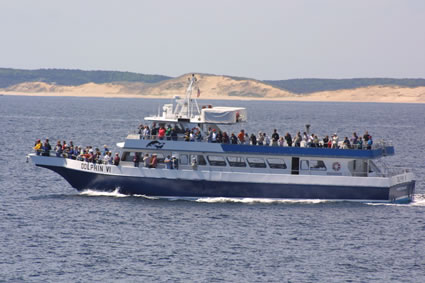
But let’s use some reasonable sense here.
If you chose to wander into to a pride of lions on a safari excursion, for example, or move into some fragmented little node of vanity home somewhere in the woods in B.C. and California, intruding into what little is left of the territory for wolves or cougars or bears on this continent, and one of these animals takes a look at you and thinks ‘food’ or gets startled when your ride around a corner on your mountain bike and thinks ‘danger’, and rips you apart, why is the mainstream media so quick to brand the animal as a “killers” and all but celebrate its destruction?
Before assigning that kind of motive to them, which smacks of something like ‘cold-blooded’ or ‘psychotic’, maybe – just maybe – we should stop and consider the possibility that of all the creatures on this planet, none have killed in larger numbers as we humans, who pride ourselves in being so rational. If you don’t believe that, let me just refer to World Wars One and Two, no end of human-induced famines and genocides over the last 50 years, and the killing via everything from bullets and missils and suicide bombs just goes on and on.
I rest my case and the last thing I’m going to worry about on this planet is a “killer tiger” or a “killer whale.” Given our history, I’m far more concerned about what next we humans are going to do.
And that brings me back to the Stellwagen Bank National Marine Sanctuary, where the responsible people of the Dolphin Fleet there (and in case anyone is wondering, I’m not advertising for these people nor would I accept free tickets from them for a story like this or suggest that all whale-watching outfits are as responsible as these folks are when it comes to placing the welfare of the animals ahead of getting too close or crowding them) take you out on a respectful journey to a world of where you can encounter these magnificent creatures on their terms.
I was an environment reporter in this region for the once-independent St. Catharines Standard from 1979 to the late 1990s, and I often wrote commentaries against the argument made by amusement parks like Marineland and SeaWorld that they provide opportunities for people to get close to these animals and learn something meaningful about these animals.
My question to them and, unfortunately to far too many elementary and secondary school teachers that have taken their students on trips to these places over the years on some grounds that it is an educational experience, what do people really learn when you’ve got an animal in tub of chlorinated water that would normally swim hundreds of miles a day in the open seas?
Are we simply embedding the old belief so many of us have grown up with about humans having “dominion” over other living creatures to the point of exploiting them for our amusement? Or are some of us hopefully learning, as Ric O’Barry, a former trainer of dolphins that performed on a 1960s TV show ‘Flipper’, that “in a world where so much that is wild and free has already been lost to us, we must leave these beautiful mammals free to swim as they will and must.”
“They do us no harm and wish us none,” concludes O’Barry, “and we should let them alone.”
As Dan Wilson, a Niagara resident and long-time advocate for animals put it so well in an article posted on Niagara At Large earlier this March (still available for reading by scrolling down the posts on NAL’s front page), the owners of Marineland and SeaWorld aren’t the agents who are most to blame here. “They are simply trying to make a buck,” he wrote, and that is true. It is the hordes of us who continue to frequent these places that have to ask ourselves why.
I drive by the Marineland parking lot on any average day in the spring, summer and fall, and the parking lot is full with line-ups of families voting with their wallets against ‘bleeding hearts’ (the owner of the Marineland facility often took to calling us ‘kooks’) like O’Barry, Wilson and Draper have to say.
We can argue all we want that there are opportunities for all of us, for about the same price it costs per person to go through the gates of one of these amusement parks, to view these mammals in their natural habitat. It apparently matters not that you can probably learn more about them viewing a wildlife documentary on TV.
I have come to the conclusion that it is unlikely we humans will ever change the dominant and aggressive attitude we have toward other animals we share this planet with in my lifetime.
If you have thoughts on this subject, please share them in the comment boxes below. You can also find out more about the Stellwagen Bank National Marine Sanctuary by clicking on http://stellwagen.noaa.gov and the Dolphin Fleet in Provincetown by clicking on www.whalewatch.com.
(Please click on www.niagaraatlarge.com for Niagara At Large and more news and commentary on this and other matters of interest and concern to our greater binational Niagara region.)
 Niagara At Large
I agree. We continue to dominate, oppress, torture and kill other animals, and then wonder why there is so much violence in the world. As Albert Schweitzer said, “Until he extends the circle of his compassion to all living things, man will not himself find peace.”
LikeLike
Sensitive observations about the crass nature of exploitative capitalism will yield only scoffs and derisive comments from the advocates of libertarian and conservative approaches to our economic regulations.. So it’s good to work with educators and citizens to sensitize them about such prison like treatment of the wild animals and mammals in our ‘Zoos’ and Profit oriented recreation parks..such as ‘ ocean world or ‘wild animal world’ etc etc.
Yet its almost as hard to get people to understand that the right of a capitalist is not a ‘god given ‘ right to do anything to make a profit..and the real concern is the culture of a community and its natural resources…leading me to support your efforts to prevent the big money developers from putting ‘high rise’ condminiums and complexes on the beaches and natural waterfronts that are still open and free…BUT NO…big money will win out..and just like the intrusion of too many windmills in a certain location…it all appears rosy and ‘just fine’ until you realize that the beauty of the original location, the pristine beaches and views are completely lost, ruined and only big decaying buildings with horrible impact on sewage, pollution and the environment will be left…for those who can afford to buy one for the view and the lakefronts. Probably in time you’ll be able to go to some sort of fun park and actually see a ‘liberal’ in a similar cage…pacing back and forth muttering about the destruction of the environment etc etc. and then once in awhile a ‘liberal’ will escape and an ‘ all points alarm’ will sound…But how will you catch the liberal?? just start ruining a lovely beach or a lovely clean lake and the liberals will be easy to catch …they’ll be the ones fighting for the lost causes. ” WE were able to catch them there liberals easy…you know…we just threw some old paper cartons on the beachfronts and just waited to see the liberals come along and start to pick up the junk” ( bait).
Keep struggling Doug. And don’t give up on the educational front at all.
LikeLike
You’re forgetting about the hideous “bear pit” at Marineland – dozens of bears, many with facial wounds, begging for treats.
LikeLike
You’re right of course Sheridan. The bears, fallow deer, bison, elk, seals, sea lions and walruses all suffer just as much as the whales and dolphins at Marineland.
I’ve known people over the years who’ve attended Marineland, not to see the whales or other animals, but to enjoy the rides, or so they’ve told me.
The problem with this is, every dollar that goes to Marineland supports the exploitation, capture and suffering of the animals, whether people intend it or not.
LikeLike
Absolutely echo the comments above-no matter what the reason for going to Marineland, every dollar spent there means animals, marine and otherwise, will continue to suffer.
LikeLike
I would love to participate/help arrange a protest of Marineland/ African Lion Safari/ other Canadian zoos that are still caging species whose needs simply cannot be met due in no small part to insufficient space. I would also like to start a movement to put an end to certain species being in captivity in Canada (primarily to begin with whales, dolphins, and elephants). I need help… any comments/suggestions would be great. Thanks Kathryn
LikeLike
Hi there,
Is anyone interested in helping organize protests of the animals held captive in the African Lion Safari?
Please reply if interested!
LikeLike
With the Harper Government decision re the Humpback Whale, it may be safer for them to be captive than in their own environment.
LikeLike