
By Doug Draper
Well here we go again!
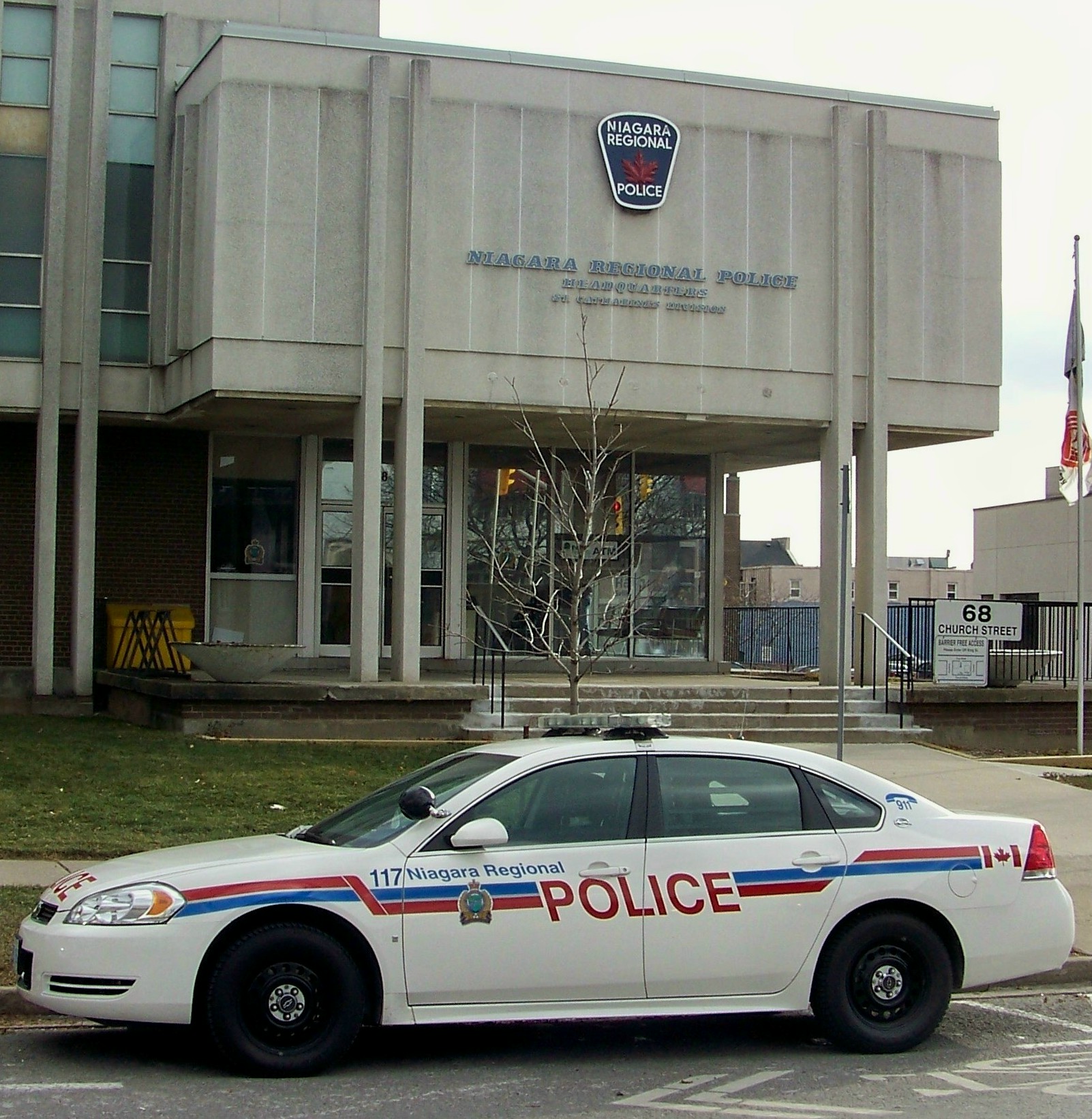
Niagara Regional Police headquarters in St. Catharines
It’s another tough budget year for Niagara Region and it’s another year the region finds itself facing a budget request from the Niagara Regional Police Service that is above a cap it has set in an effort to keep hikes on property taxes down for Niagara residents.
“We don’t have the ability to pay this,” said St. Catharines regional councillor Bruce Timms following a presentation Police Chief Wendy Southall and other representatives of the NRP made to the region’s council at one of its ongoing budget review sessions this past Thursday (Dec. 10) for a 2010 budget increase of 4.5 per cent to almost $121 million in operating costs for the coming year.
Timms was not the only councillor who expressed concern about the police budget coming in above a three per cent cap the council agreed to earlier this year to keep any increase in the region’s portion of property taxes even or less than the rate of inflation and other cost of living expenses payers of property taxes face.
But at the end of the lengthy session, a majority of councillors felt they had no choice but to give their approval to the police budget since an arbitration board appointed by the provincial government and playing under provincial rules would probably overrule them and give it their blessing anyway.
Larry Iggulden, chairman of the NRP’s board, stressed to the councillors that 93 per cent of the police forces’ budget is made up of salaries and benefits negotiated with the union representing police forces across the province. That leaves only seven per cent to cover all the other operating costs for a force that polices a region of more than 400,000 people, not including an international border area that draws millions of tourists and other visitors.
When asked by Timms if NRP’s administrators and board are doing what they can to persuade the province’s arbitrators that Niagara has economic challenges and cannot afford to pay costs for salaries and benefits for police that are similar to those paid in better-off regions, including the Greater Toronto Area, Iggulden said “when you look at the ability to pay, the arbitrators say you (meaning municipalities) have the ability to pay because you can raise taxes.”
He went on to say that when the province agrees to requests from negotiators representing the Ontario Provincial Police for higher pay and benefits, regional police forces feel they should receive similar compensation because they face similar responsibilities and risks on the job that the OPP does.
Southall added that she and other NRP representatives feel they have had some success dealing with the provincial arbitrators since the Ontario Police Act was amended a decade ago to consider a region’s ability to pay. But the arbitrators also look at what kind of salary and benefit increases those regions approve for other emergency services, including their firefighters and paramedic ambulance services, she said, adding that when you look at how much of an increase those other emergency services are getting in Niagara, “I would suggest there are few differences” compared to what police are getting.
According to information the NRP presented to regional councillors, the cost per year of adding one police officer to the force in terms of wages and benefits ( before the equipment the officer needs to do their job comes into play) is $112,000
Southall, who has been the force’s chief now for the past five years and has facts and figures to back up her argument that she has tried to bring the costs of policing in line, concluded her remarks to the councillors by arguing that she has focused on doing what she can with whatever funding is left after salaries and benefits to provide a service to the residents of Niagara that is both lean and adequate.
Councillors were left wondering what they can do with the police board to address a provincial arbitration system that seems to give them so little control over the cost of police services.
Southall told Niagara At Large after the meeting that people concerned about the costs should consider contacting their provincial members of parliament about the arbitration process.
The 2010 police budget will not likely receive final approval until early in the new year when the entire budget for regional services is placed before council for a vote.
In the meantime, Niagara At Large will have more to say about a system the province has in place that allows run-away police costs at the municipal level and that leaves property taxpayers stuck with the bill.
We invite you to weigh in on this issue to by sharing your comments below.
 Niagara At Large
It is time for serious, major wage reform in the public sector…..and even within unions. Have you every looked at the Sunshine List, those civil servants who make over $100 thousand of taxpayers money? It’s shocking , not to mention extremely time consuming….page after page, etc., etc.
Police chief Wendy Southall in 2008 made over $235,000 including benefits. That’s not to say she isn’t worth it, but a couple of years ago, she made $165,000. Then we all found out NHS CEO Debbie Sevenpifer made over $320 thousand, and many of us projected it will be a race for all public servants to catch up. This should not be the goal; the objective should be to have Sevenpifer’s wages brought down to meet others in Niagara. In 2008 Sevenpifer’s wages jumped $32,000 to over $355,000. To put this in proper perspective….the median income in Niagara is $24,000.
We must stop this insanity. In calculating salarys in Niagara, we should all bear in mind, the cost-of-living is lower than areas like Toronto for instance.
I propose all civil servants making over $200,ooo push themselves away from the trough and take a 10% decrease. Those under should take a wage freeze until we can get the budgets under control. Then, hopefully unions, (which are very necessary, but currently contribute to ever escalating salaries which have a death grip on our economy) will consider slowing down their demands. In other words, as Obama said, “Everyone must have some skin in the game.”
Our government should be courageous and take on necessary wage reform, and at the same time trim unnecessary levels of bureaucracy and empire building.
P.S. Just a note of interest. Did you know the Prime Minister of Canada makes only $310,800….significantly less than CEO Sevenpifer.
LikeLike
Southall says to contact our members of parliament if we don’t like the money they’re shelling out?
I say perhaps Southall should talk to her force about the evils of greed. After all, contending with it out in public is part of their job.
LikeLike
That’s alot of CHEESE…
LikeLike