
“The Province now has everything it needs to make a decision on daily GO Train service to Niagara.” – Niagara Regional Chair Al Caslin
An Inro by Doug Draper
Posted February 1oth, 2016 on Niagara At Large
Niagara, Ontario – Niagara’s regional government released a status report this February 9th, 2016 on its ongoing campaign to bring daily, year-round Go Train service to the region.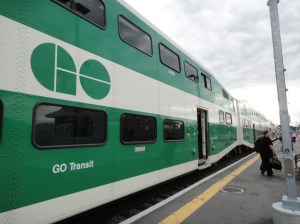
The status report, posted below, declares, among other things, that “the Province now has everything it needs to make a decision on daily GO Train service to Niagara.”
But does it?
There is no reference in the report, or in any of the statements from municipal leaders accompanying it, to the regional government moving forward with local municipalities and transit services to finally establish one, seamless, amalgamated public transit system that provides convenient, affordable bus services to all parts of the Niagara region.
And the provincial government, along agents for its Go and Metrolinx transit systems, have repeatedly stated that expanding Go services to Niagara is contingent upon the region taking steps to address the fragmented transit services it has.
“Having one (transit) system in Niagara is the way to go. … We have to get our act together,” said St. Catharines Mayor Walter Sendzik during a panel discussion on transit hosted by Greater Niagara Chamber of Commerce last October. “What we need is one integrated system in Niagara.”
Debbie Zimmerman, a former Niagara regional chair who joined Sendzik on the same panel, added that in order to strengthen the case for more Go services “we need to make sure we are doing our part.”
“We need a seamless, integrated transit system to keep people (living and working) here after graduation,” said Spencer Dawson, vice-president of finance administration for Bruck University’s Students’ Union during a briefing to area politicians and media on transportation isues this past January, and “we need it for Go Transit.”
Niagara Regional Chair Al Caslin told Niagara At Large in a brief phone interview this February 10th that regional representatives are already working with local municipal representatives and others to develop an amalgamated transit system for the whole region.
“We are working on it,” said Caslin, saying that meetings began on the issue in the spring of 2015 with a goal to have a detailed plan together in 20 months.
Suffice to say, Niagara At Large will join others in monitoring the progress of this effort. And in the days ahead, Niagara At Large will be posting information on efforts college and university student groups in Niagara are making to press municipal leaders in the region to finally do what Waterloo and other regions in Ontario have done, and amalgamate a patchwork of transit services into one system that is affordable and accessible to everyone who needs it.
Now here is the status report circulated this February 9th by Niagara’s regional government.
Key Facts and Project Status
Niagara’s Proposal:
Daily, year-round GO Train service between Niagara and Hamilton, connecting to the Lakeshore West Line to Toronto, with stops in Grimsby, St. Catharines and Niagara Falls
Project Cost: Between $100-$120 million, including a one-third local contribution
Economic Impact: $195 million for Niagara
Key Achievements in 2015:
Conducted a public awareness and engagement campaign, putting Niagara’s GO Train proposal on the Province’s radar
Comprehensive Business Case, including capital and operating scenarios, completed and submitted to Province in April followed by ongoing and frequent meetings with provincial officials, including the Minister and Deputy Minister of Transportation, Premier’s office, Metrolinx and GO Transit
Resolving Barriers:
The GO project team worked throughout 2015 to address and resolve 17 perceived barriers or issues with Niagara’s business case identified by the Province. Key issues included:
o Welland Canal Crossing: The GO team secured commitment, in writing, for dedicated crossing times from the St. Lawrence Seaway Management Corporation – eliminating the Canal as a barrier to GO
o Use of existing CN tracks: Through months of technical work, the GO team secured agreement from CN the $50 million in planned track upgrades outlined in our business case was valid
o Ridership forecasting and economics: Extensive work was done with MTO and Metrolinx to determine the cost-benefit ratio of daily GO Train service. Provincial officials agree there is a positive economic benefit, both to Niagara, and to the province
Project Status:
The Province now has everything it needs to make a decision on daily GO Train service to Niagara
The Province is now assembling a list of non-GTA expandable communities for consideration in the next wave of GO train expansions. Our solid business case has given us a leading position in this conversation. Our goal is to have Niagara GO Train expansion included in the next wave of GO train expansion projects
Quotes
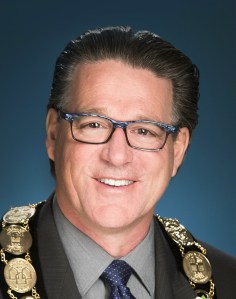
Niagara Regional Chair Al Caslin
Alan Caslin, Regional Chair:
“The level of cooperation and hard work by all municipalities and community leaders on this initiative is unprecedented in Niagara. We worked diligently throughout the past year to address all major issues and questions raised by the province about our proposal. The Province now has everything it needs to make a decision on daily GO Train service to Niagara.”
Walter Sendzik, Mayor of St. Catharines:
“Bringing GO Train service to Niagara is critical to our long term prosperity, economic growth and quality of life. We worked hard to develop a business case that demonstrates daily GO service would bring a positive economic benefit, both to Niagara, and to Ontario – and the province agrees.”
Jim Diodati, Mayor of Niagara Falls:
“Last April, the Province told us they heard Niagara’s call for GO loud and clear. Since then our focus was to work diligently on a number of outstanding issues and perceived barriers to daily GO service. We rolled up our sleeves and worked with the Seaway, CN and others, securing the necessary commitments to pave the way for daily GO trains. We did our homework and the result is a solid business case that makes us a leading contender for the next wave of GO Train expansion projects.”
Bob Bentley, Mayor of Grimsby:
“Extending full day GO service into the Niagara Region is a critical and affordable investment for the Province of Ontario. The returns on this investment are tremendous, not only as an economic game changer for our Niagara Region but also a vital link to opportunities for people and goods between New York City and Toronto, the two largest markets in the north eastern North America.”
Sandra Easton, Mayor of Lincoln:
“The movement of goods, services and people is very important to Niagara’s economy through the associated growth in population and jobs that such important connections will bring. I am very proud as the Mayor of Lincoln to participate with my Regional colleagues in the efforts to bring GO commuter rail service to Niagara.”
Patrick Darte, Lord Mayor of Niagara-on-the-Lake:
“GO Niagara Service would be a tremendous benefit to residents and businesses in Niagara-on-the-Lake. Millions of additional visitors along the transit hubs from Barrie, Eastern Ontario and the Greater Toronto and Hamilton corridor could experience what we already know – some of the best wineries, restaurants, hotels and spas and theatre in the country.”
NOW IT IS YOUR TURN. Niagara At Large encourages you to share your views on this post. A reminder that we only post comments by individuals who share their first and last name with them.
Visit Niagara At Large at www.niagaraatlarge.com for more news and commentary for and from the greater bi-national Niagara region.
 Niagara At Large
Note that the comments are from mayors of Niagara municipalities along the QEW and the CN line. What’s needed is a comprehensive, Niagara-wide transit plan, one that doesn’t leave all the rest of us—the communities in the centre, the south, west, and southwest of the peninsula—out of the picture.
LikeLike
Call me distrustful, but has anyone read about Metrolinx lately and its complete disregard for costs with the the Pearson Express, made for A-listers only to ride? It is now running at 8 percent capacity after its big launch last year. Losing money hand over fist, it is.. So, who thinks Metrolinx with the 1- percenters leading it, will give Niagara a second thought? They will pay themselves fat wads of cash, but not us, I believe. Call me cynical.
LikeLiked by 1 person