
Niagara’s Regional Council Would Be Reduced From 31 Councillors, Plus Chair To 12 Plus Chair. Number Of Local Councils Seats Would Be Chopped Too
A Brief Commentary by Niagara At Large reporter/publisher Doug Draper, followed by Niagara Regional Chair Bob Gale’s latest letter to Ontario Ford Government Minister of Municipal Affairs and Housing Rob Flack
Posted March 5th, 2026 on Niagara At Large
By Doug Draper
Well, here we go again.
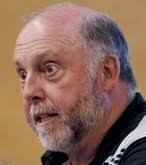
Ontario Premier Doug Ford’s recently appointed Niagara Regional Chair, Bob Gale, is pressing for few elected representatives andfor amalgamation of local municipalities
A mere two weeks after Ontario Premier Doug Ford’s recently appointed Niagara Regional Chair Bob Gale fired off a letter to the mayors of our region’s 12 local municipalities and another to his masters at Queen’s Park – both sent out without any prior consultation or approval from Regional Council and both calling for urgent reform in municipal governance here, he has done it again.
This March 4th, Gale circulated another letter he has sent to Ford’s Municipal Affairs and Housing Minister Rob Flack, proposing a significant cut in the number of elected members of municipal councils representing us across the region.
This letter comes less than a week after a majority of Niagara Regional Councillors passed a resolution directing Gale to hold back on taking any further action or using any further staff time on the issue of municipal amalgamation and other reform measures until the Region and local municipalities across Niagara have an opportunity to consult with residents and local businesses and have time to collect solid data weighing the pros and cons of various options for reforming municipal government.
Given that resolution, one of the first questions this reporter has is this – To what extent has sending out this latest letter to the Ford government violated that resolution’s call on Gale not to take any further action until municipalities have had the time to study the pros and cons of various changes to the way they govern with their constituents?
And to what extent is the Ford government merely using Gale as a shield for accomplishing its longstanding goal of downsizing Niagara’s local governments for its special interest friends who don’t want them and the citizens they represent getting in their way when it comes to polluting or paving over more of our natural heritage?
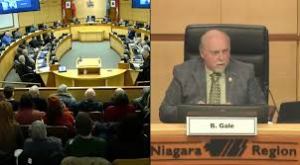
At recent Niagara Regional committee-of-the=whole meeting, majority of councillors direct recently appointed Regional Council Chair Bob Gale to pump the brakes on amalgamation and governance report until there is more study and public consultation
What possible agreement did the Ford government and Gale reach when he was appointed to a Regional Chair’s position that, until recently, went to an elected Regional Councillor chosen by his or her peers?
While at least some of us work to get the answers to those questions and others, here is Bob Gale’s most recent March 4th, 2026 letter to Premier Doug Ford’s Municipal Affairs and Housing Minister Rob Flack –
The Honourable Rob Flack, Minister of Municipal Affairs and Housing Government of Ontario
Re: Regional Governance in Niagara
Dear Minister Flack,
Following my earlier correspondence on options for improving governance in the Niagara Region, I received considerable feedback from regional councillors, local councils and residents about both the process and the substance of that discussion.
While I heard criticism with the initial lack of advance consultation, it was widely acknowledged that the current structure of 126 municipally elected officials across 12 municipalities and 31 members at Regional Council is not as lean, efficient or affordable as it should be.
In addition to many phone calls, emails, meetings, and letters (including the letter received today from mayors of the lower-tier municipalities), I also held a special regional meeting on February 26th. Throughout this process I heard from the public, regional councillors and mayors. They:
- Agreed that we must reduce duplication and improve coordination and shared services, rather than defend the status quo.
- Expressed support for reducing the overall number of elected officials at both tiers.
- Raised weighted voting at the regional table as a fair way to reflect population differences while preserving a voice for every municipality.
I have also heard from several major private‑sector employers, representing more than 12,000 employees across Niagara, who have written in support of streamlined, more decisive local governance.
In light of these discussions and consultations, I propose the following made‑in‑Niagara option, effective at the start of the next municipal term in fall 2026:
Regional Council composition
That Regional Council be composed of the 12 municipal mayors plus a Regional Chair, directly addressing concerns that the current body is too large to operate efficiently while maintaining a clear voice for every municipality.
Weighted voting based on population
That each mayor’s vote at Regional Council be weighted according to population in increments of 15,000 residents (e.g., a municipality of 100,000 residents would have six votes; a municipality of 6,000 residents would have one vote), reflecting both representation by population and municipal diversity.
Rationalized local council sizes
That, beginning in the same term:
- St. Catharines will have 12 municipal councillors plus the mayor,
- Niagara Falls will have 8 municipal councillors plus the mayor;
- Welland, Niagara-on-Lake, Thorold, Pelham, West Lincoln, Grimsby, Lincoln, Port Colborne Fort Erie will each have 6 municipal councillors plus the mayor,
- Wainfleet will have 4 municipal councillors plus the mayor.
This delivers a clear and consistent reduction in council size across Niagara.
- Mandated exploration of shared services and efficiencies
That you consider assigning a commissioner, or similar, after the municipal election to explore shared services and other efficiency measures, building on the many ideas raised by councillors and mayors.
This package reflects what we have heard: Niagara needs meaningful governance reform, smaller and more effective councils, and a more efficient regional decision‑making table, while avoiding the disruption and risk of full amalgamation at this time. It preserves local identities and accountability, reduces the number of elected officials, and creates a Regional Council structure better able to respond to Niagara’s fiscal and infrastructure challenges.
I believe this option strikes a pragmatic balance between fiscal responsibility, democratic representation and local autonomy, and will command broader support across Niagara than any immediate move to full amalgamation.
You will find that this recommendation, representing 74% of the population, is also supported by the majority of the region’s mayors including:
- Mayor Siscoe of St. Catharines, pop. 136,803
- Mayor Diodati of Niagara Falls, pop. 94,415
- Mayor Campion, Welland pop. 55,750
- Mayor Easton of Lincoln, pop. 25,719
- Mayor Junkin, Pelham, pop. 18,192
- Lord Mayor Zalepa, Niagara-on-the-Lake, 19,088
- Mayor Grant, Wainfleet, pop. 6,887
I am grateful for the opportunity to provide this advice to the Minister.
Thank you for your consideration.
Respectfully, Bob Gale, Regional Councillor, Niagara Region
The following is from the resolution a majority of Niagara’s Regional Councillors approved at the Region’s February 26th, 2026 committee-of-the-whole meeting called in response to Gale’s first two letters –
- That a governance review of Niagara BE INITIATED to address areas of duplication and improve service efficiency based on data, a business case with financial analysis and public consultation, including local area municipalities, commencing this term of Council;
2. That Regional Council DIRECTS Regional Chair Gale to refrain from any further action and utilization of any further Regional resources or staff time, with the exception of the above, in connection with a review of Regional governance or municipal amalgamation; and
3. That this resolution and amendment BE FORWARDED to the Premier and the Minister of Municipal Affairs and Housing.
For a news commentary Niagara At Large recently posted on this issue, click on – https://niagaraatlarge.com/2026/02/27/niagara-regional-councillors-slams-brakes-on-gale-drive-for-forced-municipal-amalgamation/
NIAGARA AT LARGE Encourages You To Join The Conversation By Sharing Your Views On This Post In The Space Below and by sharing the Niagara At Large site at www.niagaraatlarge.com with all of your friends and associates.
Visit us every day on www.niagaraat.arge.com and on Doug Draper’s Facebook page at https://www.facebook.com/doug.draper.180 and encourage everyone else you know to do the same. Let’s build media outlets for local news and commentary!
 Niagara At Large