
The Greater Niagara Chamber of Commerce’s (GNCC’s) Position On Chair Gale’s Call For Urgent Changes To Regional Government.
‘Any transition must preserve local voices, representation, and the unique character that residents value.’
A News Release from the Greater Niagara Chamber of Commerce
Posted February 20th, 2026 on Niagara At Large
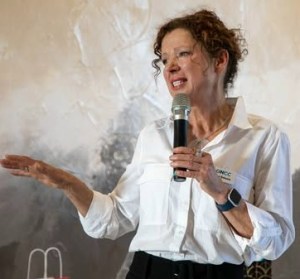
Greater Niagara Chamber of Commerce CAO Mishka Balsom
Niagara, Ontario – Regional Chair Bob Gale today said that he has written to the Honourable Rob Flack, Ontario Minister of Municipal Affairs and Housing, outlining a pressing need for changes to municipal governance in Niagara.
“Governance reform is a significant change, with long-term implications for Niagara,” said Greater Niagara Chamber of Commerce (GNCC) CEO Mishka Balsom. “The GNCC’s role is to advocate on behalf of our members and Niagara’s business community for the best outcome.”
The GNCC is glad that reform is being considered with community input and a commitment to a robust discussion. We recognize that reform can be a necessary part of the continued health and competitiveness of any organization, whether in the private or public sector.
Businesses in Niagara are continuously adapting, modernizing operations, responding to market pressures, and implementing new practices in order to remain resilient and competitive. Government must also be prepared to examine whether its structures are delivering the best possible outcomes for the people it serves. At the same time, structural change can be complex and challenging, and it must be approached with clarity and purpose.
In considering municipal governance reform, the GNCC emphasizes four key principles:
- First, structural reform should not be pursued for its own sake but must be driven by outcomes that make life better and more affordable for the community. “Governance reform must improve service delivery and deliver greater value for taxpayers,” said Balsom. “It must also help close the infrastructure, housing, and social gaps that continue to hold our region back.”
- Second, reform must help close Niagara’s long-standing gaps in infrastructure, housing readiness, and economic competitiveness, while also addressing the growing social challenges facing communities across the region. Businesses and residents alike require modern roads, reliable water and wastewater systems, coordinated planning, and stronger supports that respond to the pressures of housing affordability, homelessness, and workforce stability.
- Third, any transition must preserve local voices, representation, and the unique character that residents value. “Community identity matters,” said Balsom. “Niagara’s towns and cities are more than administrative units; they are places with distinct histories, cultures, and local pride.”
- Fourth, decisions of this magnitude are strongest when supported by clear data and evidence. The GNCC encourages the government to share the analysis informing this reform so that residents, businesses, and community organizations can better understand the path forward.
 The GNCC also respectfully reiterates its interest in the release of the 2019 Seiling-Fenn Report to support a well-informed public dialogue.
We are eagerly awaiting the continuation of this dialogue at our State of the Region event on February 27th.
More information on the GNCC is available at gncc.ca .
For a related post on this issue, click on – https://niagaraatlarge.com/2026/02/19/niagaras-new-regional-chair-bob-gale-is-calling-for-a-reduction-in-the-number-of-municipal-politicians-and-a-possible-amalgamation-of-local-municipalities-across-our-region/
A Footnote from Niagara At Large reporter/publisher Doug Draper – Niagara At Large will be posting more news and commentary on this issue in the days and weeks ahead. Stay Tuned.
In the meantime, we encourage you to share your views in the space below. After all it is not just Gale and the local mayors. Niagara residents deserve a say in this too!
NIAGARA AT LARGE Encourages You To Join The Conversation By Sharing Your Views On This Post In The Space Below and by sharing the Niagara At Large site at www.niagaraatlarge.com with all of your friends and associates.
Visit us every day on www.niagaraat.arge.com and on Doug Draper’s Facebook page at https://www.facebook.com/doug.draper.180 and encourage everyone else you know to do the same. Let’s build local news and commentary media!
 Niagara At Large
Community input??? Who’s kidding whom? Did Doug Ford seek “community input” before he introduced legislation to reduce the number of Toronto councillors from 47 to 25? That did cause considerable uproar, of course. Talk of amalgamation in Niagara has been around for decades, and Ford’s made no secret of wanting it. He may be proceeding slightly more cautiously in this case, giving a token nod to local democracy by allowing Niagara’s municipalities to vote on whether they want a single amalgamated municipality or four. It is worth noting that Mayors Siscoe (St. Catharines), Diodati (Niagara Falls) and Campion (Welland), all of whom endorsed Ford prior to the last election, “expressed support for a four-municipality amalgamation at the Standing Committee hearing in January 2024”. * (*From Dean Iorfida’s very informative 2024 article in Thorold Today https://www.thoroldtoday.ca/local-news/threat-of-niagara-amalgamation-still-present-10267417 ) By appointing him Niagara Regional Chair, Ford has given Bob Gale the unenviable job of facing the displeasure of the Niagara voters, whose councils have until March 2 to make their minds up. Don’t you just love democracy?
LikeLike