
Bob Gale Calls For Reduction In The Number of Municipal Politicians And Possible Amalgamation of Local Municipalities Across Region
“Niagara’s residents are being asked to absorb higher costs of living, rising interest rates and significant uncertainty. They are entitled to a municipal governance structure that is lean, accountable and demonstrably serious about stewarding their tax dollars.
“The status quo has had many chances to prove itself. The evidence now points strongly toward the need for change.” – Niagara Regional Chair Bob Gale
A Letter from Niagara Regional Chair Bob Gale to Ontario Minister of Municipal Affairs and Housing Rob Flack
Posted February 19th, 2026 on Niagara At Large
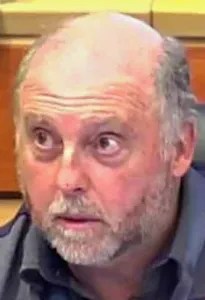
Following the death of former Niagara Regional Chair Jim Bradley, Niagara Falls Regional Councillor Bob Gale was recently appointed Regional Chair by Ontario’s Ford Government
To Ontario Municipal Affairs and Housing Minister for the Doug Ford Government from Niagara Regional Chair Bob Gale –
Over the past several months, Niagara Region has been engaged in an increasingly difficult budget process that has laid bare the failings of our municipal governance structure.
Throughout our deliberations and public reporting, several patterns have emerged that, taken together, raise serious concerns regarding waste, abuse and a culture of casualness with taxpayer dollars.
These concerns are inconsistent with the expectations of both municipal taxpayers and the provincial government, and are made all the more serious by the current economically precarious environment.
These patterns are exacerbated by an outdated and unwieldy municipal structure, with 126 elected officials at the municipal level in Niagara – more than the entire provincial legislature at Queen’s Park.
This governance structure has resulted in a decision-making process that has led to successive tax increases of roughly 7%, 9.6%, and 6.3% over the past three years, driving the regional tax levy up by almost 25% over a single Council term.
This is an egregious affront to Niagara taxpayers and is not sustainable.
On top of that, the Region is carrying a deferred capital backlog in the order of $2.7 billion, meaning Council has been pushing core infrastructure costs into the future, where they will land on taxpayers’ backs with even higher tax hikes, more debt, or both if nothing changes.
In this context, Council’s recent decision to delay final approval of the 2026 operating budget pending a detailed Chair’s review is not a procedural footnote; it is a signal that the system, as currently structured, is no longer capable of delivering the level of fiscal discipline and administrative efficiency that the moment requires.
Moreover, this dysfunction threatens to undermine the provincial government’s ambitious agenda for Niagara, including its Destination Niagara strategy, which was announced last December by Premier Ford, as well as its ongoing work to build infrastructure and attract jobs and new investments to the region. 2 February 19, 2026
Accordingly, I would like to inform you that as Regional Chair, I will be initiating a process of consultation and review with local mayors to address these serious concerns. Specifically, I will be seeking their advice and input on reforms that are reflective and informed by local considerations, that provide taxpayers with better value and that support economic growth in Niagara.
These include a reduction in the number of municipal Councillors and a municipal restructuring in the Region, including potential amalgamations.
This process would:
- o Send a strong signal that Niagara is prepared to confront waste, abuse, and the cultures that allow them at a structural level, not just case by case;
- o Create an opportunity to rationalize overlapping functions, reduce administrative duplication and bring large-ticket spending decisions into clearer focus for taxpayers; and,
- o Align Niagara’s governance with the province’s broader objectives on housing delivery, infrastructure resilience, investment attraction, job creation and prudent fiscal management.
My goal, working closely with local mayors and communities, will be to propose changes that will also materially support the province’s priorities on housing, transit and tourism.
A rationalized structure would also enable a truly regional transit network, integrating local routes, inter‑municipal services and GO Transit connections, so that new housing and key tourism nodes are supported by reliable, connected transit instead of being constrained by fragmented decision‑making and competing local priorities.
Niagara’s residents are being asked to absorb higher costs of living, rising interest rates and significant uncertainty. They are entitled to a municipal governance structure that is lean, accountable and demonstrably serious about stewarding their tax dollars.
The status quo has had many chances to prove itself. The evidence now points strongly toward the need for change. I would welcome the opportunity to meet with you at your earliest convenience to discuss this review and to assist in next steps.
Thank you for your consideration.
- Sincerely, Bob Gale Regional Chair, Niagara Region
A Footnote from Niagara At Large reporter/publisher Doug Draper – Niagara At Large will be posting more news and commentary on this issue in the days and weeks ahead. Stay Tuned.
In the meantime, we encourage you to share your views in the space below. After all it is not just Gale and the local mayors. Niagara residents deserve a say in this too!
NIAGARA AT LARGE Encourages You To Join The Conversation By Sharing Your Views On This Post In The Space Below and by sharing the Niagara At Large site at www.niagaraatlarge.com with all of your friends and associates.
Visit us every day on www.niagaraat.arge.com and on Doug Draper’s Facebook page at https://www.facebook.com/doug.draper.180 and encourage everyone else you know to do the same. Let’s build local news and commentary media!
 Niagara At Large