
A Major Goal Of Strategy Is To Accelerate Canada’s Transition To Electric Vehicles
“Canada’s new government is fundamentally transforming our economy – from one reliant on a single trade partner (the United States), to one that is stronger, more independent, and more resilient to global shocks. We are making strategic decisions and generational investments to build a strong Canadian auto sector, where Canadian workers build the cars of the future.” – Mark Carney, Prime Minister of Canada
“By strengthening greenhouse gas emissions standards and backing Canadian workers to build cleaner and more efficient vehicles, we are reducing pollution at the source while meeting growing global demand for EVs.” – Julie Dabrusin, Minister of the Environment, Climate Change and Nature
 News from the Office of Prime Minister of Canada Mark Carney
Posted February 6th, 2026 on Niagara At Large
The world is changing rapidly, fundamentally reshaping trade relationships and leaving economies, businesses, and workers under a cloud of uncertainty. Canada’s automotive industry is on the frontline of this shift, with more than 90% of Canadian-made vehicles and 60% of Canadian-made auto parts currently exported to the U.S.
Canada’s new government is focused on what we can control – implementing a new industrial strategy. We are transforming our economy from one that is reliant on a single trade partner to one that is more resilient to global shocks – a stronger, more sustainable, more independent economy built on the solid foundation of strong Canadian industries and bolstered by diverse international trade partners.
In parallel, the government is launching a national electricity strategy to leverage our energy advantage to provide clean, affordable, and reliable power to Canadians.
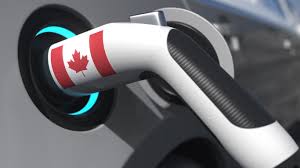 These shifts present a unique opportunity to transform Canada’s auto industry. To that end, the government is introducing a new auto strategy that rewards the production of made-in-Canada vehicles and harnesses our world-class capabilities in artificial intelligence and technology expertise to build the cars of the future. This is a strategy that positions Canada to become a global leader in electric vehicle (EV) production.
Today (this February 5th, 2026, the Prime Minister, Mark Carney, announced the following new measures:
To accelerate investment in Canada’s auto manufacturing sector, Canada’s new government will:
- Allocate $3 billion from the Strategic Response Fund and up to $100 million from the Regional Tariff Response Initiative to help the auto industry adapt, grow, and diversify to new markets.
- Harness the Productivity Super-Deduction and reduced corporate tax rates for zero-emission technology manufacturers to encourage investment in clean technologies and EVs.
To rationalise emissions reduction policies to focus on outcomes that matter to Canadians, Canada’s new government will:
- Introduce stronger greenhouse gas emission standards that put Canada on a path to achieve a goal of 75% EV sales by 2035 and 90% EV sales by 2040 – reducing our carbon footprint and securing Canada’s global leadership in clean energy.
These more stringent emissions standards will enable the Government of Canada to repeal the Electric Vehicle Availability Standard. This approach will allow manufacturers to use a wide array of technologies to meet the standards and respond to consumer preferences in the near-term, while driving EV adoption over time.
To strengthen domestic demand by making EVs more affordable and reliable for Canadians, Canada’s new government will:
- Launch a five-year EV Affordability Program to lower the cost of EVs for Canadians and create a stronger domestic consumer market.
The new $2.3 billion program will offer individuals and businesses purchase or lease incentives of up to $5,000 for battery electric and fuel EVs, and up to $2,500 for plug-in hybrids (PHEVs) with a final transaction value of up to $50,000 on cars made by countries Canada has free trade agreements with. To support the Canadian automotive industry, this $50,000 cap will not apply to Canadian-made EVs and PHEVs.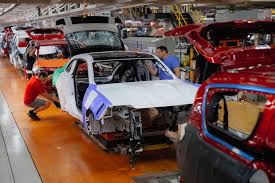
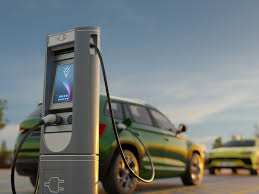
Enhance our national EV charging network through investments of $1.5 billion through the Canada Infrastructure Bank’s Charging and Hydrogen Refueling Infrastructure Initiative, making it easier and more convenient for drivers to charge their EVs across the country.
To establish a comprehensive trade regime that strengthens the competitiveness of the auto sector, Canada’s new government will:
- Strengthen Canada’s automotive remission framework to reward companies that produce and invest in Canada.
- Maintain counter-tariffs on auto imports from the United States to ensure a level playing field for Canadian automotive manufacturers in the domestic market.
Canada recently deepened its strategic partnership with the Republic of Korea by signing a memorandum of understanding (MOU) to strengthen Canada-Korea industrial collaboration for future mobility. This builds on other MOUs that Canada has signed with global automakers to promote cooperation.
Canada has also agreed to a new strategic partnership with China, a global leader in EV manufacturing, to further diversify trade and catalyse new investment in the automotive sector.
The recently announced partnership will look to drive new Chinese joint venture investment in Canada and allow for a fixed volume of Chinese EV imports into the Canadian market.
To protect Canadian auto workers and businesses from immediate pressures while helping them bridge them to the future, Canada’s new government will:
- Provide support to employees through a new Work-Sharing grant – preventing layoffs and supporting worker retention so businesses can plan for the future.
- Establish a new workforce alliance of industry, labour, and training partners to address bottlenecks and catalyse private investment.
- Provide employment assistance and reskilling supports for up to 66,000 workers across Canada, including for displaced auto workers, with a $570 million investment.
Canada’s new government will leverage our new and existing trade agreements – including our recent EV arrangement with China – to catalyse massive new investment in the sector, diversify Canada’s auto export markets, and position Canada as a global leader in EVs.
Canadian workers and industries are well equipped to seize this opportunity, and our government is making generational investments in critical minerals, including those essential for batteries, to secure our place in the world’s most important supply chains.
The choices we make now will shape the Canadian auto industry for decades to come. By protecting the industry and incentivising automakers to build here, we can transform Canada’s workers and businesses to compete and win in this new global environment.
Today’s measures build on previously announced initiatives to help transform strategic Canadian industries, including steel and softwood lumber. Together, they form an ambitious industrial strategy that will build a stronger, more resilient, more independent Canadian economy, and ensure workers and industries can bridge to that future and seize its opportunities.
Quick facts
- Canada’s auto sector supports over 500,000 workers, contributes over $16 billion annually to Canada’s GDP, and is one of the country’s largest export industries. In 2025, Canada produced over 1.2 million passenger vehicles.
- With over 90% of Canadian-made vehicles and 60% of Canadian-made parts exported to the United States, U.S. automotive tariffs are threatening Canada’s automotive manufacturing industry and the 125,000 direct jobs it supports.
- Since April 2025, Canadian-made vehicles have faced a 25% U.S. tariff on non-U.S. content (the value of U.S. content in CUSMA-compliant autos is exempt).
- Within five years, EV sales are projected to reach nearly 40% of global car sales.
NIAGARA AT LARGE Encourages You To Join The Conversation By Sharing Your Views On This Post In The Space Below and by sharing the Niagara At Large site at www.niagaraatlarge.com with all of your friends and associates.
Visit us every day on www.niagaraat.arge.com and on Doug Draper’s Facebook page at https://www.facebook.com/doug.draper.180 and encourage everyone else you know to do the same. Let’s build local news and commentary media!
 Niagara At Large