
“Unfortunately, this will not be the last time Northern communities are forced to evacuate due to wildfires or floods. Climate change is making these events more frequent and more severe. Niagara may again be called upon to host evacuees in the years ahead. …What gives us confidence is the way our region responded this year.” – Tara Galitz, Executive Director, Niagara Ontario Health Team – Équipe Santé Ontario Niagara
This Article Submitted To Niagara At Large by the Niagara Ontario Health Team – Équipe Santé Ontario Niagara
Posted September 25th, 2025 on Niagara At Large
 When hundreds — and eventually thousands — of evacuees from Northern Ontario and Manitoba arrived in Niagara this spring and summer, they brought with them stories of upheaval, resilience and hope.
Families displaced by wildfires and floods found themselves far from home, living in hotels in Niagara Falls, uncertain when — or if — they might return. Their journey was marked by trauma, but also by remarkable displays of compassion, collaboration and cultural strength.
Behind the headlines, a quiet but extraordinary effort unfolded within our region. More than 5,000 evacuees were supported in Niagara since May, with as many as 3,000 at one time. Meeting the health and social needs of entire communities — sometimes overnight — required nimbleness, resources, and above all, a deep commitment to human dignity. The response and support did not always meet the need in the moment, however, the dedication and commitment was ever present.
Caring for thousands of evacuees was no small feat. Entire families and communities with very diverse needs had been displaced and were now living in hotels across Niagara Falls. Health care teams quickly set up primary care clinics inside those hotels to ensure access to essential health and social services.
At the peak, three dedicated teams from De dwa da dehs nye>s Aboriginal Health Centre and REACH Niagara operated Monday to Friday (and numerous times on weekends and holidays as well), providing walk-in care for evacuees who needed everything from prescriptions to urgent primary care interventions.
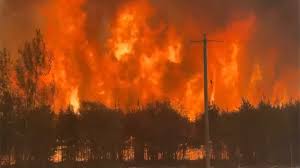
Wildfires force evacuations of communities in nothern Ontario and Manitoba
This effort would not have been possible without collaboration. De dwa da dehs nye>s led the primary care response, focusing narrowly on what only they could provide —safe, accessible, Indigenous-led primary care.
They did not stand alone. Some partners, like Niagara EMS and Niagara Health’s Indigenous Health Services and Reconciliation team, also worked tirelessly to provide care. With no option to set limits, these small but dedicated teams worked extended hours, embodying commitment and compassion at its highest level.
REACH Niagara brought mobile, on-demand care expertise to the table, a critical set of services for evacuees facing sudden displacement. Marchese Pharmacy and Queen’s Pharmacy ensured medications were available without interruption. Six Nations Health Services deployed members of its clinical team.
The Indigenous Diabetes Health Circle and the Fort Erie Native Friendship Centre provided cultural supports. Ontario Health West played a key role in bridging the gap between Indigenous Patient Navigators, hospitals, and community care—helping to ensure that no one was left behind. To support the effort, Indigenous Patient Navigators were redeployed from other Aboriginal Health Access Centres and hospitals across the region.
Together, these partnerships created a safety net strong enough to support thousands of evacuees, each arriving with unique needs and challenges.
The evacuee experience was not only medical, but also deeply personal and cultural. Communities arrived with vastly different needs, from routine health supports to needs associated with more complex needs, including mental health and substance use concerns stemming from on-going trauma. Addressing these realities required care that was not only clinical, but also culturally grounded.
Traditional supports—such as sweat lodges, smudging, and feasts—offered more than ceremonies; they provided balance, belonging, and identity. For many, seeing a familiar face, a smudging ceremony or access to cultural food was as healing as medical treatment.
For frontline staff, the experience was deeply meaningful. They described the work as some of the most impactful of their careers, filled with “good news stories” of making real differences in people’s lives. As importantly, by sharing the need to provide supports, Indigenous-led providers were able to preserve their team’s wellbeing.
As we reflect on the past months, gratitude must be at the heart of any story told. Gratitude to the staff and volunteers who chose to serve. Gratitude to the communities who trusted local organizations with their care. Gratitude to the people of Niagara Falls, who welcomed evacuees with open arms, despite the sudden and massive scale of need.
Repatriation flights have been taking place throughout the summer, with the remaining evacuees having left Niagara Falls in mid-September.
Unfortunately, this will not be the last time Northern communities are forced to evacuate due to wildfires or floods. Climate change is making these events more frequent and more severe. Niagara may again be called upon to host evacuees in the years ahead.
What gives us confidence is the way our region responded this year. Despite challenges, the collective effort — Indigenous and non-Indigenous organizations working side by side — showed what is possible. We can build on this experience, strengthening our understanding of how to provide care within a context of cultural humility, deepening collaboration and ensuring even greater readiness for the future.
Because at the heart of this story is not just logistics or numbers — it’s people. People who lost their homes but found safety here. People who carried their culture, humour and resilience into unfamiliar spaces. People who showed that even in times of crisis, compassion and collaboration can carry us forward.
*Recognition for support is also shared with the following organizations: Xpera, Six Nations of the Grand River Elected Council, Niagara Region, Ontario Health atHome, Niagara Health, Dalton Associates, Indigenous colleagues from the Province of Manitoba, Indigenous Services Canada, Niagara Regional Police Service, Contact Niagara for Children’s and Developmental Services, Youth Wellness Hub Niagara, Positive Living Niagara, and March of Dimes.
-
Tara Galitz, Executive Director, Niagara Ontario Health Team – Équipe Santé Ontario Niagara
(A Brief Note from Niagara At Large – Niagara At Large is open to considering submissions of news and commentary of interest and concern to residents across the Niagara region and beyond for posting on this site. Send submissions to drapers@vaxxine.com .)
NIAGARA AT LARGE Encourages You To Join The Conversation By Sharing Your Views On This Post In The Space Following The Bernie Sanders Quote Below.
“A Politician Thinks Of The Next Election. A Leader Thinks Of The Next Generation.” – Bernie Sanders
 Niagara At Large