
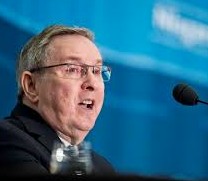
Niagara Regional Chair Jim Bradley.
“When it comes to environmental protection and conservation, Niagara Region is leading by example. By adopting a Corporate Climate Change Action Plan, we will ensure that we are holding ourselves to a higher standard, and are taking concrete actions that address climate change, protect the health and well-being of our residents, and minimize costs.” – Niagara Regional Chair Jim Bradley
News from Niagara, Ontario’s Regional Government
Posted May 27th, 2025 on Niagara At Large
(A Note To Readers from Niagara At Large – Niagara At Large is posting this May 27th news release from Niagara’s Regional Government with an eye to the possibility that there may be many members of the public who question the length of the target date for the government achieving net-zero emissions and with how the government is planning to do it. NAL expects to be posting more in the way of analysis and commentary on this climate plan later. Stay tuned.)
 Niagara, Ontario – Niagara Regional Council has officially approved its Climate Change Action Plan [https://www.niagararegion.ca/culture-and-environment/climate-change/general/default.aspx], a comprehensive roadmap to significantly reduce greenhouse gas emissions across the Region’s corporate operations and facilities, and to achieve net-zero corporate emissions by 2050.
The Climate Change Action Plan, grounded in data from the Region’s first Corporate Greenhouse Gas Inventory (2023) and a Council-approved Net-Zero Target Report, outlines a phased strategy to lower emissions, enhance energy efficiency, and future-proof infrastructure and services against climate-related risks and rising energy costs.
The plan’s short-term goal is to reduce corporate emissions by 17.9 per cent by 2028, aligned with a net-zero emissions trajectory. It targets major emission sources (such as buildings, water and wastewater systems, operational waste and fleet) through cost-effective upgrades, low/no-cost energy efficiency projects, and the development of key internal policies.
“When it comes to environmental protection and conservation, Niagara Region is leading by example,” said Regional Chair Jim Bradley. “By adopting a Corporate Climate Change Action Plan, we will ensure that we are holding ourselves to a higher standard, and are taking concrete actions that address climate change, protect the health and well-being of our residents, and minimize costs.”
The Climate Change Action Plan is structured across three phases:
- Phase 1 (0-5 years): Focuses on foundational policy development and strategic investments in end-of-life capital projects.
- Phase 2 (5-15 years): Introduces deeper policy integration and initial capital investments supporting sustainable operations.
- Phase 3 (15+ years): Involves intensive capital investments and the deployment of advanced low-carbon technologies.

Niagara Region’s Deputy Chief Administrative Officer Michele Sergi
“This is a strategic, long-term framework designed to reduce emissions while enhancing the Region’s resilience, cost-efficiency and energy independence,” said
. “We are laying the foundation for sustainable growth that is fiscally responsible and environmentally smart, with updates every five years to remain agile and responsive.”
In addition to reducing emissions, the plan aims to lower operational costs and reduce exposure to rising energy tariffs and global market volatility. It also promotes clean air and public health as well as leverages external funding to offset capital costs.
The approval of the Climate Change Action Plan is a critical step toward integrating sustainability into core Regional operations, ensuring regulatory compliance and adapting to emerging provincial and federal climate policies.
For more information about what Niagara Region is doing to combat Climate Change, please email [climate.change@niagararegion.ca] or call 905-980-6000.
NIAGARA AT LARGE Encourages You To Join The Conversation By Sharing Your Views On This Post In The Space Following The Bernie Sanders Quote Below.
“A Politician Thinks Of The Next Election. A Leader Thinks Of The Next Generation.” – Bernie Sanders
 Niagara At Large