
The Full Text of the Address was shared with Niagara At Large by Niagara’s Regional Government
Posted March 26th, 2025 on Niagara At Large
 A Brief Foreword by Doug Draper at Niagara At Large – This March 26th, 2025 Niagara Regional Chair Jim Bradley delivered his annual State of the Region Address to a large gathering of area political, business and other community leaders hosted by the Greater Niagara Chamber of Commerce at the Club Italia in St. Catharines.
Rather than post a story with selective quotes from that annual address, Niagara At Large has decided, once again, to post the address in its entirety so that readers receive the full breadth of what Niagara’s top political leader had to say on a host of issues from housing and homelessness to economic growth, budget challenges and the impact on our region of the current trade war launched by the U.S. Trump administration
The only editing that Niagara At Large has done is to highlight in bold lettering some, but certainly not all of the key points made in an address that is necessarily long and that covers a good deal of territory around issues and challenges residents across our region are facing today.
I trust that posting the whole text rather than an abbreviated version of it, as is typically the case, is a public service that better informs all of us who engage in the affairs of our region and are eligible to vote in the next municipal elections that will take place a little more than a year from now. – Doug Draper, Niagara At Large
With that, here is the full text of the address, minus a reference to a short video promoting Niagara that was shown as part of the address –
 STATE OF THE REGION ADDRESS – 2025
Introduction
I would like to start by thanking the dedicated team at the Greater Niagara Chamber of Commerce for hosting today’s event, as well as our signature sponsor, Pen Financial Credit Union, for making today possible.
I would also like to recognize the local and regional councillors and other elected officials who are with us in the room today. Please stand to be acknowledged.
I would like to give an especially warm welcome to Mayor Robert Restaino of Niagara Falls, NY, Erie County Executive Mark Poloncarz and David Bojanowski of Erie County as well as Mayor Christopher Scanlon of Buffalo, NY. I very much appreciate your presence here today and your continued partnership as we work together to weather the economic storms taking place on both sides of the border. Also joining us today, as our special guests, are the Belgian Ambassador to Canada, Patrick Van Gheel as well as one of his counsellors, Maxime Ramon.
Finally, I would like to recognize the dedicated Regional staff who are in the audience today. When I speak about the many positive things that we as a Region have accomplished, it is in large part due to the hard work and dedication of so many Regional staff, who through their day-to-day work, help translate Regional Council’s vision and priorities into real-world action that benefits our community.
Trade War
 I typically start my State of the Region addresses by giving an update on Niagara’s economy. This year, it would be impossible to do so without speaking briefly of the economic uncertainty around international trade.
I use the term ‘uncertainty’ very deliberately, for that is what I believe the current US administration is trying to induce here in Canada and around the world. This constant cycle of new tariffs, delays, 30-day reprieves, and more tariffs are meant to unsettle global markets, to upend longstanding economic conventions, and to create doubt, hesitation, and pessimism.
As everyone in this room recognizes, there is nothing worse for business than uncertainty. Businesses hold off on expansions and investments. Consumers delay large purchases and curtail their everyday spending. Economic growth is stunted or halted.
Beyond economics, it is obvious that this trade war is meant to sow division, to drive a wedge between allies and break apart longstanding relationships. They mean to turn neighbours into strangers, friends into adversaries.
We fight back most effectively when we refuse to play into this scheme. While it may be difficult to do at times, I would ask that we uphold that Canadian stereotype of politeness by ensuring our everyday interactions with our US neighbours are marked by civility, good will, and mutual respect.
Rather than throwing away one of the longest-lasting economic alliances in history, we must instead do what we can to protect it. We must continue to capitalize on the many economic opportunities we have benefitted from thanks to our partnerships with our counterparts in the State of New York. We must have faith that the strong ties that have endured countless trials over a century and more, will also survive president Donald Trump.

Working with our American allies in border communities to help each other trhough Trump’s tariff war
The Region, along with the area municipalities, is helping to maintain these relationships through cross-border collaborations with the Border Mayors Alliance. I would like to commend our Chambers of Commerce, our municipal counterparts in Buffalo, Niagara Falls New York, Erie County, Niagara County and so many others on both sides of our immediate border, who have continued to show strength, solidarity, friendship and cooperation throughout the last several months.
Now, I am not suggesting we turn a blind eye to the real and immediate challenges facing our business community; far from it. Niagara is truly united in its commitment to defending and strengthening our economic resiliency.
Since the possibility of these tariffs was first raised, Regional Economic Development staff have been meeting frequently with municipal economic development officials, chambers of commerce and others as part of Team Niagara, to share intelligence and develop strategies to protect and support Niagara businesses.
In record time, the Region has also developed a suite of resources and information for local businesses seeking to diversify their trade connections, find new suppliers and more. I would also like to recognize the efforts of the GNCC, who have similarly provided a great deal of supports for our local business community.
 One positive effect of this trade war has been an outpouring of patriotism and a strong desire to make everyday choices that benefit Canadian companies. Locally, the Region will be launching a ‘support local business’ campaign this week to help channel this patriotism. I am hopeful that this surge in local pride will be a boon to our economy.
Economic Update
Putting aside the topic of tariffs, allow me to highlight a few positive developments that have marked the last year as one of economic growth and prosperity in Niagara.
Our region continues to be a hotspot for manufacturing investment and innovation. Making the headlines in the summer of 2024 was the announcement of Asahi Kasei’s brand new lithium ion battery separator plant in Port Colborne. Phase one of this $1.6 billion plant is expected to come online in 2027, creating over 300 new jobs.
The economic benefits of this new plant will stretch far beyond the host community of Port Colborne, with spin-off jobs being driven in many other Niagara municipalities.
Since the announcement, Asahi Kasei has been aggressively working toward that 2027 deadline, and has already shown a long-term commitment to Niagara.
The fact that this global powerhouse chose to invest in Niagara speaks volumes of the excellent business opportunities, vibrant community, and strong partnerships that are hallmarks of Niagara. In fact, those partnerships were recognized this past year by Business Facilities magazine, which awarded Regional staff with the Deal of the Year Impact Award for their work supporting Asahi Kasei’s investment in Niagara.
Also in Port Colborne, this past August we received news that Jungbunzlauer (YOUNG-BUNS-LAOWER) would be investing $200 million in a major expansion of its xanthan (ZAN-THAN) gum facility to meet rising global demand. The expansion will bring 50 new, well-paying jobs to Niagara and will strengthen local and provincial supply chains.
Other highlights over the past year include new investments in the renewable energy and clean technology sector, such as Atura Power in Niagara Falls, as well as Stormfisher Hydrogen and Destiny Copper, both in Thorold.
Taken together, Niagara has seen investments of $1.71 billion in 2024, along with 590 new jobs created.
2024 is no flash in the pan either. When you combine those numbers with figures from 2023, you reach a total of $2.5 billion invested, with over 2,000 jobs created in the manufacturing sector. Niagara is clearly making a name for itself as an ideal place for world-class clean and advanced manufacturing businesses to set up shop.
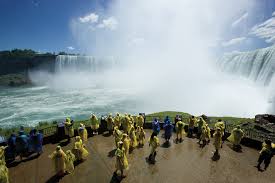 On the tourism side, Niagara saw an 11 per cent growth in tourism spending in 2024 over the previous year, equating to a total of $3.4 billion. Underscoring the strength of Niagara’s tourism industry are recent signals that the Provincial government intends to invest significantly in Niagara as a prime destination for visitors from across Ontario.
I would also like to call attention to what I have always considered the jewel of Niagara’s economy – our thriving agricultural industry. Many in Niagara have family histories that are rooted in the small farms that for many years underpinned our economy. Today, Niagara’s farms and the high-quality foods they produce, along with our world-famous vineyards and wine industry, are a source of pride to Niagara locals and a source of envy to others.
As proof of this, in September, West Lincoln will host the 2025 International Plowing Match and Rural Expo. This five-day celebration of agriculture and rural living draws an average of 70,000 people from across North America, providing an excellent opportunity to showcase what makes Niagara’s agricultural scene so special.
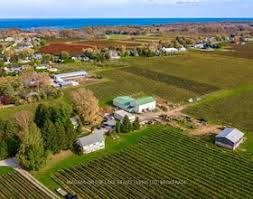 Today, Niagara’s agricultural industry contributes over $1.71 billion in GDP impact and supports over 24,000 jobs, demonstrating that farming is still a key player in our economic success. Recognizing this, in 2024, The Region’s Economic Development department completed the Niagara Agriculture Action Plan and will be working with the area municipalities and the Niagara Federation of Agriculture to execute that plan.
Niagara is also faring well when it comes to overall population and employment data. Our population reached a high of 540,000 people in 2024. Keeping pace with that new population growth, we have seen over $1.8 billion in residential construction investment for 2024. Total non-residential construction investment was just over $700 million.
That new growth has also translated into positive employment numbers. Over 2024, Niagara gained nearly 13,000 jobs, representing a 6 per cent growth. Our unemployment rate also dropped from a high of 8.3 per cent to just 6 per cent now.
As we continue to strengthen Niagara’s position as a global leader in business and innovation, it is important to highlight the strategic advantages that make this region a prime destination for investment and growth.
If we allow this positivity to drive our actions, we are well poised to not only survive the current economic turmoil, but to thrive through it.
Municipal Financing/Budget
We have talked about the resiliency our business community has shown in the face of the US tariffs. I would also like to address the challenges our municipalities are facing around financing and property taxes.
 I have said many times that the model by which our municipalities are funded is in desperate need of reform. The provincial funding model for municipalities has not been meaningfully updated since 2008, while our federal funding models have remained essentially unchanged since the nineteenth century.
Over the past several years, we have seen a disheartening trend by which provincial responsibilities are downloaded to municipalities, without the commensurate funding being provided.
We saw this most clearly through the Region’s 2025 budget deliberations, in which the Province’s decision to introduce changes to the responsibilities of police services across Ontario incurred over $10 million in new costs for the Niagara Regional Police Service.
These are changes which the Region and the police have no control over. While the Province reimbursed those extra costs for municipalities who rely on the OPP for their policing, no such support was offered for municipalities like Niagara who operate their own police force.
As a result, property taxpayers in Niagara are on the hook for that extra $10 million, which made up a significant portion of the 9.6 per cent increase to Regional property taxes this year. There are many other examples of this, and the trend must stop. Property taxes are regressive taxes, and do not account for a person’s ability to pay. This additional burden on taxpayers translates to negative effects on our economy and on our businesses.
This is a problem municipalities across the province are facing, and the Region will continue to advocate strongly, along with the Association of Municipalities of Ontario and others, for significant reform to the Province’s municipal funding model.
While we are on the subject I would like to touch on a few highlights from the Region’s 2025 budget, which show our work to support the significant growth happening in Niagara.
This year’s budget included over $100 million in infrastructure funding, to build, improve and maintain the vital public works that support business growth and new housing starts.
That includes an Eastside Pumping Station Forcemain replacement and a new Barrick Road watermain, both in Port Colborne. It also includes $29 million to improve and rehabilitate MacLoed road in Niagara Falls, and $10 million for the rehabilitation of JR Stork Bridge in St. Catharines.
These are critical investments that will prepare Niagara for continued growth as we look to the future.
I would like to commend my colleagues on Regional Council, especially our Budget Review Chair Fort Erie Mayor Wayne Redekop, for showing diligence and attention when considering these important matters. While tax increases are never ideal, I truly believe our Council made some very strategic decisions to reduce costs where we could.
That being said, it is clear that more difficult decisions are on the horizon. 2026 promises to be another challenging budget year, and with 92 per cent of our budget going to essential or mandated services, it will be more important than ever that we find ways to keep property taxes under control without endangering the vital services our residents and businesses rely on.
2024 Regional and Community Highlights

Niagara’s Regional Headquarters in Thorold
Speaking of those vital Regional services, I would like to pause here to recognize the efforts of Regional staff over the past year.
They are the talented professionals who keep our drinking water safe and our Regional roads clear. They provide care not only for our seniors and children, but also for the homeless, the sick, and those in danger. They support our business community and help to chart Niagara’s long-term future.
In 2023, Regional Council created its Strategic Priorities, committing to Growing Better Together by creating a Prosperous Region, a Green and Resilient Region, an Equitable Region, and an Effective Region. We could make no progress on any of these priorities were it not for the hard work of staff at every level, who work to carry out these important projects and provide the services that our communities need.
Our time today does not allow for a full list of their accomplishments in 2024, but I would like to highlight just a few.
Few people realize that the largest contingent of Regional staff are actually those who care for our seniors at the Region’s long-term care homes.
Earlier this year I had the pleasure of touring through the brand-new Gilmore Lodge long-term care home in Fort Erie. In December of 2024, residents were able to move into a new 160-bed home that showcases the latest best practices in long-term care.
I was truly impressed by the design, comfort, and attention to detail that defines this state-of-the-art piece of community infrastructure, and I look forward to touring the similarly redeveloped Linhaven long-term care home in St. Catharines when it opens later this year.
Moving on, many of us have witnessed the exceptional skill and professionalism that has always defined our region’s paramedic services, and this past year those skills were highlighted right here at home.
 For the first time, the International Trauma Life Support conference and trauma skills competition was held in Niagara, and our own EMS staff secured top honors. The event featured paramedic teams from around the world competing in three demanding trauma scenarios that tested their critical thinking, skill, and collaboration.
I would like to congratulate the winning Niagara EMS team who achieved first place, demonstrating exceptional proficiency and dedication to life-saving practices.
In April of 2024, much of Southern Ontario experienced a total solar eclipse – truly a once-in-a-lifetime event. Hundreds of thousands of visitors came from across Ontario and parts of the US to take in the astronomical spectacle in Niagara.
I would like to thank all of the staff who helped prepare for this momentous occasion, especially those staff in Emergency Management and Public Health, who developed critical eye-safety guidelines and messages, and made sure our communities were ready for any eventuality.
Post-secondary successes

A statue at Brock University, with the iconic ‘Brock Tower’ in the background.
Many of our community’s economic successes would be impossible without the key role played by universities and colleges, and 2024 was a banner year for Niagara’s post-secondary institutions.
This past year marked 60 years since Brock University first opened its doors. Since the fall of 1964, Brock has been shaping skilful and well-informed leaders that have made their mark here in Niagara and around the world. Brock continues to develop new programs that meet the needs of Niagara’s labour market. Programs like Integrated Engineering, which welcomed its first cohort last September, are developed with industry input to ensure Niagara’s workforce has the skills needed to grow.
I would like to offer my sincere congratulations on its 60th anniversary, and I look forward to the next 60 years of excellence.
Speaking of excellence, 2024 also marked the second year in a row that Niagara College was named the top research college in all of Canada by Research Infosource. Niagara earned its number one ranking by attracting more than $40 million in research support. This facilitated innovative projects with partners in the advanced manufacturing, business and commercialization, food and beverage, health, horticulture and environment sectors. I know many in this room have benefitted from the College’s trailblazing approach to applied research.
I would also like to congratulate Niagara’s newest post-secondary institution, the University of Niagara Falls Canada, which celebrated its grand opening in September of 2024.
Physician Recruitment
 I would like to switch gears for a moment to touch on an area that is fast becoming a priority for our economic development efforts.
Like many other municipalities across Ontario, Niagara continues to experience a significant shortage of family doctors, made even more acute by the steep growth in Niagara’s population.
As the effects of the shortage become more pronounced, there has been a universal recognition that Niagara must take a more coordinated and collaborative approach to physician recruitment.
 To kick-start this collaboration, Niagara Region hosted Niagara’s first-ever Physician Recruitment Roundtable in November of 2024. A total of 38 representatives from Niagara’s area municipalities, post-secondary institutions, health care system, and individual family doctors attended.
I was very encouraged by the cooperation, creative thinking and open-mindedness shown by all the participants. The group discussions generated some very useful insights that are already driving new approaches to attracting and retaining doctors.
We heard that Niagara must take a more cooperative approach when considering things like incentives, as well as business supports and office space, and must broaden the partners we engage with on this file to include law firms, accountants, real-estate experts and others. We must also consider the needs of incoming doctors, not only as physicians, but as spouses, parents, and members of the broader community, and must do a better job telling Niagara’s unique story.
Participants specifically noted that family doctors are also business owners, and require business supports. In keeping with this, we recently moved the Region’s Physician Recruitment Specialist into the Economic Development team. Doing so has better connected the Specialist with the business support, marketing, and lead-generation expertise that resides in Economic Development.
I would also like to highlight our recent successes in this field. I am pleased to say that in 2024, a record 26 new family doctors relocated to Niagara, thanks to the collaborative efforts of the Region and our local municipalities.
I am very encouraged by the spirit of collaboration and creativity that has marked our discussions on this topic, and I look forward to Niagara continuing to lead the rest of the province as we look for innovative ways to draw new family doctors to our beautiful region.
Homelessness
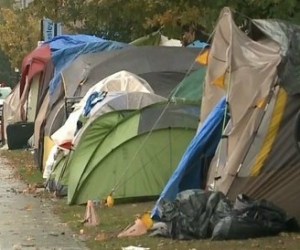 I would also like to touch on the ongoing work the Region is doing to combat homelessness in Niagara.
It is important to recognize that Niagara is not alone in tackling this complex problem. Earlier this year, the Association of Municipalities of Ontario released a study that showed that there are upwards of 80,000 people experiencing homelessness across our province – truly a sobering figure.
The study’s solution is daunting to say the least. It is estimated that an investment of at least $11 billion over the next 10 years would be required. And that high price tag does not tell the whole story; we cannot simply throw money at this issue.
So very often the homelessness that is manifested in our communities is the result of a confluence of issues, most notably mental health, addictions, and poverty. Truly solving homelessness will require fundamental changes to how we serve those most vulnerable members of our community.
The scope of this problem can at times seem overwhelming. But we must not let the enormity of the problem dampen the significant progress we are making. Local news headlines do not always tell the full story of the exceptional work being done by the Region and by so many dedicated community partners, who are working on the frontlines of this crisis every day to find long-term solutions for those experiencing homelessness.
In 2024, Niagara’s system helped 991 people successfully transition from emergency shelter to housing. This shows that we are in fact succeeding at getting people out of the emergency shelter system and into stable housing. This in turn, frees up shelter capacity for those needing temporary shelter.
We also have good reason to be hopeful for the future. Earlier this year, we received $4.4 million from the federal government that will be matched by the Region through the Unsheltered Homelessness and Encampments Initiative. This funding will go a long way toward strengthening Niagara’s homelessness supports and shelter system.
Also in January 2025, our Provincial government announced an investment of nearly $19 million to create a Homelessness and Addictions Recovery Treatment, or HART, Hub in Niagara.
Under this new model, a group of community partners led by Gateway Residential and Community Support Services, will offer a broad range of wraparound supports to address the complex needs of those experiencing homelessness.
I would like to express my thanks to all the community partners who came together in a spirit of collaboration to advance Niagara’s proposal for this HART Hub, and I look forward to these new services coming online over the coming months.
Housing
 While mental health and addictions services are key strategies in our quest to end homelessness, it must be remembered that the only true solution to homelessness is housing.
I am pleased to say that over the past year, the Region has continued to make steady progress towards increasing Niagara’s supply of affordable housing stock.
This past August, Regional Council endorsed a new Attainable Housing Strategy, which lays the groundwork for more diverse forms of housing in Niagara, including affordable housing and rental units. We have a long road ahead of us in this regard. In fact, the Strategy showed that Niagara will have to double the number of apartments within the next 30 years to meet rising demand.
Success will depend not only on the Region’s efforts but on those of a wide variety of partners. Niagara has a strong track record of working together in pursuit of a common goal, and we are taking this same proven approach to Niagara’s housing crisis.
Just last week, the Region hosted Niagara’s first Innovative Ideas for Housing Forum, which brought together over 100 local representatives from both public and private sectors to collaborate and explore new strategies for overcoming barriers to housing development.
I was very pleased at the breadth of ideas that were discussed, and the fresh, new thinking that was on display. I look forward to seeing Niagara’s collective progress on this file in the coming months and years.
Advocating for Niagara’s needs
As I have mentioned throughout my address today, much of Niagara’s success depends on strong partnerships between the Region and other levels of government. This is especially the case in 2025, as we tackle issues that extend far beyond Niagara’s borders, including the homelessness crisis and the international trade situation.
Rest assured that Niagara will be strongly advocating for Niagara’s unique needs again this year. In just a few short weeks, we will once again be partnering with the GNCC to host Niagara Week at Queen’s Park. This is a unique opportunity to showcase Niagara to key decision-makers, and to advocate for our priorities in face-to-face meetings with Provincial ministers.
When it comes to the ongoing tariff threats, we will work to ensure that the Province considers Niagara’s unique identity as a border community with a strong focus on manufacturing.
We will also be advancing our work on securing Provincial and Federal funding for the much-needed South Niagara Wastewater Treatment Plant, along with other infrastructure that Niagara desperately needs to support the coming residential and industrial growth.
 We will also be seeking further action on bringing all-day, two-way GO train service to Niagara. We have received clear signals that the Province wants to drive more traffic to Niagara while reducing gridlock on our highways. The case for fast, convenient GO train service in and out of Niagara has never been stronger, and we are very optimistic that we will continue to see progress from the Province on this file.
Niagara Week is just one part of a continuous strategy to advocate for Niagara’s needs. Our staff work hard at every level to influence provincial policy in Niagara’s favour. I would also like to thank all of my colleagues on Regional Council, who are constantly championing the needs of all of Niagara, both through formal events like Niagara Week and through many other avenues.
Conclusion

Niagara Regional Chair Jim Bradley,
As I reflect on the state of our beautiful region, and on the many accomplishments and strengths we have talked about today, I remain very hopeful for the future.
Our region, and our country, are indeed facing real, immediate challenges. But I would like to remind everyone in this room that Niagara has what it takes to endure.
We have a strong, growing and resilient economy, that is attracting world-class businesses and jobs to our region. We are actively working together to shore up that economy to tackle whatever may come our way.
We are making progress on the social and systemic issues that affect our most vulnerable residents, like homelessness, addictions, and access to healthcare.
We have strong partnerships with our provincial and federal governments.
And even when we have an American administration which seeks to question our sovereignty and disrupt our economic progress, we still have many allies across the border, who share our respect for each other, who value our continued partnership, and who are committed to working together for the benefit of both our countries.
Let us then approach the coming year with a sense of hope and optimism, confident in our resiliency and strong in our convictions.
The coming months may not be easy, but we have the collective power to make Niagara thrive, if we truly treasure our opportunities and strengths and embrace our identity as one of the most free, prosperous, resilient, and pioneering regions in Canada.
NIAGARA AT LARGE Encourages You To Join The Conversation By Sharing Your Views On This Post In The Space Following The Bernie Sanders Quote Below.
“A Politician Thinks Of The Next Election. A Leader Thinks Of The Next Generation.” – Bernie Sanders
 Niagara At Large
Thanks Doug for the whole shebang. I want you to know it is appreciated. Gail Benjafield
LikeLike