
Report provides insights into food price trends, affordability challenges and the broader forces shaping Canada’s food systems.
Among the Key Drivers – Climate events: Ongoing droughts, extreme weather and the anticipated effects of a weak La Niña are expected to disrupt crop yields and supply chains.
News from the The Agri-Food Analytics Lab (AAL), a panel of experts researching food issues in Canada
Posted December 9th, 2024 on Niagara At Large
 Food prices in Canada are projected to rise by three to five per cent in 2025, adding up to $801 more to the annual grocery bill for an average family of four, according to Canada’s Food Price Report 2025, released this December 5th, 2024.
The report, a collaboration between Dalhousie University, the University of Guelph, the University of British Columbia and the University of Saskatchewan, provides insights into food price trends, affordability challenges and the broader forces shaping Canada’s food systems.
Researchers used historical data, machine learning and predictive analytics to provide insights into food price trends and their impact on Canadians.
Overall trends
Expected price adjustments:
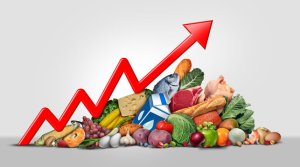 While the report anticipates price increases across food categories, these increases reflect dynamic market conditions, and unlike in the past three years, are consistent with overall inflation.
- Notable exceptions include meat prices that are projected to rise moderately (four per cent to six per cent) as the industry responds to factors such as reduced cattle herds and high feed costs.
- Price pressures in vegetables (three per cent to five per cent) and bakery items (two per cent to four per cent) are expected to see manageable increases, highlighting ongoing efforts to adapt to production and supply chain challenges.
Regional variability:
- Provinces like Newfoundland and Nova Scotia are expected to face above-average price increases, driven by local supply constraints.
- In contrast, Alberta and British Columbia may remain below the national average due to relatively stable supply chains and production conditions.
Key drivers
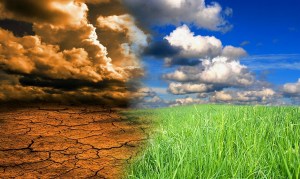 Climate events: Ongoing droughts, extreme weather and the anticipated effects of a weak La Niña are expected to disrupt crop yields and supply chains.
For example, flooding in Eastern Canada and wildfire-induced transportation delays in the West have highlighted vulnerabilities in food distribution networks.
- Labour disruptions: Workforce shortages in agriculture and food processing, exacerbated by COVID-19 and an aging workforce, are causing supply delays. A deficit of 20,000 truck drivers and recent strikes have further stressed the system.
- Exchange rates: A weaker Canadian dollar relative to the U.S. dollar continues to inflate the costs of imported goods, especially fruits and vegetables sourced from the U.S. during winter months. Currently 60 per cent of Canadian agri-food exports are directed to the U.S. which has deepened reliance on the U.S. to sustain growth. The recent re-election of Donald Trump could widen the gap, given his commitment to reducing American farming costs and rolling back environmental regulations.
Economic and social implications
- Consumer behaviour: Rising prices are reshaping shopping habits, with 48.2 per cent of Canadians seeking more sales and discounts, and 28 per cent resorting to reduced food consumption. Couponing, bulk buying and switching brands are increasingly common.
- Food insecurity: Over 8.7 million Canadians are food insecure, with Northern and Maritime regions bearing the brunt. Food bank visits exceeded 2 million in March 2024—a historic high, reflecting a 90-per-cent increase since 2019.
- Annual costs: A typical family of four is projected to spend $16,833.67 on food in 2025, an $801.56 increase from 2024. This calculation assumes minimal food waste and exclusive home meal preparation, highlighting affordability concerns.
Policy developments
- Grocery Code of Conduct: Set to launch in mid-2025, the code aims to foster competition among retailers, stabilize prices and empower smaller grocers. Its success, however, depends on robust enforcement.
- Labour solutions: With over 71,000 agriculture and processing jobs potentially requiring foreign workers by 2030, the report emphasizes the need for policy support to address workforce shortages.
The bigger picture
 Canada’s food systems face interconnected challenges, from rising costs to environmental and social impacts.
While food inflation is slowing, efforts to enhance resilience and innovation are essential. Investments in sustainable practices and new technologies could support high production levels and improve access to affordable food for Canadians.
UBC experts from food and resource economics research group in the faculty of land and food systems, Drs. Kelleen Wiseman, Rick Barichello and Matias Margulis and master’s student Rebecca Feng contributed to the report.
The UBC team conducted the forecasts of Canadian food prices by analyzing monthly inflation rates of the Consumer Price Index (CPI) for major food categories using a Vector Autoregression (VAR) model. They also conducted a B.C. to Canada, Ontario and Alberta food-price-comparison to review if B.C. prices are higher or lower overall or in specific categories.
For more information, read the full Canada’s Food Price Report 2025.
About the The Agri-Food Analytics Lab (AAL) – The Agri-Food Analytics Lab (AAL) uses advanced analytics to fully understand the future of food. The AAL provides a global knowledge hub, forum, and destination for sharing the latest intelligence, research and learning on fisheries, agriculture, aquaculture, and food.
For more on the Lab and its research work, click on – Agri‑Food Analytics Lab – Dalhousie University
For recently posted related commentary posted on Niagara At Large, click on – Why Are People So Angry? It’s The Price Of Groceries Stupid! | Niagara At Large
NIAGARA AT LARGE Encourages You To Join The Conversation By Sharing Your Views On This Post In The Space Following The Bernie Sanders Quote Below.
“A Politician Thinks Of The Next Election. A Leader Thinks Of The Next Generation.” – Bernie Sanders
 Niagara At Large