
“Climate change has a direct negative impact on our budgets and bank accounts. Failing to grasp the economic threat posed by climate change has led many Canadians and decision-makers to drastically underestimate both the economic benefits of climate policies and the cost of failing to act.” — Rick Smith, President, Canadian Climate Institute
A News Release from The Canadian Climate Institute with a Brief Foreword from Niagara At Large reporter/publisher Doug Draper
Posted October 22nd, 2024 on Niagara At Large
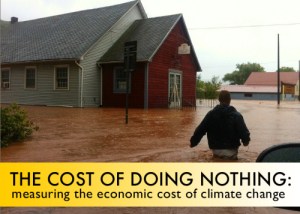 A Foreword by Doug Draper at NAL – Every time another report comes out about the astronomical costs we, as communities, as a province, and as a country – face from ever more frequent and severe climate-related disasters, it makes a mockery of the arguments too many of our fellow citizens and business and political leaders continue to make that the cost of addressing climate change is or will cost too much.
Those arguments are doing nothing but costing us time and money as a climate crisis that could ultimately devastate our life-sustaining resources grows ever worse and we, as a people, need to stand up and push back against them.
Now here is the News Relase from The Canadian Climate Institute –

Forests and communities ravaged in unprecedented numbers of wildfires across Canada.
OTTAWA, Canada —The financial toll from this year’s two biggest extreme weather disasters have already surpassed $1.8 billion, counting only insured losses, according to a new online tool created by the Canadian Climate Institute.
A single afternoon of heavy rain in Toronto caused flooding that may wind up costing almost $1 billion. The wildfire that destroyed parts of Jasper will cost at least $880 million in insured losses alone.
This new tool, accessible at ClimateChangeCosts.ca, tracks estimates of the financial impact of climate-related disasters and extreme weather across the country. It will be updated in real time as these sorts of events continue to become more common.

Jasper, Alberta following a catastrophic wildfire in the summer of 2024. Rebuilding this jewel of a community and its surroundings will cost us all billions
Because the impacts of climate change are difficult to calculate and slow to tally, the costs on the map present only a fraction of the damages from recent extreme weather and climate-fuelled disasters. Costs from weather-related events such as the recent flooding in Montreal and the 2024 wildfire season will be added as more data becomes available.
Canada has already warmed 1.7 degrees since 1948 due to the release of heat-trapping pollution, faster than the global average. Nine out of the ten costliest years for insured damages from extreme weather in Canada have occurred since 2011, adding up to more than $27 billion in insured losses, according to the Insurance Bureau of Canada.
A 2022 Climate Institute report showed how climate change is eroding economic growth at both the national and sector levels, straining government budgets, reducing household income, and damaging Canada’s competitiveness. Economic damage from climate change is expected to cost the Canadian economy an estimated $25 billion by 2025—that’s equal to half a year’s projected growth.
Proactive adaptation measures and policies can limit the damages from the impacts of climate change, however. Institute research finds that such measures and policies can cut future costs in half, saving billions of dollars, and making life more affordable for households.
 A dollar invested in proactive adaptation measures, the Institute has found, can return $13-$15 in direct and indirect benefits. And if adaptation measures are combined with global emissions reductions, future costs could be reduced by three-quarters, putting Canada on a path to a more stable and affordable future.
The interactive map currently features reports from the past 12 months, and will be updated regularly as more costs are reported. While Canada does not yet have the capacity to analyze the contribution of climate change to all extreme weather, the map provides a clear and growing picture of how floods, wildfires and other events are increasingly straining Canada’s economy.
QUOTES
“Canada’s climate is changing and everyone, everywhere, is experiencing the effects. The economy is highly sensitive to this threat, and we estimate that the average Canadian household currently loses at least $700 each year due to climate-related costs. We need to reckon with the price tag for these massive disasters and do everything we can to control the damage. As our new interactive map shows, the costs of extreme weather events, which we know are exacerbated by climate change, are measurable and mounting.” – Ryan Ness, Adaptation Research Director, Canadian Climate Institute
RESOURCES
- Visit Interactive tool at ClimateChangeCosts.ca
- Costs of climate change: a series of five reports that seeks to understand the costs facing Canada from accelerating climate change
- Canadian Climate Institute fact sheets: Heat Waves, Wild Fires, Droughts, Floods
What We Do – The Canadian Climate Institute is Canada’s leading climate change policy research organization. We produce rigorous analysis, economic modelling, and in-depth research focused on three main priorities:
- Incentivizing clean economic growth and low-carbon competitiveness,
- Reducing emissions and accelerating Canada’s net zero energy transition
- Making our economy and infrastructure more resilient to a warming climate.
Canadian Climate Institute: Climate Change Canada Policy Research
NIAGARA AT LARGE Encourages You To Join The Conversation By Sharing Your Views On This Post In The Space Following The Bernie Sanders Quote Below.
“A Politician Thinks Of The Next Election. A Leader Thinks Of The Next Generation.” – Bernie Sanders
 Niagara At Large