
This Post Is Courtesy of Ontario Nature, a province-wide advocacy group for protecting and preserving our natural spaces
Posted May 1st, 2016 on Niagara At Large
(A Brief Note from Niagara At Large – With all of the discussion and debate in Niagara, Ontario in recent months over something called “biodiversity offsetting” – something the Niagara Peninsula Conservation is interested in trying for the benefit of developers who want to bulldoze through “nuisance pieces” of wetlands in our region – NAL is including this piece from the group Ontario Nature as a way of shining a little light on the key role wetlands play in the web of life on our planet.)
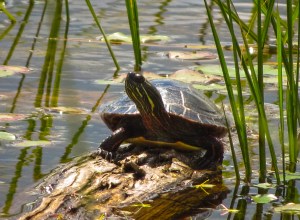
Painted Turtle – Photo by Jason King, Courtesy of Ontario Nature
Niagara Falls, Ontario – A few reptiles and amphibians have already been spotted in Niagara Falls this spring. But with the warmer weather, the first weeks of this April served to rouse scores more.
On a leisurely shoreline stroll you may spot an American toad or midland painted turtle. If you turn over a log, you may find a spotted salamander or milksnake.
The onset of spring is an exciting time of year for outdoor enthusiasts as the veil of winter’s slumber is lifted from our wetlands, forests and meadows. The awakening of reptiles and amphibians is happening right at our feet. “Spring is one of my favorite times of year and is distinctively marked by the unique calls of different species of frogs and toads. The early season calls of wood and chorus frogs as well as spring peepers bring the night alive with sound,” says Emma Horrigan, Ontario Nature’s Citizen Science Coordinator.

Spotted Salamander. Photo by Scott Gillingwater, Courtesy of Ontario Nature
Sadly though, reptiles and amphibians are experiencing global declines of 20 and 40 percent respectively. In Ontario, 75 percent of reptiles and 22 percent of amphibians are listed as at-risk provincially. These turtles, snakes, lizards, salamanders, frogs and toads have unique, specialized and fascinating life histories. But they suffer terribly from habitat loss and fragmentation, road mortality, persecution and pollution.
You can help by enlisting as a citizen scientist for the Ontario Reptile and Amphibian Atlas, which has been led by Ontario Nature since 2009. The data submitted by people of all skill levels is used to map the whereabouts of some of the province’s most enigmatic creatures. Ontario Nature’s spring is to fill in key data gaps where there are no recent sightings. While you’re enjoying the nice weather this week, keep an eye out for reptiles and amphibians. They have fascinating traits and adaptations, and you can help their plight simply by reporting your sightings.
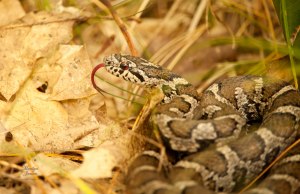
Milksnake. Photo by Marilyn Jansen, Courtesy of Ontario Nature
Ontario Nature protects wild species and wild spaces through conservation, education and public engagement. Ontario Nature is a charitable organization representing more than 30,000 members and supporters, and 150 member groups across Ontario. For more information, visit ontarionature.org .
Background – Reptiles
- Reptiles are experiencing global declines of 20 percent
- 24 species of reptiles are found in Ontario:
- 15 snakes
- 8 turtles
- 1 lizard
- 18 of Ontario’s 24 species of reptile (75 percent) are listed as at risk under the Ontario Endangered Species Act
Background – Amphibians
- Amphibians are experiencing global declines of 40 percent
- 23 species of amphibians are found in Ontario:
- 10 frogs
- 2 toads
- 11 salamanders
- 5 of Ontario’s 23 species of amphibian (22 percent) are listed as at risk under the Ontario Endangered Species Act
Background – Ontario Reptile and Amphibian Atlas
The atlas is a citizen-science program that tracks distributions and spatial trends of reptiles and amphibians across the province over time. The overarching goal is to increase the collective knowledge base of reptiles and amphibians. Equally important, however, is the engagement of non-scientists of all ages and abilities, in all parts of the province, in nature study and conservation.
- In 2015, citizen scientists reported more than 29,000 sightings from across Ontario
- More than 350,000 submissions have been reported by more than 3,000 people
- Ontario Nature’s Lost Bay Nature Reserve hosts 24 species of reptiles and amphibians
- The atlas was launched in 1984 and has been led by Ontario Nature since 2009
- Least reported species: Allegheny Mountain dusky salamander (11)
- Most reported species: spring peeper (65,052)
For more on Ontario Nature and its nature preservation work in Ontario visit – http://www.ontarionature.org/ .
NOW IT IS YOUR TURN. Niagara At Large encourages you to share your views on this post. A reminder that we only post comments by individuals who share their first and last name with them.
Visit Niagara At Large at www.niagaraatlarge.com for more news and commentary for and from the greater bi-national Niagara region.
 Niagara At Large