
A Column from Natalie Mehra, Executive Director of the Ontario Health Coalition, a province-wide public advocacy group
Posted January 20th, 2016 on Niagara At Large
We have raised it repeatedly for the last half-decade or more in legislative

Ontario Health Coalition executive director Natalie Mehra
hearings on the Ontario Budget and the Local Health Integration Networks. Now, finally, the Ontario government is taking some modest action to roll back the worst of hospital parking fees.
In advance of the protests against hospital cuts that we are holding across the province this week at each pre-budget hearing, the government proclaimed early Monday morning that it will be requiring hospitals to roll back some parking fees.
But the announcement will not actually lower parking fees in many communities. This is the bottom line:
- Hospitals will still be able to charge $10 per day or more to visitors.
- For hospitals that charge $9.99 per day or less, nothing changes.
- But those hospitals that do charge $10 or more per day for visitors will be required to provide access to 5 -, 10 -, and 30 – day passes discounted by 50%. These discount passes must be transferable between patients and caregivers and must include in- and out- privileges.
The reduction in fees still leaves hospital parking rates higher than any other parking in many communities across the province. These parking rates will still cause hardship, particularly for seniors. The media is reporting that 36 hospitals charge more than $10 per day. Those are the only hospitals impacted by this week’s announcement.
Moreover, $9 a day for a senior who has to visit a loved one every day for weeks in hospital, is still a big financial hit. (For two weeks, that cost is $126.) For those going in just for a day surgery, there is nothing in these measures that will alleviate the fee you are charged — no matter whether it is a hardship for you to pay it or not.
It should not be the case that our public hospitals charge the highest parking fees in town. Not only are the fees escalating every year, but the truth is that hospitals have gone to extreme lengths to force patients, their families and staff to pay exorbitant parking rates.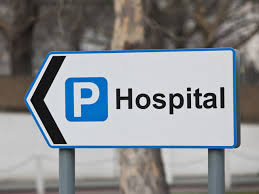
In many communities, hospitals have had lower-cost municipal parking meters or free parking removed from all streets surrounding the hospital in order to force patients into the high-cost hospital parking lots. In one Ontario town, a free church parking lot across the street from the hospital has been bought by the hospital foundation and barricaded in order to stop patients from parking for free.
Some media reports include claims that the Health Ministry consulted on this. It did not consult the Ontario Health Coalition, though we represent half-a-million Ontarians in more than four hundred organizations, and we have repeatedly raised this issue in the media, in public forums and in legislative committees. In its media release the Ministry states only that it consulted the hospitals and the Ontario Hospital Association (which has generally represented the interests of hospital CEOs whose incomes couldn’t be more disparate from those seniors and patients paying the parking fees).
Hospitals have responded to the government’s announcement by saying that the Ministry has cut their funding and encouraged them to raise revenues from patients and their families through increased user fees. This is true. However, that doesn’t mean fees should stay high.
The Ministry was wrong to cut hospital budgets and encourage hospitals to levy more user fees in the first place, and it is a welcome development that the Minister of Health recognizes that these fees are a huge burden to everyone, in particular seniors and those on fixed incomes. Needed hospital care should not rely on user fees for the sick and their families. The Ministry should never have let the parking fees get so out of control and any move to roll them back is welcome.
This leads us to the real issue that underlies this controversy: the Ontario government must improve funding levels for our public hospitals in the provincial budget and protect equitable access to health care for all Ontarians, without financial barrier for the sick and the elderly. This is the ethical solution, and the one that works in the public interest.
In fact, the Ontario Hospital Association should have been advocating for this for a long time, rather than being complicit — and worse — in the government’s attempts to shunt the burden onto hospital staff, the sick, the elderly and their families.
The real problem is hospital funding levels that are too low to meet population need for care. We are in the 9th consecutive year of real-dollar cuts to our communities’ hospital budgets and Ontario’s hospital funding levels have plummeted to the bottom of the country. For the last few years, we have been trading places back and forth with Quebec for the dubious distinction of which province has the worst hospital funding in Canada. This year we are second-last. The difference between our province and the national average is significant. Here is a chart showing our ranking, according to the latest government data:
Public Hospital FundingPer Person, 2015Current $ |
|
Newfoundland & Labrador |
$2,406 |
Alberta |
$2,245 |
Prince Edward Island |
$1,995 |
New Brunswick |
$1,971 |
Nova Scotia |
$1,907 |
Manitoba |
$1,818 |
British Columbia |
$1,797 |
Saskatchewan |
$1,761 |
Ontario |
$1,419 |
Quebec |
$1,382 |
Average of Rest of Canada |
$1,920 |
Difference between Ontario and the average of the rest of Canada |
Ontario funds hospitals at $501 per person less |
Source: Canadian Institute for Health Information, National Health Expenditures Database, 2015.
As a result, Ontario has the fewest hospital beds left per person of any province in Canada. In fact, Ontario has the fewest beds left compared to virtually all developed nations in the world. We have the second-lowest nurse-to-patient staffing ratios in our hospitals.
Our hospitals push patients out quicker and sicker than other jurisdictions, whether or not they are sufficiently recovered. The evidence is overwhelming that hospital budgets are inadequate. In every large town, patients line stretchers line hallways, ERs are overflowing, hospitals are on “code gridlock” because there are not enough beds left.
Patients are being pushed out too sick, or have their surgeries cancelled because there are no available beds in which to recover. Tertiary hospitals (the really big hospitals with highly specialized care) can’t discharge patients to their regional community hospitals because all the beds are full.
Outpatient services and health professionals’ care have been dismantled and privatized. Support staff and services, too, have been privatized, even when vital services like cleaning, patient records, food, and patient transport are of much worse quality.The evidence is overwhelming that the system is stretched beyond safety.
In confronting the inequities and hardships caused by burgeoning user-fees for patients, the government must finally confront the damage it is doing by cutting hospital budgets year after year after year.
The Ontario Health Coalition’s Message to the Province’s Health Ontario Minister Dr. Eric Hoskins:
Thank you, Minister Hoskins for taking the first of what we are hoping will be more significant steps to start to address the high parking fees in our public hospitals.
Next time, the public interest and advocacy groups like ourselves that raised the issues should be consulted, not just the hospital CEOs.
Next step — your government must finally stop the hospital budget cuts and plan to restore hospital funding, at least to meet the national average.
Natalie Mehra, Executive Director, Ontario Health Coalition
Find out more about the Ontario Health Coalition and its advocacy efforts as a not-for-profit citizens advocacy group by visiting the Coalition’s website at www.ontariohealthcoalition.ca
NOW IT IS YOUR TURN. Niagara At Large encourages you to share your views on this post. A reminder that we only post comments by individuals who share their first and last name with them.
Visit Niagara At Large at www.niagaraatlarge.com for more news and commentary for and from the greater bi-national Niagara region.
 Niagara At Large
As far as I am concerned, not everybody is able to drive to the hospital — depending on where they live — and if they don’t have a vehicle, the cost of a taxi is quite a bit more expensive than the parking. I would say if somebody is taking a taxi to the hospital, whether this is for after hours testing or visiting or medical services on a non emergency basis (yes – dialysis, CT scans, etc. is 24 hours a day), then perhaps limiting the taxi gouge to $10 per round trip might be helpful too. Fair is fair. There were times I didn’t even go to the hospital for necessary testing and ended up waiting much longer because I can’t afford the cabs there … it is not my fault or anybody’s that they choose to put the hospital out in the sticks.
LikeLike
Hospitals are put out in the sticks because of parking. Downtown locations, the best option for any community, would require parking structures, which over the long term have less attractive life cycle costs. On-grade parking is preferred because of the minimal initial capital and ongoing maintenance costs. This is typical narrow silo thinking common to most government ministries. Adherence to The Provincial Policy Statement on urban development is expected of all except themselves. Not considered are the transportation costs borne by the community or damage to the urban fabric by ripping out institutional anchors. Not their problem.
LikeLike