
A Commentary by Doug Draper
“This (Trans-Pacific trade) deal is, without any doubt whatsoever, in the best interests of the Canadian economy.”
Those were Stephen Harper’s words as he took time on the campaign trail this October 3rd to announce that a long-anticipated trade deal – known as the TPP for short – had been reached between Canada, the United States and 10 other Pacific Rim countries.
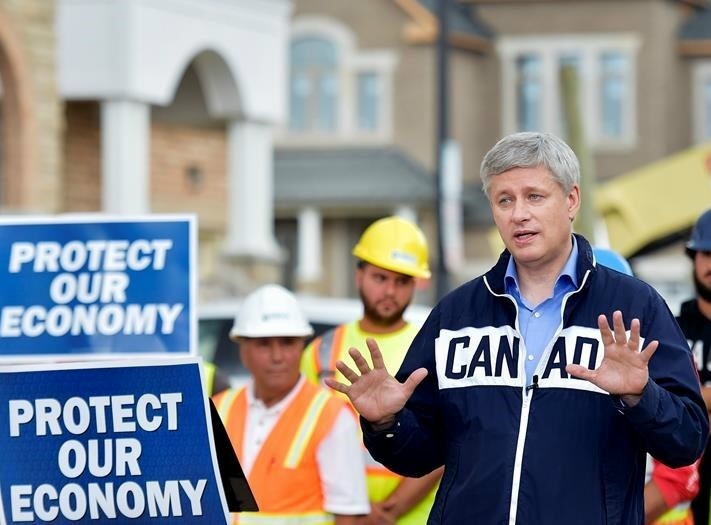
Harper out on the hustings earlier this October, cheering the TPP trade deal.
Yet here we are – only days away from Canadians heading to the polls in this federal election – and the Harper government still hasn’t released the full text of what is being loosely described as the mother of all “free trade” agreements going back to the first one Canada signed with the United States and Mexico in 1992.
That means we may very well be going to the polls knowing more than we ever wanted to about niqabs, barbaric cultural practices and Harper’s charge that Justin Trudeau’s Liberals want to get us all hooked on pot, but with key questions left unanswered about what this trade deal could mean for jobs and the pocketbook of everyday Canadians.
For those of us who’ve taken a little time out from the first weeks of the hockey season and the baseball playoffs to pay attention to this stuff that may be far less exciting but more important to our collective lives in the long run, you may know about Harper promising to throw billions of dollars of our taxes in subsidies to soften any blow the trade deal may have on jobs and profits in the Canadian dairy and auto industry.
Then this October 15th, in a front page story in The Globe and Mail, the newspaper said it has confirmed that the trade deal will make it easier for other countries like Vietnam, Malaysia and Burnei on the island of Borneo (where the labour and environmental laws are week and labour costs are dirt cheap), to bring temporary foreign workers into Canada.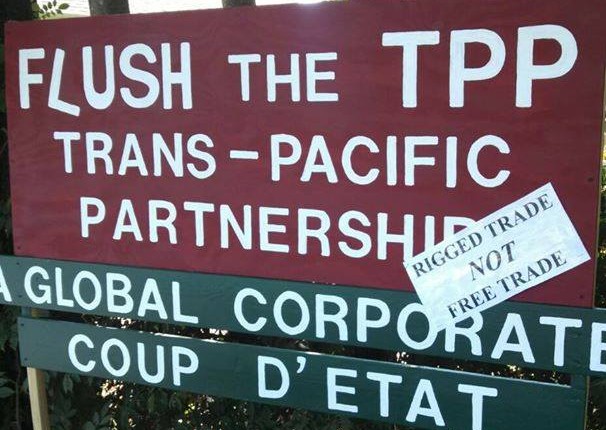
Remember those temporary foreign workers or TFWs for short? They were a big issue for a while when the CBC, Globe and other media reported that the Harper government, either deliberately or through incompetence and ignorance (in other words, through not having a proper handle on what was going on in the Canadian job market), allowed temporary foreign workers into this country to displace Canadians in the job market for cut-rate wages and little or no benefits offered by the businesses that hired them.
There were outrageous examples in a number of businesses, from banks and mining companies, to service businesses like hotels and fast-food restaurants, using their veteran Canadian employees to train these temporary foreign workers, and then dumping those Canadians so the foreign workers could fill their jobs for a lower cost.
None of this had nothing to do with the old Harper line that foreign workers were only allowed in to do jobs Canadians don’t want to do. And all of it was happening while younger Canadians, in particular, were looking for any kind of work to pay off their student debts.
Now we have a headline on the front page of the October 15th edition of The Globe and Mail reading: ‘TPP trade deal opens door to more TFWs’.
“The Globe and Mail has confirmed that the deal, like Canada’s existing trade pacts, contains [provisions that would make it easier for companies from TPP countries to bring temporary foreign workers to their operations in Canada.” …
“United Steelworkers national director Ken Neumann predicted the deal would ‘open the floodgates’ to foreign workers from developing countries,” the Globe story adds. “What this agreement does (Neumann’s words here), it increases the access to corporations to basically pool cheap labour from countries such as Vietnam, … We’re very much concerned about what this agreement brings about, especially on the temporary foreign worker side.”
Never mind the niqab or “barbaric cultural practices” or some masked terrorist with a knife breaking into your home at three o’clock in the morning.
This trade deal and the impact it could have on Canadian jobs for now and decades to come, along with the need for a national medical drug benefits program (Pharmacare), tax loopholes for the upper one per cent and climate change should be among the issues of upmost concern to us as we head for the polls in what may be the most important federal election in generations.
Visit Niagara At Large at www.niagaraatlarge.com for more news and commentary for and from the greater bi-national Niagara region.
(NOW IT IS YOUR TURN. Niagara At Large encourages you to share your views on this post. A reminder that we only post comments by individuals who share their first and last name with them.)
 Niagara At Large
Earlier this year, Harper issued orders restricting the number and location of work of the Temporary Foreign Workers, now he is going to be welcoming them with open arms. I wear “Flip Flops” in summer. I now hear and see a human “Flip Flop” _ Harper.
We are witnessing the effects of the TPP deal with US Steel getting a court order to cancel the benefits for the retired workers of US Steel. The TPP gives the multi national corporations the opportunity to override government legislation. With TPP we may as well get rid of government and return to the days before the abolition of slavery. Under TPP the workers will be the modern slaves to the multi national corporations which intend to make profits for their stockholders.
I can see this prospect backfiring. Slave wages equal no buying power!
LikeLike
Buying this deal would be like having Bernie Madoff as your investment manager, do Canadians feel like buying “a pig in a poke”, ?? we shall soon find out how gullible they are this coming Monday 19 October Voting Day.
LikeLike