
News from John Hassell and Ontario Nature
(A note from Niagara At Large – just to interject for a moment, where is the Harper government on this? We are talking about saving threatened bee populations necessary to pollinate fruit plants in the Niagara, Ontario fruitbelt and other plants vital to our food supply. Is this not also a national security matter?)
The government of Ontario put out a proposal this week to protect pollinators by restricting the use of neonicotinoid pesticides.
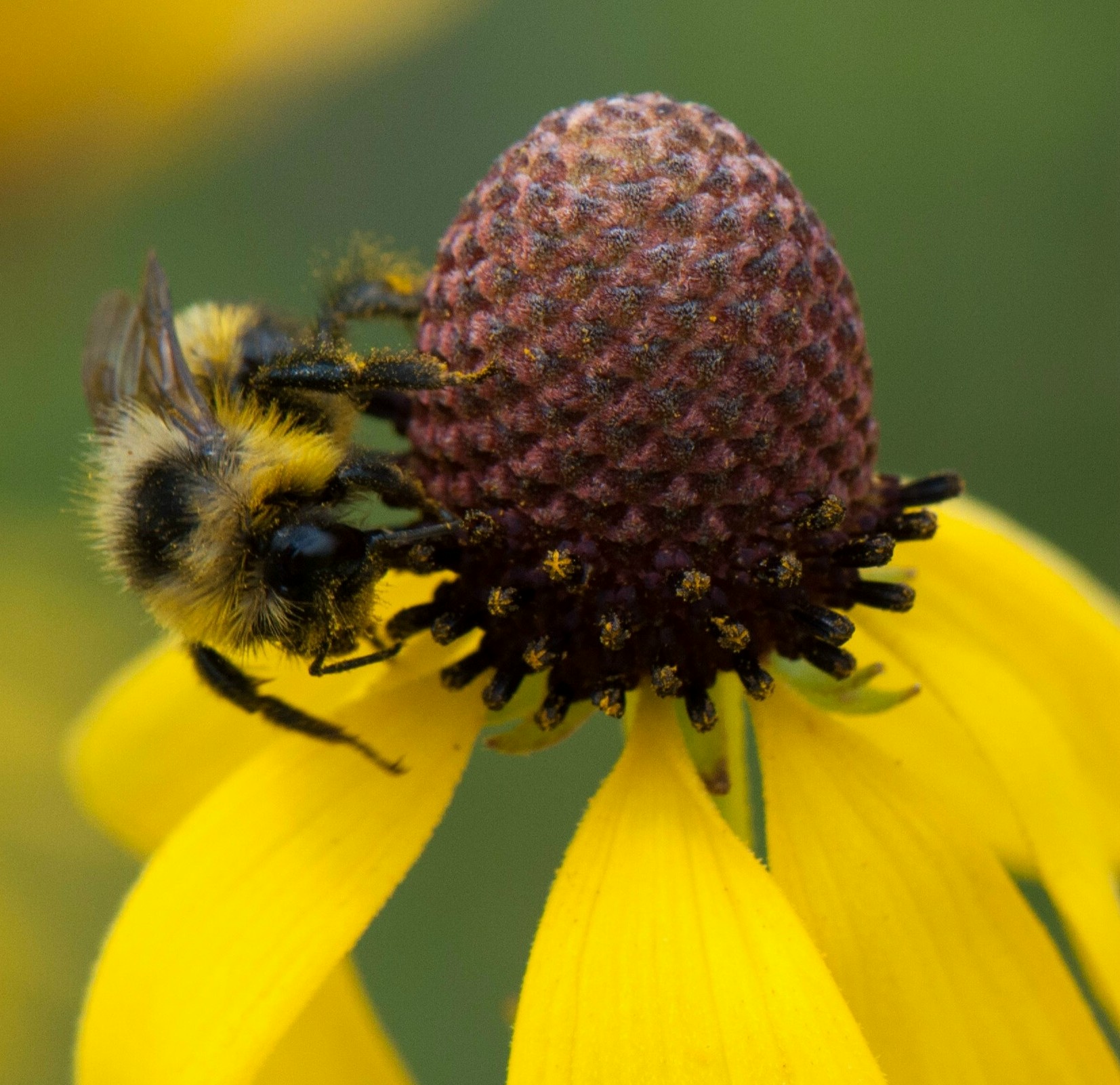
A pollinating bee at work for our food supply and other plants that make our world healthy and wonderful. Why won’t the Harper government join Ontario and ther provinces in protecting them from possible extinction?
This is a bold and necessary step.
Eighty-seven percent of flowering plants rely on pollinators for reproduction, including most of the world’s leading food crops. Food security and the health of ecosystems depend, fundamentally, on bees, butterflies, birds and other pollinators.
Among the pollinators, bees are generally regarded as the most important. But not just honey bees. There are about 400 wild bee species in Ontario, including about 20 bumblebee species, all doing their part to maintain the delicate web of life.
It is therefore deeply troubling to learn that so many of Ontario’s wild bees are in trouble. The rusty-patched and gypsy cuckoo bumble bees are now on Canada’s endangered species list. Scientists will decide this spring whether the yellow-banded bumblebee, once common but now rare in eastern North America, will join them on the list. The American bumblebee, also in steep decline, is a candidate for future consideration.
Signs of trouble abound. Wild bumble bees are just the tip of the iceberg. Scientists in Europe are sounding the alarm about the “brutal and recent collapse of insect populations” which may have “dramatic consequences for natural ecosystems, the human environment and public health.” Many factors are likely contributing to this decline, including habitat loss, disease, climate change – and, of course, exposure to pesticides.
With respect to the latter threat, an international Task Force on Systemic Pesticides has reviewed the results of over 1,100 published peer-reviewed studies on the impacts of neonicotinoids. Among their findings: these pesticides are adversely affecting bees by impairing navigation, learning, food collection, lifespan, resistance to disease and fecundity.
The sheer scale of neonicotinoid use is, in and of itself, disturbing. They are the most widely used pesticide in the world. In Ontario, for example, almost 100 percent of corn seeds are treated with neonicotinoids prior to planting. Neonicotinoids are used on many other crops, as well as in horticulture, forestry, aquaculture, on pets and livestock, and for household pest control. Water soluble and persistent, these pesticides are carried by groundwater and surface water into rivers, wetlands and other water bodies, and remain in the environment for months and even years.
Contrary to the claims of the chemical industry, neonicotinoids are not safe. A single kernel of treated corn is enough to kill a songbird.
The government’s proposal to reduce the use of neonicotinoids is the first step in developing and implementing a Pollinator Health Action Plan for the province that will involve extensive public consultations. Ontario Nature and a swath of other environmental groups have come out in support of this step, as have many farmers. In the upcoming months we can all be part of efforts to ensure that pollinators will recover and thrive in Ontario.
Learn more about the organization Ontario Nature and its mission by clicking on www.ontarionature.org
Tel: 416-444-8419 ext. 269 | Toll free: 1-800-440-2366 | Fax: 416-444-9866
(NOW IT IS YOUR TURN. Niagara At Large encourages you to share your views on this post. A reminder that we only post comments by individuals who share their first and last name with them.)
 Niagara At Large
March 31st 2015 at the Kiwanis Library, Niagara St, St Catharines @ 7pm
Please come out to support pollinator species and meet the representatives from the Sierra Club of Canada on their national BEE TOUR.
See http://www.greeningniagara.ca for details.
LikeLike