
By Doug Draper
She was, first and foremost, a warm, passionate human being – a person whose down-to-earth humility belied the many tributes and awards she received around the world for her groundbreaking work in the field environmental health and science.
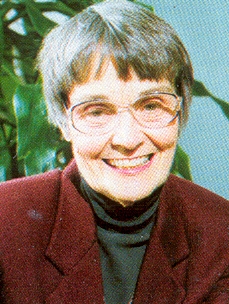
Internationally renown environmental scientest Theo Colborn
The last thing I think I remember Theo Colborn wanting to be compared to was Rachel Carson, author of one of the groundbreaking environmental books of the last century, Silent Spring.
Yet Theo Colborn, an American scientist who left this earth and all of the life on it she cared so much for in her late 80s this December, 2014, fell into the same rarified circle as Rachel Carson (as was acknowledged by other esteemed groups in her own country who awarded her Rachel Carson medals).
Theo Colborn was that brave scientists whose research lifted Carson’s warnings about synthetic chemicals assaulting our health and environment to a more urgent level. Colborn’s warnings of the research she outlined in her own groundbreaking book ‘Our Stolen Future’ some two decades ago, were that some of the smallest concentrations of pharmaceutical and industrial chemicals (including those we use to spray our lawns, gardens and bugs) flushed into our rivers and lakes will come back to break down our immune systems and to screw up the endocrine systems of fetuses in their womb before they see the light of day.
One never hears the righteous, so-called right-to-life voices ever talking about environmentally enduced assaults on the fetus. But there are the rest of us, who may want to consider the threat manmade drugs and chemicals has wreaked on human life, from the moment of conception.
Theo Colborn, whose work is still way ahead of the backward bureau nothings in Environment Canada and Health Canada – gutless bureau nothings, so in contempt of making their work transparent to the public that they might just as well have their useless operations shut down – made that connection. She had the courage to put her work on the line.
Theo Colborn may be gone, but her work remains to be taken as seriously as it should.
In a Foreword to the first edition of Our Stolen Future in 1997, then U.S. vice president Al Gore finishes his praise for Theo Colborn’s decades of dedication to environmental science with the following: “Our Stolen Future is a critically important book that forces us to ask new questions about the synthetic chemicals that we have spread across this Earth. For the sake of our children and grandchildren, we must urgently seek the answers. All of us have the right to know and an obligation to lear
I would only add that we also have an obligation as individuals and communities to act.
Now here is a much better tribute to Theo Colborne by an old friend and Ontario environmentalist John Jackson, who served for decades, at a senior, with the now gone environmental group Great Lakes United.
Fellow Ex-Great Lakes United Staff members
I suspect that most of you have heard by now that Theo Colborn died on Sunday at the age of 87. The book that she co-authored, Our Stolen Future, awoke the world to the devastating impacts of endocrine disruptors on wildlife and humans. Many people have referred to her as the second Rachel Carson, whose Silent Spring had woken us to the tragic effects of pesticides. As with Silent Spring, Our Stolen Future drew out the chemical industry in an unsuccessful effort to destroy her reputation.
Theo’s successes were numerous. When the 27th International Neurotoxicology Conference gave Theo an award in 2011, it was “in gratitude, for legions of children not yet born, but because of you, shielded from harm.”
We in the Great Lakes were so fortunate to have Theo focus much of her energy on health issues in the Great Lakes. The research that she drew together that led to a new understanding of the threats and impacts of endocrine disruptors came from the work of many scientists studying the Great Lakes basin. She spent much of her time in the Great Lakes basin spreading the word, helping set the agenda, and inspiring so many of us.
She served on the IJC’s Ecosystem Health workgroup of its Science Advisory Board for 14 years. Through this work she helped set the agenda for the Great Lakes. And from here her messages spread throughout the world. Recently, she focussed much of her energy on waking people up to the health problems associated with fracking. Two years ago she was the main presenter on a webinar that Great Lakes United held on fracking; over two hundred people participated.
I know that many of you remember profound times with Theo. I was so fortunate to be on the advisory committee for her “Great Lakes. Great Legacy?” project in the 1980s and to be part of the meetings she held to strategize on how to confront the problem. This project developed into “Our Stolen Future” published in 1996. Whenever we at Great Lakes United called upon her, she was sure to appear and bring her inspiration.
A few of her traits that are such an inspiration were:
- She was a scientist with an amazing ability to synthesize the research of others to come to new understandings of the implications of their findings for all life;
- She recognized the need to spread her findings and to strategize with activists to stimulate a movement to solve the problems the scientists were finding;
- She had an amazing ability to spread the word without over simplifying the science;
- She had an astonishing strength to stand up against industries efforts to destroy her; in recognition of this trait, In These Times recently titled an interview with her “Nemesis of the Chemical Giants;”
Despite her fame, Theo was a humble friend to so many of us. She always saw us activists as essential co-workers in our shared missions.
(Niagara At Large invites all of you willing to share your real first and last name with your views to post them below.)
 Niagara At Large